
Austin Mini Countryman(1:18, Kyosho)
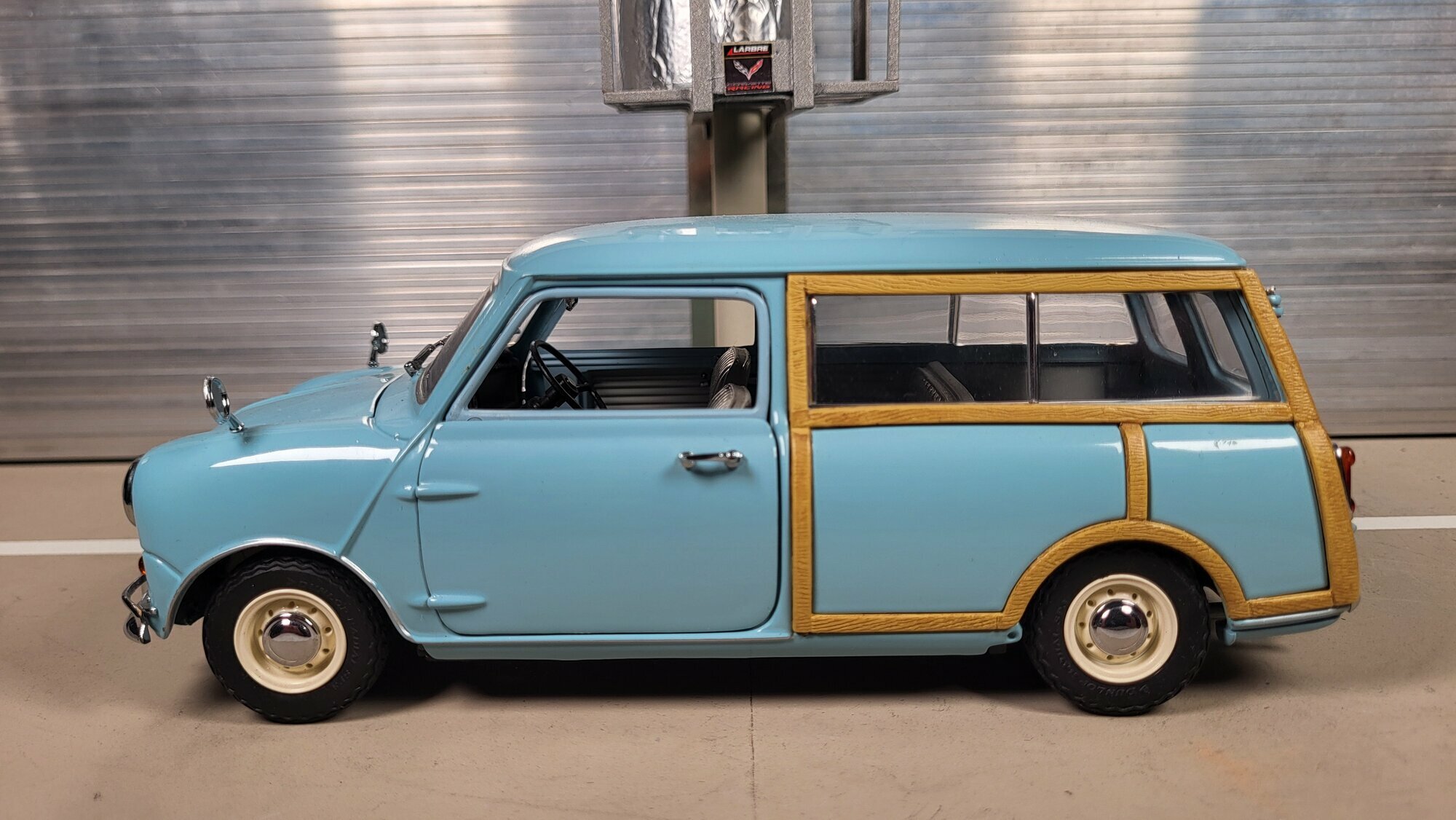
- Austin Mini Countryman (from 1963)
- Kyosho
- 1:18
- Showcase model / No engine
- mixed
- hellblau
- 80191B
- Not specified
- Not specified
- Not for sale
British small-car classic turned versatile estate
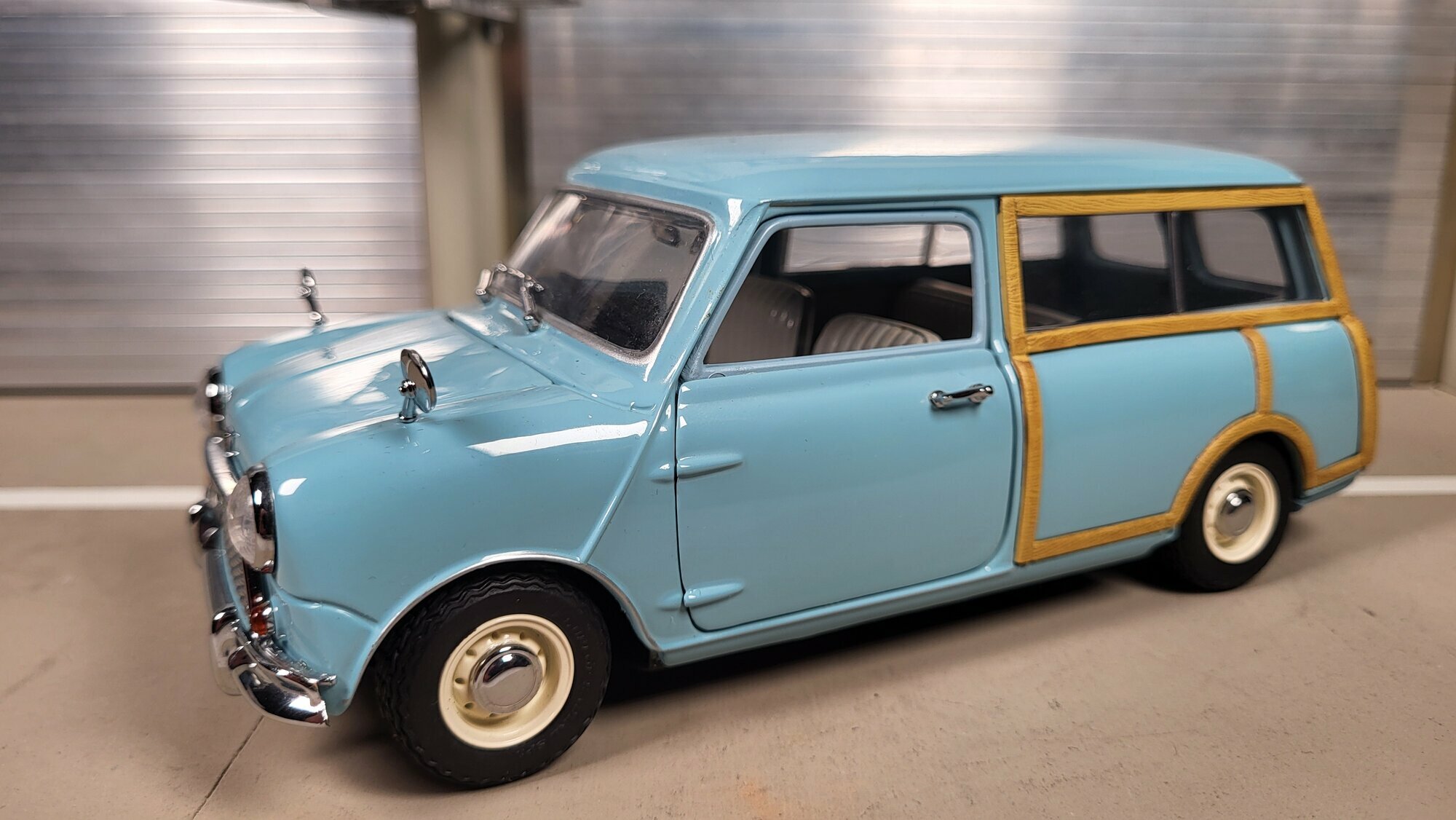
The model shown here is based on the Austin Mini Countryman, which was developed from the early 1960s as the estate version of the Mini. Designer Alec Issigonis applied the same packaging idea from the base model to the Austin Mini Countryman: a transverse-mounted inline-four, front-wheel drive and short overhangs to maximize usable space. The factory-offered estate version, together with its sibling the Morris Mini Traveller, provided the practical extension of the Mini range. Characteristic features were the sliding rear side windows and the two-piece tailgate. The pictured finish with simulated wood trim harks back to the early “Woody” versions, where wood-grain trim strips were a stylistic feature. The shown shape represents the first generation (Mark I), built from 1960 to 1967; it was followed by a revised Mark II version up to 1969. For context: 1960 saw the founding of the OPEC, John Fitzgerald Kennedy won the US presidential election, and in Liverpool The Beatles were forming — a few markers to give you a feel for the era the car comes from.
Original car’s tech, specs and development
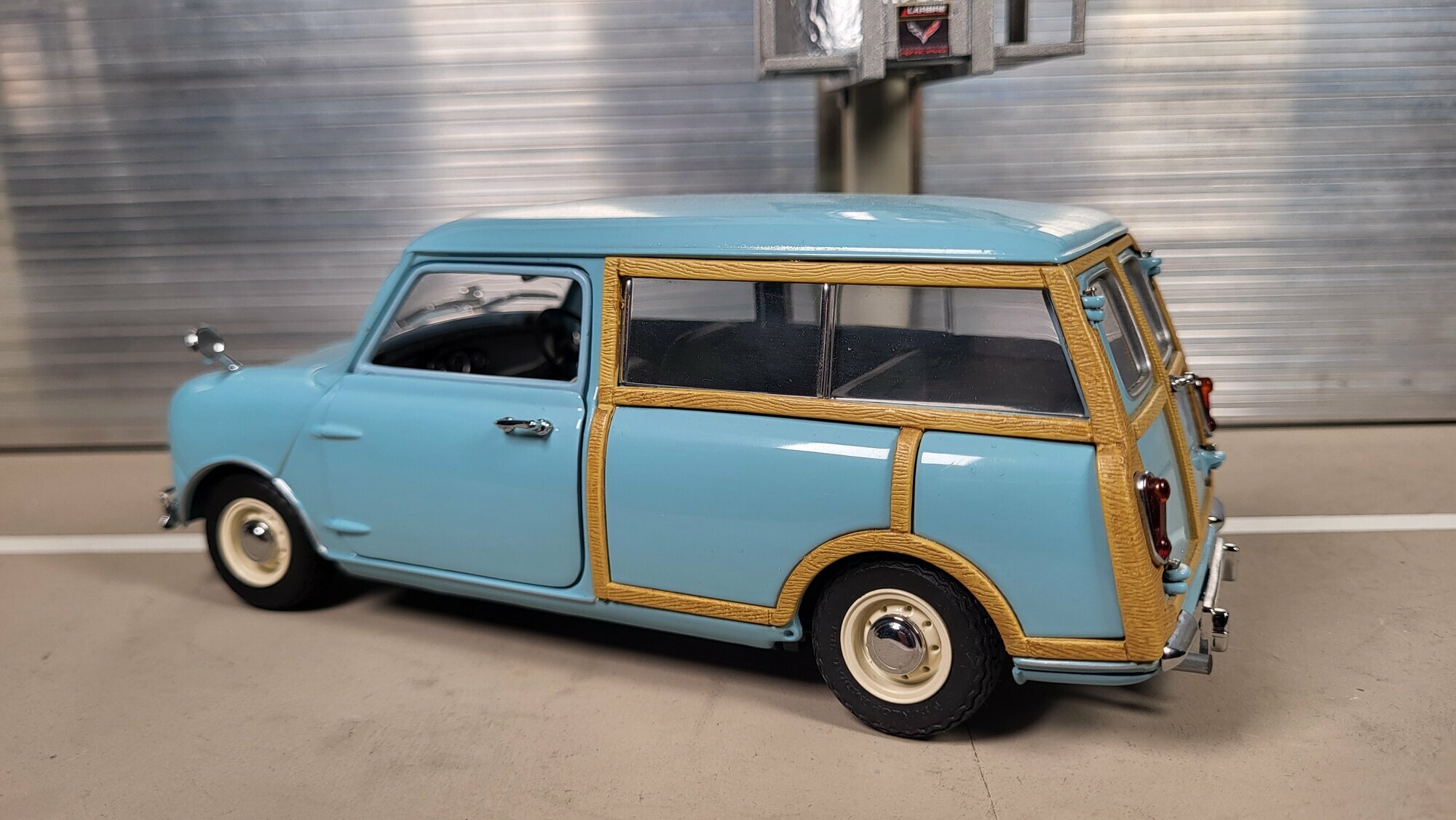
The Austin Mini Countryman used the well-known A-Series engine. In its early version it displaced 848 cm³ (51.8 cubic inches) and produced roughly 25 kW (34 PS, about 33.5 hp). The engine sat transversely over the gearbox, which saved length and allowed a low bonnet. The concept traces back to the Austin A35 Countryman, whose compact, practical estate idea was carried into the Austin Mini Countryman. Engineer Alex Moulton used rubber cone springs for the suspension; later years saw hydrolastic elements introduced. Front disc brakes only appeared on the stronger variants; the estates mostly ran with drum brakes. The estate was about 25 centimeters (9.8 inches) longer than the saloon, giving a flat loading floor behind the standard rear bench. The wood trim was originally functionally tied to the bodywork; later it was mostly decorative. The rear with its two doors and narrow vertical taillights defined the silhouette. Besides Alec Issigonis, Jack Daniels also contributed to the detailing of the drivetrain and packaging. Overall, the result was an economical town-and-country hauler that offered usable cargo space and low running costs in a very compact footprint. Production figures vary by source but show steady demand throughout the production run.
The 1/18 model from Kyosho in Phat‑T’s collection
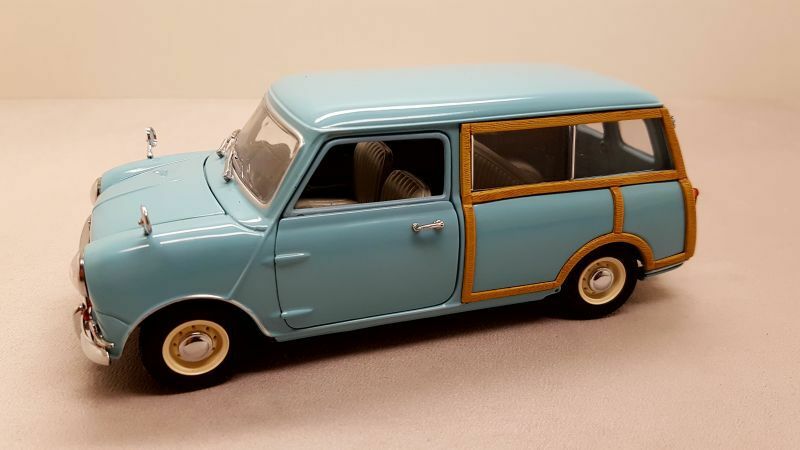
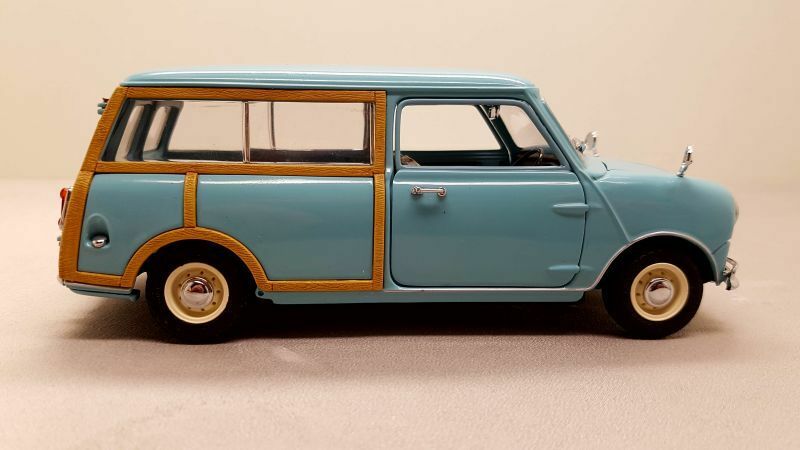
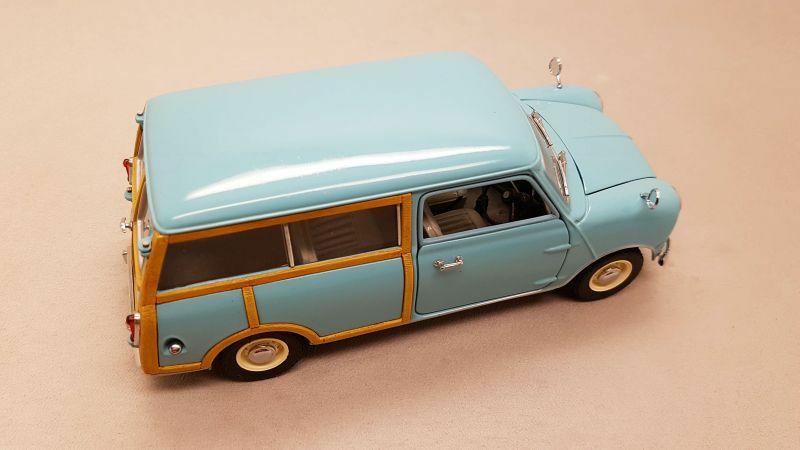
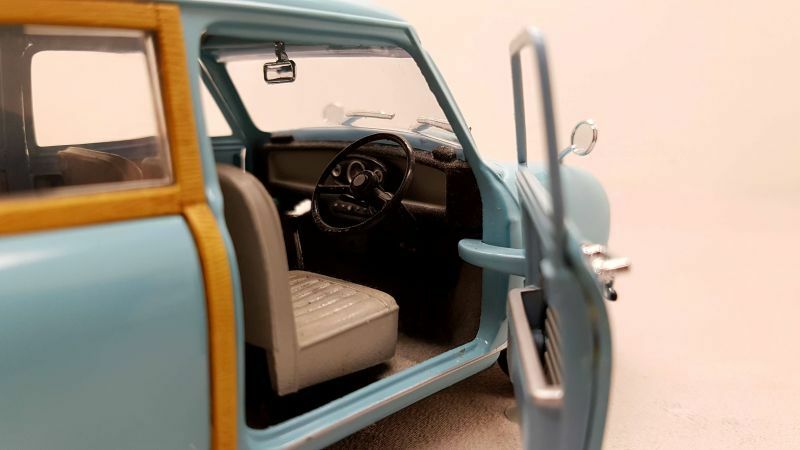
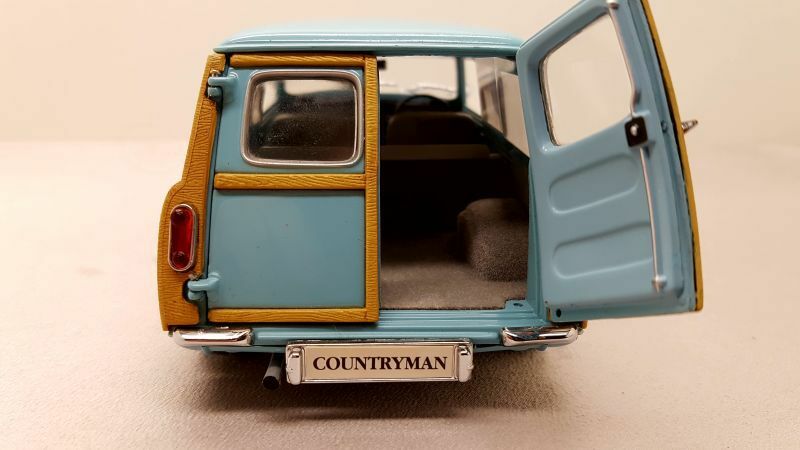
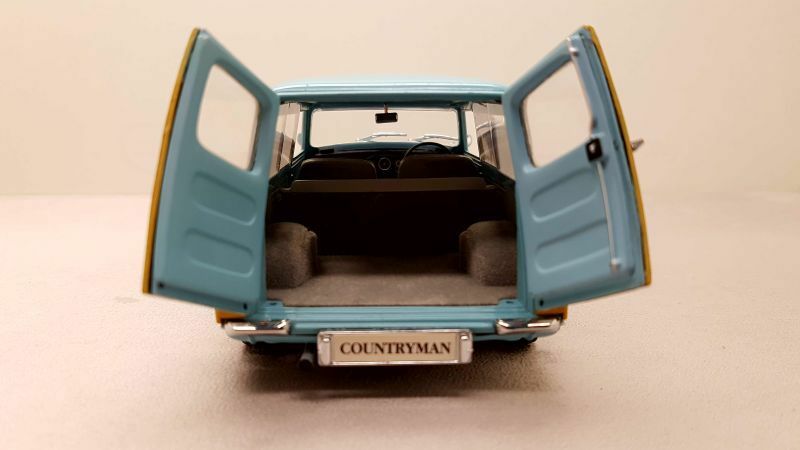
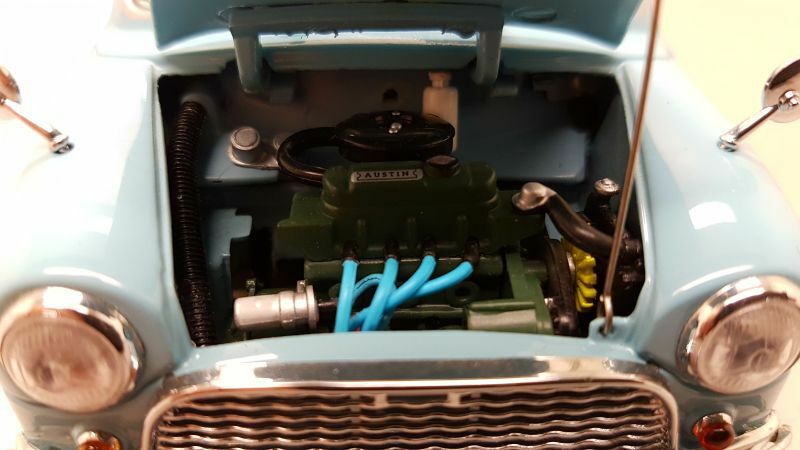
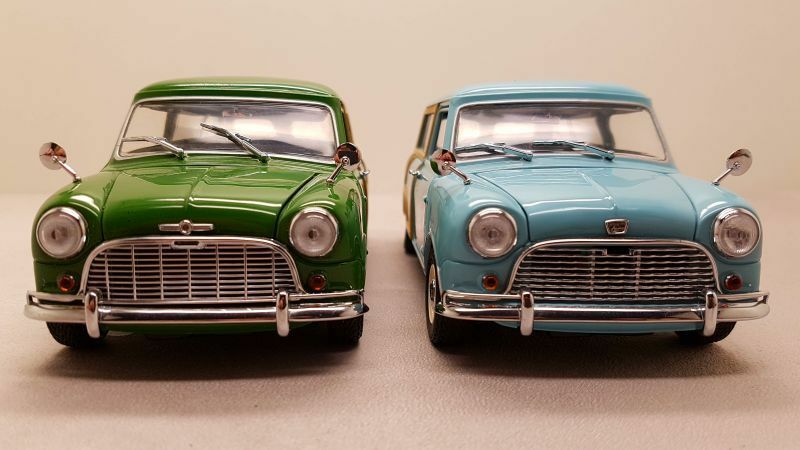
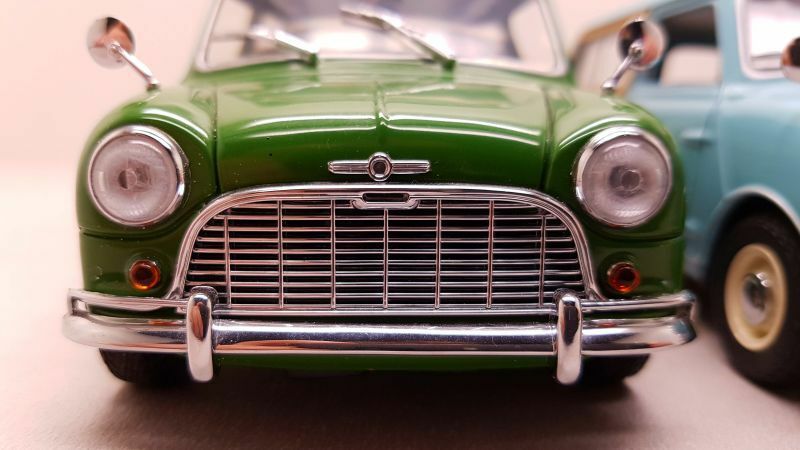
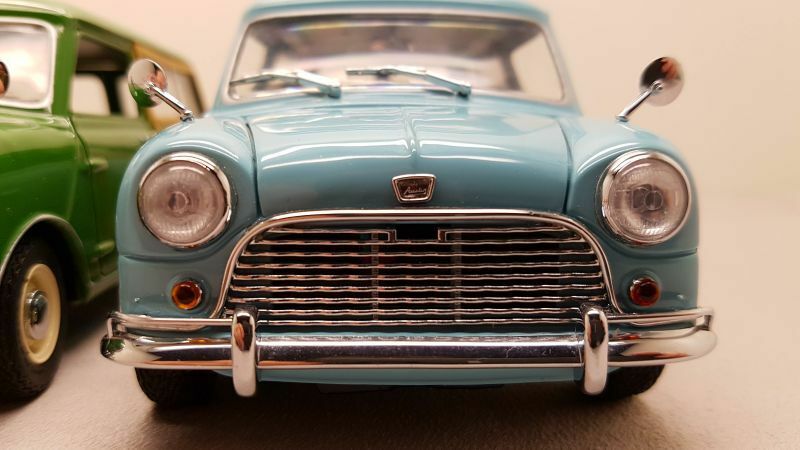
The model pictured comes from collector “Phat‑T” and depicts the Austin Mini Countryman at 1/18 scale. It’s a Kyosho-made model. The miniature mixes materials: a die‑cast zinc body with plastic parts for the glazing, interior, headlight bowls and trim. The photos show a pale blue paintjob with carefully reproduced wood‑grain trim along the sides and rear. The wood effect is finely grained and follows the frame lines over the rear wheelarches and the rectangular rear side windows, just like on the real thing. Proportions are faithful to the original: short front end, slightly raked windscreen, long roof flowing to the two-piece tailgate. The front carries chromed bumper overriders, a central bonnet trim and classic wing-mounted mirrors. Narrow tyres sit on single-piece steel wheels with small chrome rims and hubcaps; there’s no specific aftermarket wheel maker visible on the model. Inside, the seats are in a light grey tone; the dash is spartan with a central round instrument, as on early Austin Mini Countrymans. Door handles, hinges and lamp surrounds are modeled as separate parts, which makes the detailing easy to read. This 1/18 scale model by Kyosho is aimed at collectors who want a precise but understated take on classic British cars.
Detail accuracy, paint and collector’s note
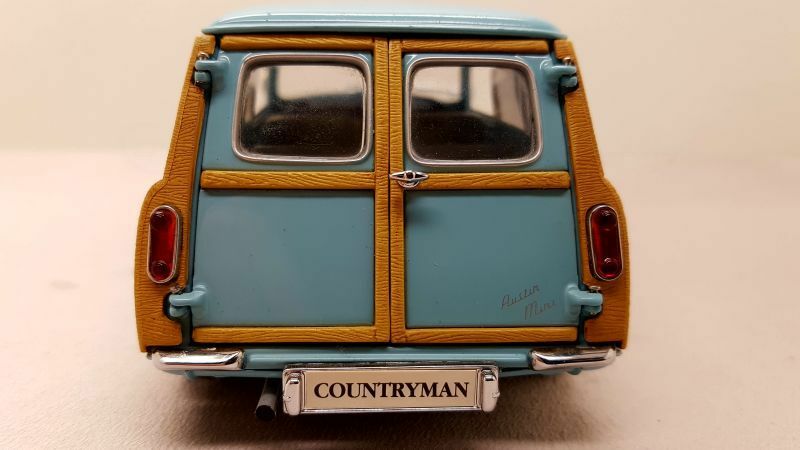
The paint stands out as a calm pale blue and pairs nicely with the warm brown simulated wood strips that show visible grain. The trim lines are neatly defined and run around the rear side windows and the B‑pillar in the rectangular framing typical of the “Woody” Mini estates. At the rear there are two narrow tail lights with a simple tailgate trim above; the two-piece tailgate is modeled with visible panel gaps. Up front the headlights are clear inserts with visible reflector detail, and the indicators below are small orange inserts. Overall the model looks sensible and believable, which helps its fidelity to the prototype. There’s nothing to suggest it’s a film- or TV‑specific piece, so it reads as an authentic everyday configuration. For the display case it’s a coherent package: tidy gaps, convincing wood effect and a contrast between trim and smooth bodywork. The feel fits the car’s utilitarian character and shows how compact the Austin Mini Countryman managed to be despite offering cargo space. Mentioning the era — the founding of OPEC, the election of John Fitzgerald Kennedy, the early days of The Beatles — helps place the original in time. All in all, this mixed‑material piece recreates how utility and city‑friendliness were combined in that era; executed as a 1/18 model by Kyosho, it’s a neat addition to Phat‑T’s collection of period British cars.
- Write a first comment about this model now!Any comment can be discussed by all members. It's like a chat.Mention other Modelly members by using @ in your message. They will then be informed automatically.
- Write a first comment about this model now!Any comment can be discussed by all members. It's like a chat.Mention other Modelly members by using @ in your message. They will then be informed automatically.