
BMW Isetta(diecast 1:18, Schuco)
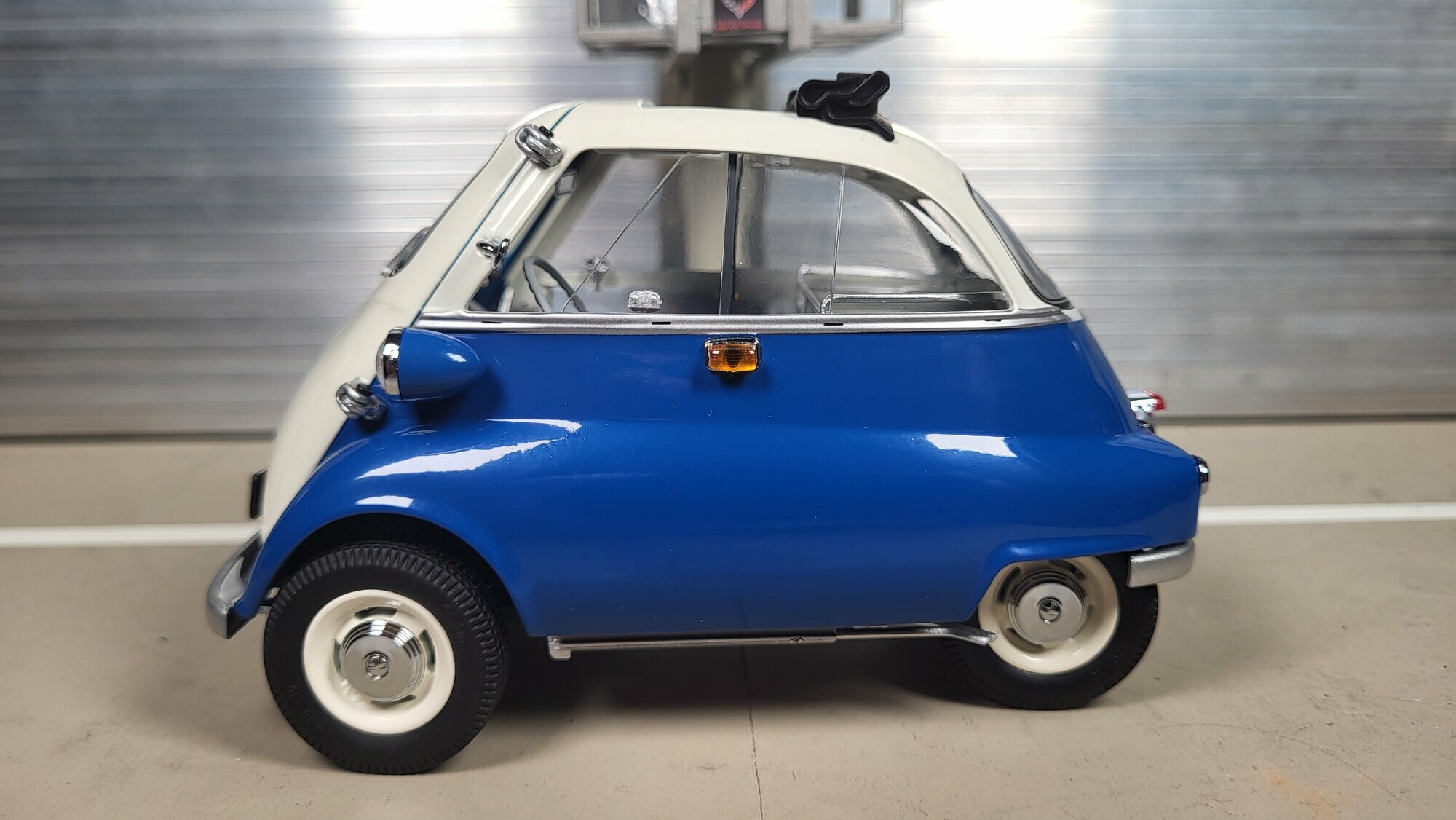
- BMW Isetta (from 1955)
- Schuco
- 1:18
- Showcase model / No engine
- diecast
- blue
- In near mint condition
- Original packaging exists
- Not for sale
History and background of the original
The model shown is based on the small car BMW Isetta, which in Germany was built under license from the Italian Iso concept. The German version is considered a distinct development and was produced as the first German production generation from 1955 to 1962. The BMW Isetta was a response to the economic conditions after the war: minimal exterior size, very low fuel consumption and simple, cheap engineering. The original first appeared in 1955 — the same year the Federal Republic joined the NATO, the Warschauer Pakt was founded and the first McDonald’s of Ray Kroc’s system opened in the US. I’m just throwing those in to give you a feel for the era. BMW didn’t have a direct predecessor here; the basis was the Italian Iso. The styling goes back to the Italian designers Ermenegildo Preti and Pierluigi Raggi, whose egg-shaped cabin with a front door became a unique feature. The original filled the microcar niche in Europe and helped stabilize BMW economically in the tough 1950s.
Technical data and quirks of the original
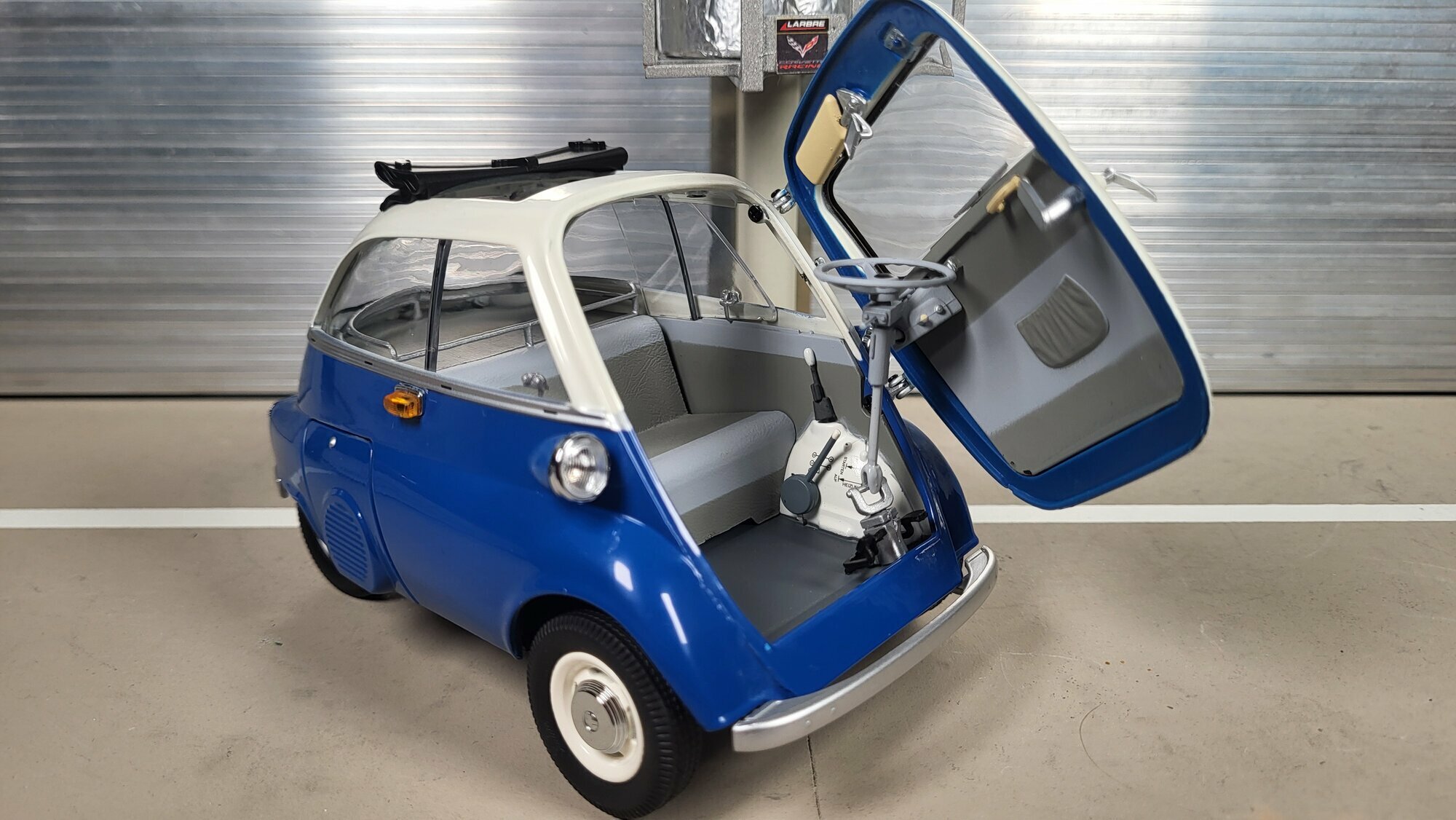
The BMW Isetta is a two-seater cabin scooter with a front-opening door. The steering wheel and instrument cluster swing out with the door to make getting in easier. The German version — unlike the early Italian Iso — got two closely spaced rear wheels, which let it be homologated as a four-wheeled car. Drive comes from an air-cooled single-cylinder four-stroke engine taken from BMW’s motorcycle program: initially 247 cm³ (about 15.1 in³) with roughly 9 kW (≈12 hp) / 12 PS, later 298 cm³ (about 18.2 in³) with roughly 10 kW (≈13.4 hp) / 13 PS. The four-speed gearbox transfers power by chain and final drive to the rear axle. Top speed is around 85 km/h (53 mph), fuel consumption roughly 3–4 l/100 km (≈78–59 mpg US). Dimensions are typical for the class: length about 2.3 m (7.5 ft / 90.6 in), width about 1.3 m (4.27 ft / 51.2 in), curb weight depending on version around 350–370 kg (771–816 lb). Characteristic details are the two-part sliding windows, the fabric sunroof that can serve as an emergency exit, and the compact passenger cell with simple ventilation. The BMW Isetta was popular in Germany in the 250 and 300 cc classes and was built in several plants. The combo of tiny footprint, low running costs and easy mechanics made it a mobility solution of the 1950s.
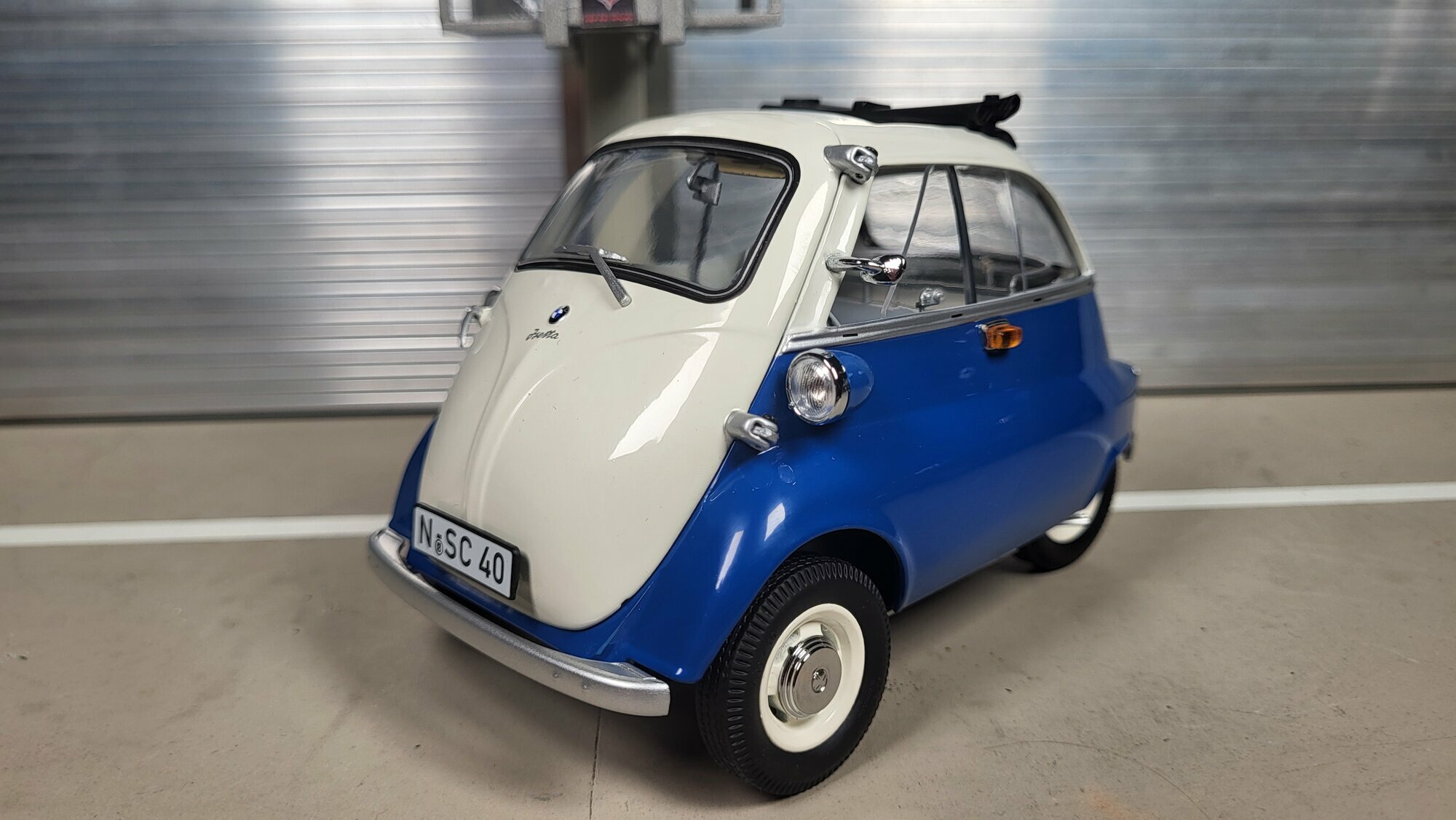
The 1/18 model by Schuco in Phat-T’s collection
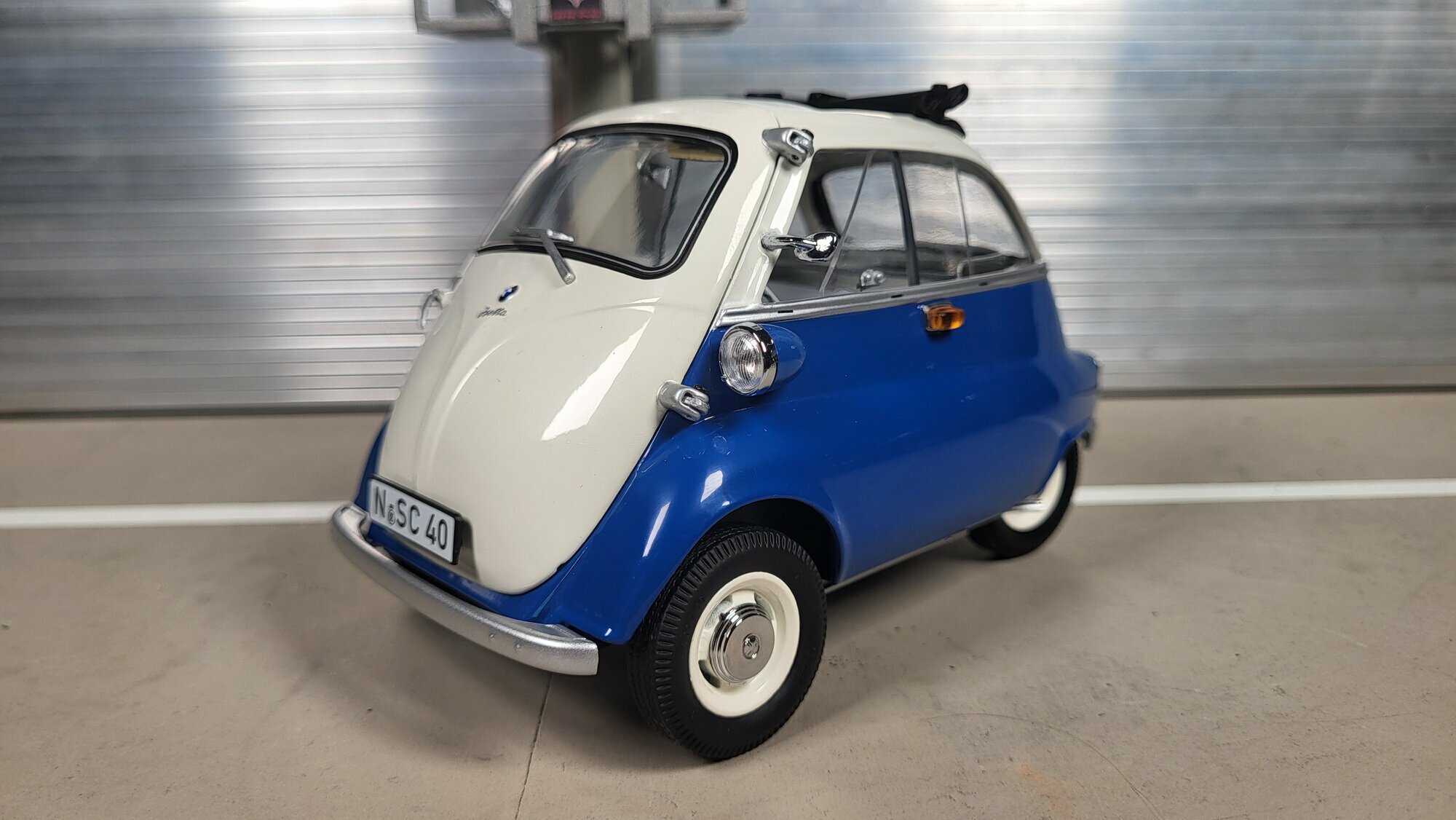
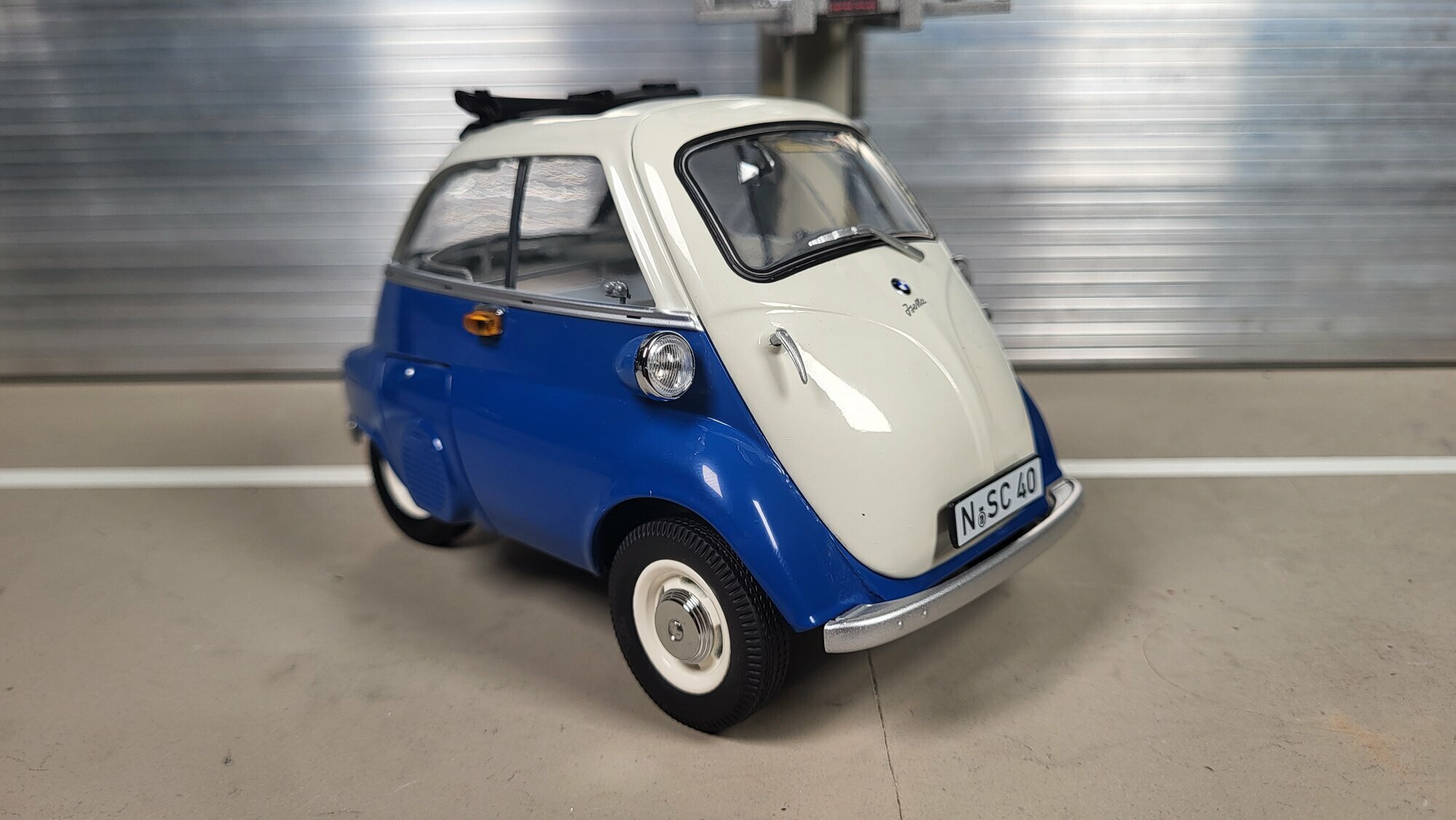
The pictured 1/18-scale model comes from Schuco and is in the collection of model club member “Phat-T”. It’s a diecast model using zinc alloy; you can tell from the solid feel and the neatly fitted parts in the photos. The two-tone paint shows a clear blue on the lower body and a light cream on the front and roof area. The separation line runs along the side trim, just like on the real BMW Isetta. The BMW roundel sits on the front, the Isetta badge below it, and a single windshield wiper is correctly reproduced. Chrome trims around the windows, the small external headlights and the orange side marker are all individually applied. The black folding roof is shown open, giving a good view of the large glazing and the light-colored interior with the bench seat. Notice also the very closely spaced rear wheels — a true-to-life detail — only partly visible through the body cutouts. The steel rims with painted hubcaps match the 1950s look; there’s no separate rim-maker marking on the model. As a 1/18 diecast from Schuco, the proportions of the BMW Isetta read clearly and details like the door hinges and bumper shapes are visible.
Collector notes, paint and context
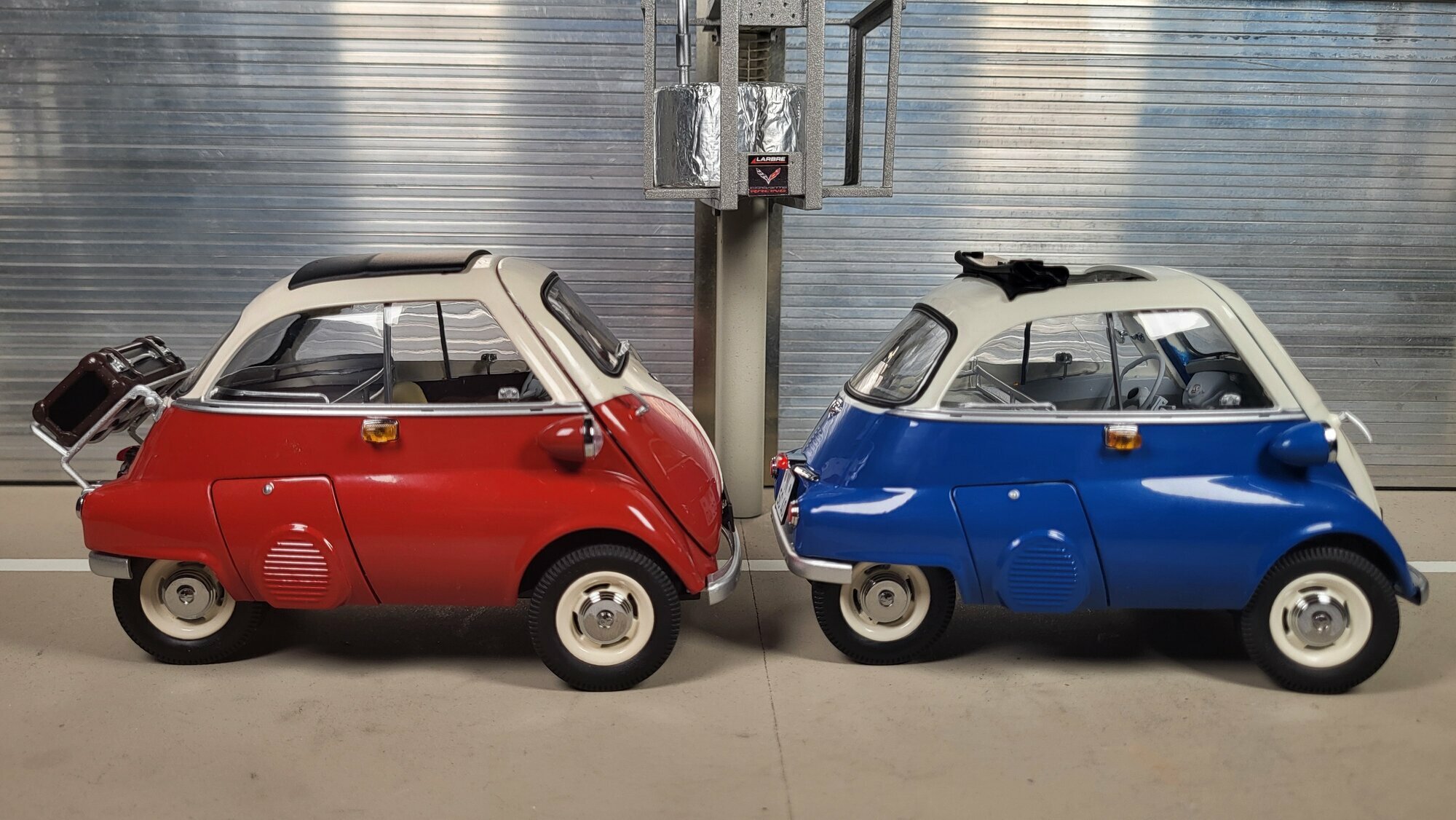
For collectors: this is a 1/18 Schuco model representing the German BMW Isetta of the first German production generation (built 1955–1962). The photographed example stands out with its two-tone paint: the creamy front highlights the bulbous front door and the blue on the sides emphasizes the body volume; both are separated by a thin silver trim. The black fabric roof, small round mirrors and orange side blinkers give the miniature that no-nonsense 1950s character. On the right side you can see the closed engine access cover with ventilation slots. The side sliding windows are implemented as two-piece clear elements and show the square guide rail. There’s no obvious film or TV tie-in for this specific finish; it’s simply a representation of the common street scene of the late 1950s. To place the original again in time: 1955 — NATO membership, the Warschauer Pakt, and international hits like “Rock Around the Clock” help to imagine the era — little contextual notes that make the tiny car’s time more tangible. All in all, the diecast captures the historic vehicle well and in Phat-T’s collection it reads as a compact piece of auto history — you can appreciate the small details from the hubcaps to the front door and the folding roof.
- Write a first comment about this model now!Any comment can be discussed by all members. It's like a chat.Mention other Modelly members by using @ in your message. They will then be informed automatically.
- Write a first comment about this model now!Any comment can be discussed by all members. It's like a chat.Mention other Modelly members by using @ in your message. They will then be informed automatically.