
BMW Isetta(diecast 1:18, Schuco)
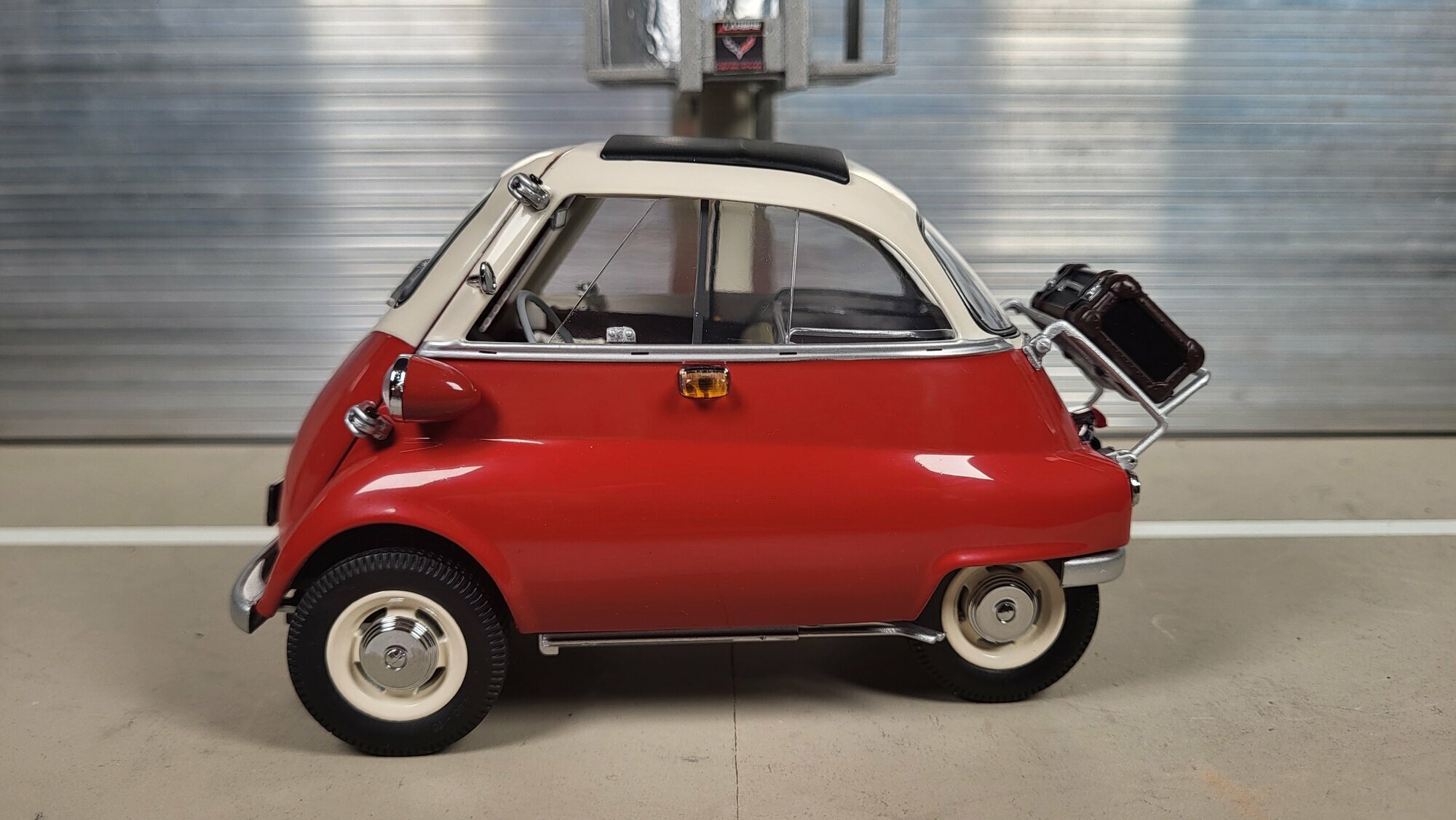
- BMW Isetta (from 1955)
- Schuco
- 1:18
- Showcase model / No engine
- diecast
- red
- In near mint condition
- Original packaging exists
- Not for sale
Prototype and time frame: The BMW micro-legend
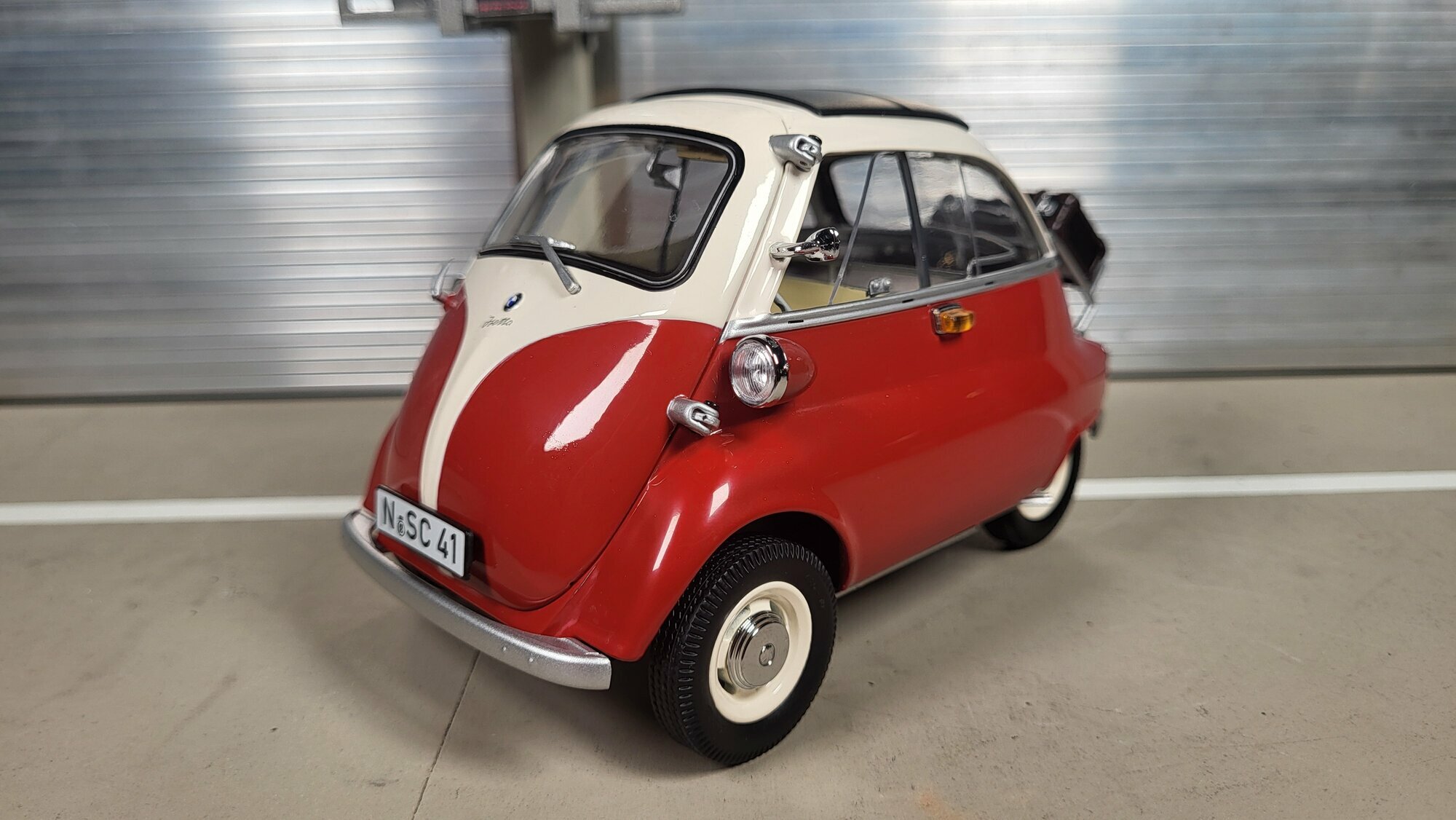
This model from collector “Phat-T” is based on the BMW Isetta, a German-built licensed microcar that shaped postwar mobility. The exact series is the BMW Isetta (BMW‑version 250/300); it was made from 1955–1962. The concept originally came from the Italian Iso design, drawn up by engineers Ermenegildo Preti and Pierluigi Raggi. BMW reworked the design and the drivetrain and used one of their motorcycle engines. When the BMW Isetta launched in 1955, a few big events happened around the same time that help place it historically: West Germany joined NATO, the Warsaw Pact was formed, and actor James Dean died in a crash. I’m just throwing those in so you get a feel for how old the BMW Isetta is and the era it belongs to.
Engineering of the BMW Isetta: micro size, quirky solutions
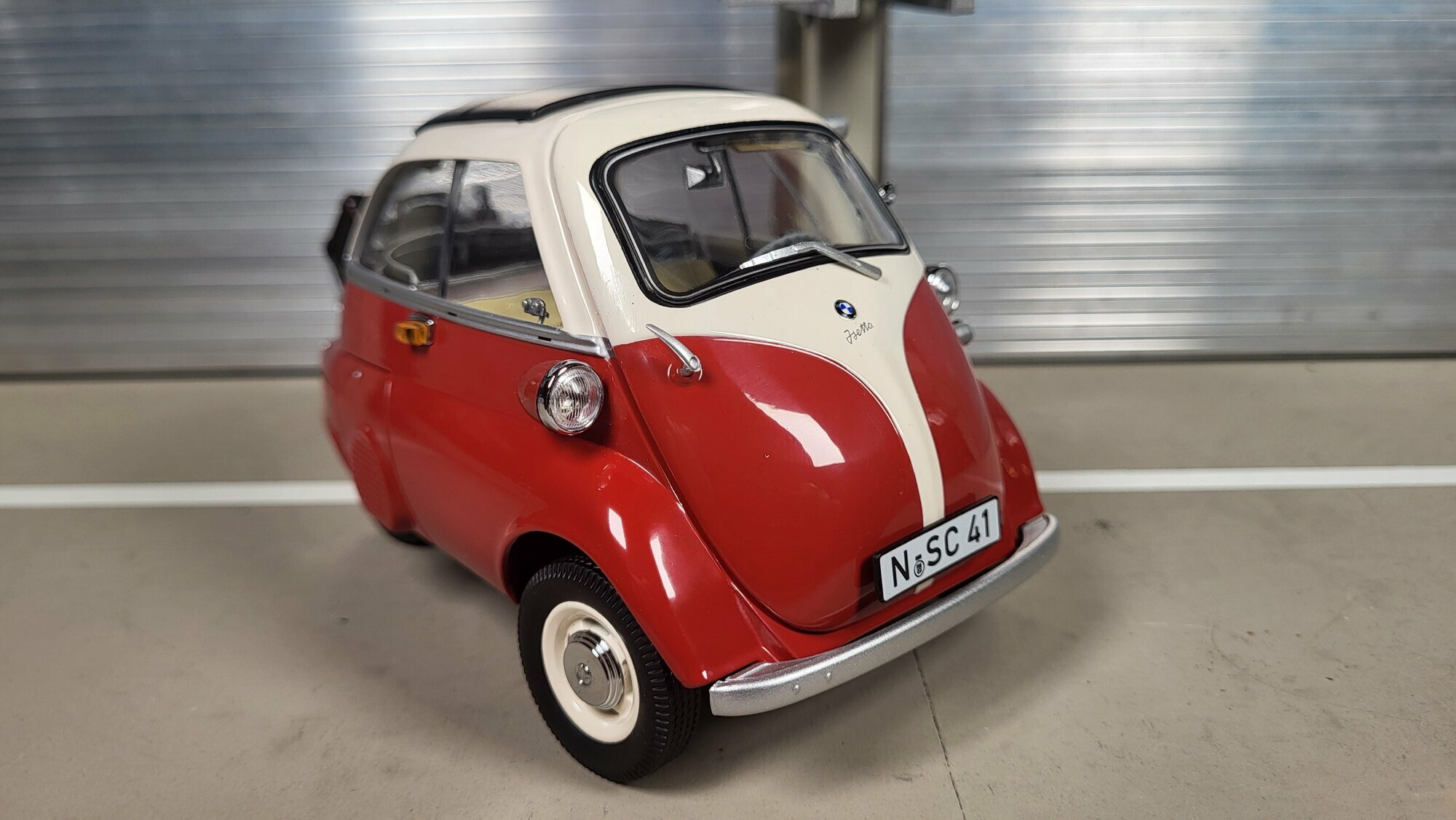
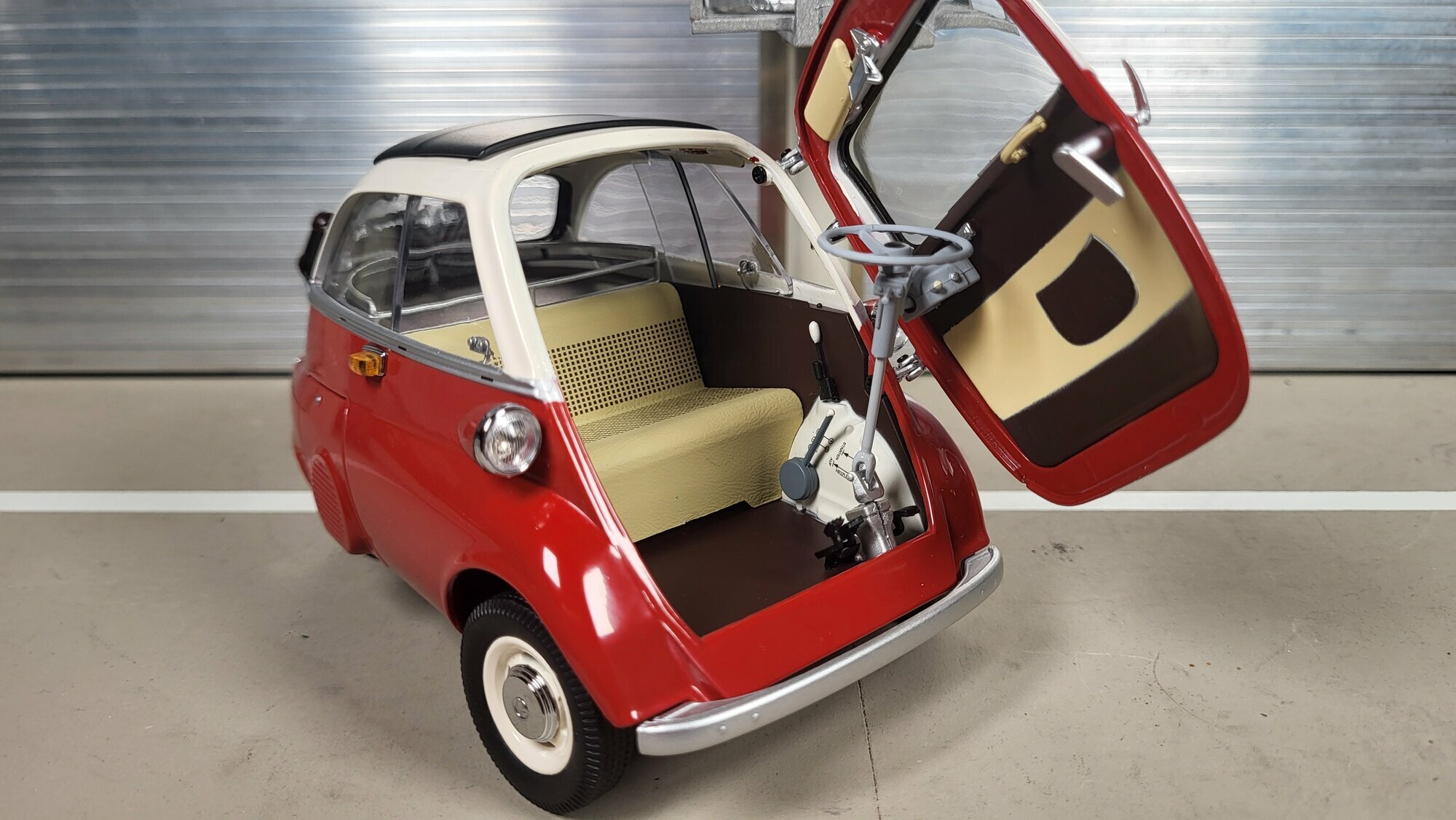
The BMW Isetta is one of those classic “bubble cars.” Its signature is the front door that swings open forward; the steering column and wheel fold with it so you can hop onto the single bench seat easily. BMW’s version used an air‑cooled single-cylinder four-stroke from their motorcycle range. In the 250 variant the 247 cm³ (15.1 in³) engine put out about 9 kW (about 12.1 hp / 12 PS), the 300 version’s 297 cm³ (18.1 in³) reached about 10 kW (about 13.4 hp / 13 PS). Depending on the model it hit roughly 80–85 km/h (about 50–53 mph) and could manage around 3–4 L/100 km (about 59–78 mpg US). The rear axle used two very closely spaced wheels, so the track stayed narrow and a differential wasn’t needed — saves weight and cost. The car measured roughly 2.3 m (7 ft 6.6 in / 90.6 in) long and 1.4 m (4 ft 7.1 in / 55.1 in) wide, with a curb weight of about 350 kg (772 lb). Typical features are sliding windows without frames, a fabric sunroof as an emergency exit, simple leaf springs at the front and the distinctive lights mounted on the A‑pillars. The Italian Iso is the conceptual ancestor, which BMW licensed, but BMW reworked many details and adapted it to German registration rules.
The Schuco 1/18 scale model — collector details
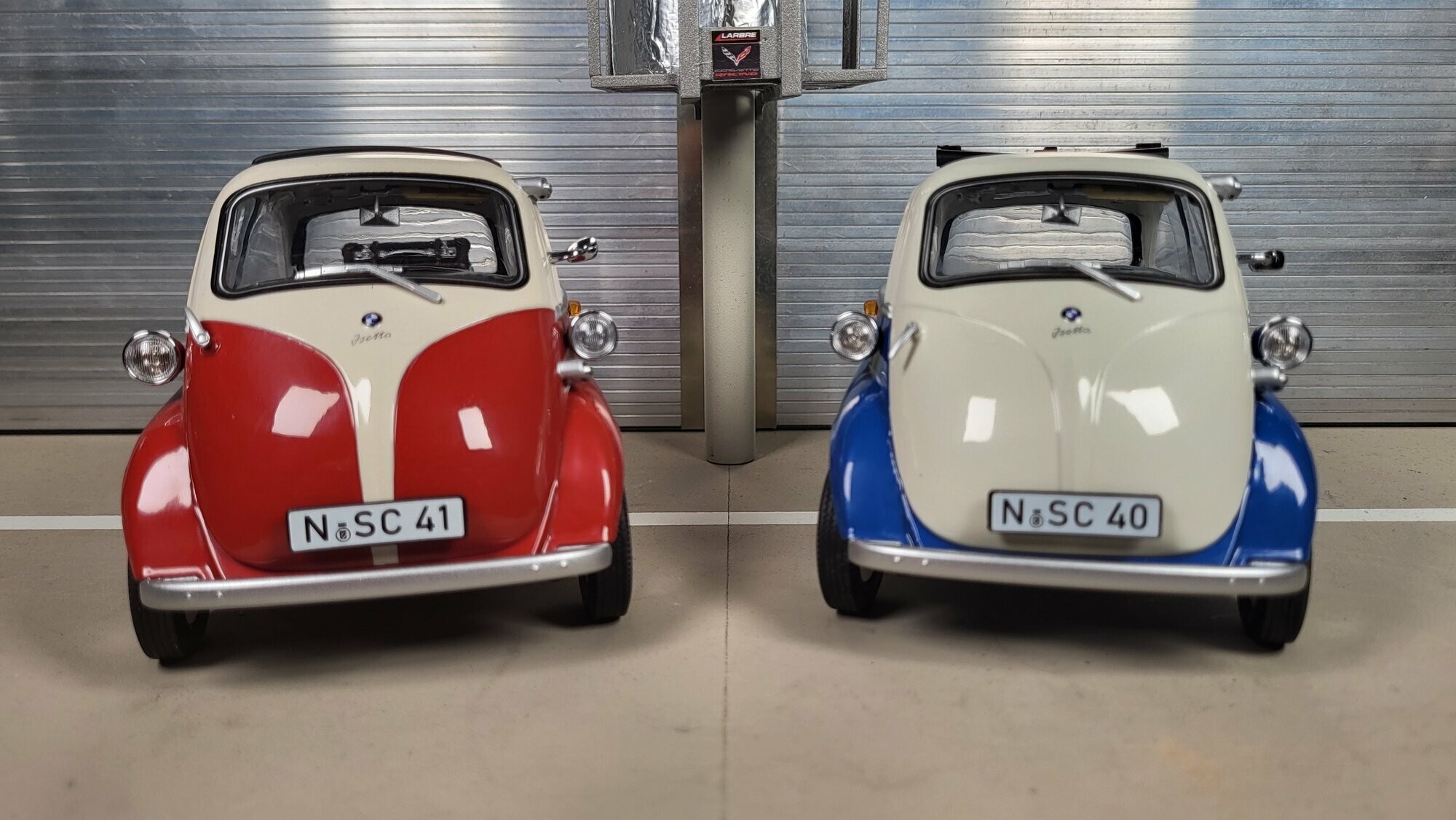
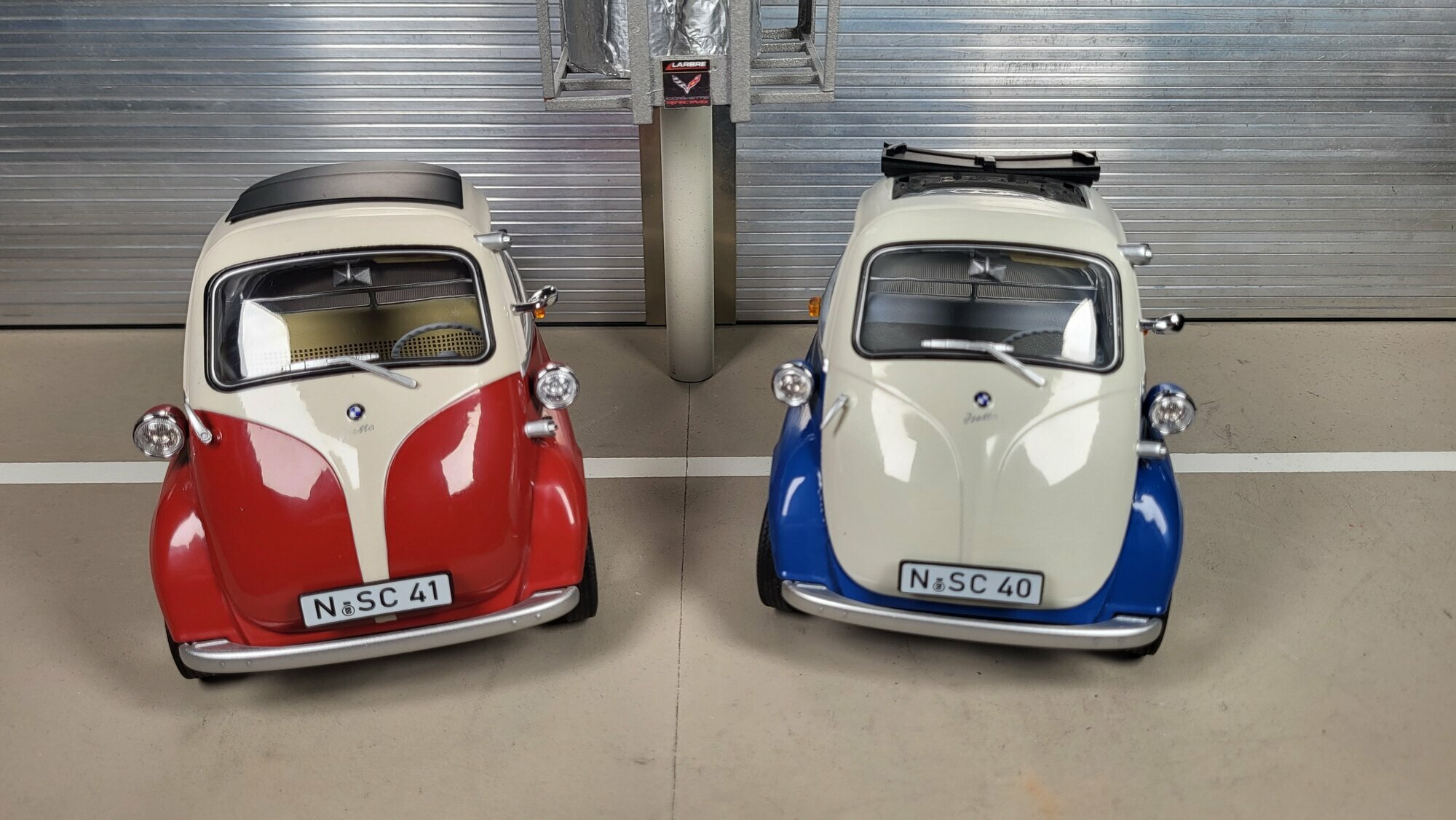
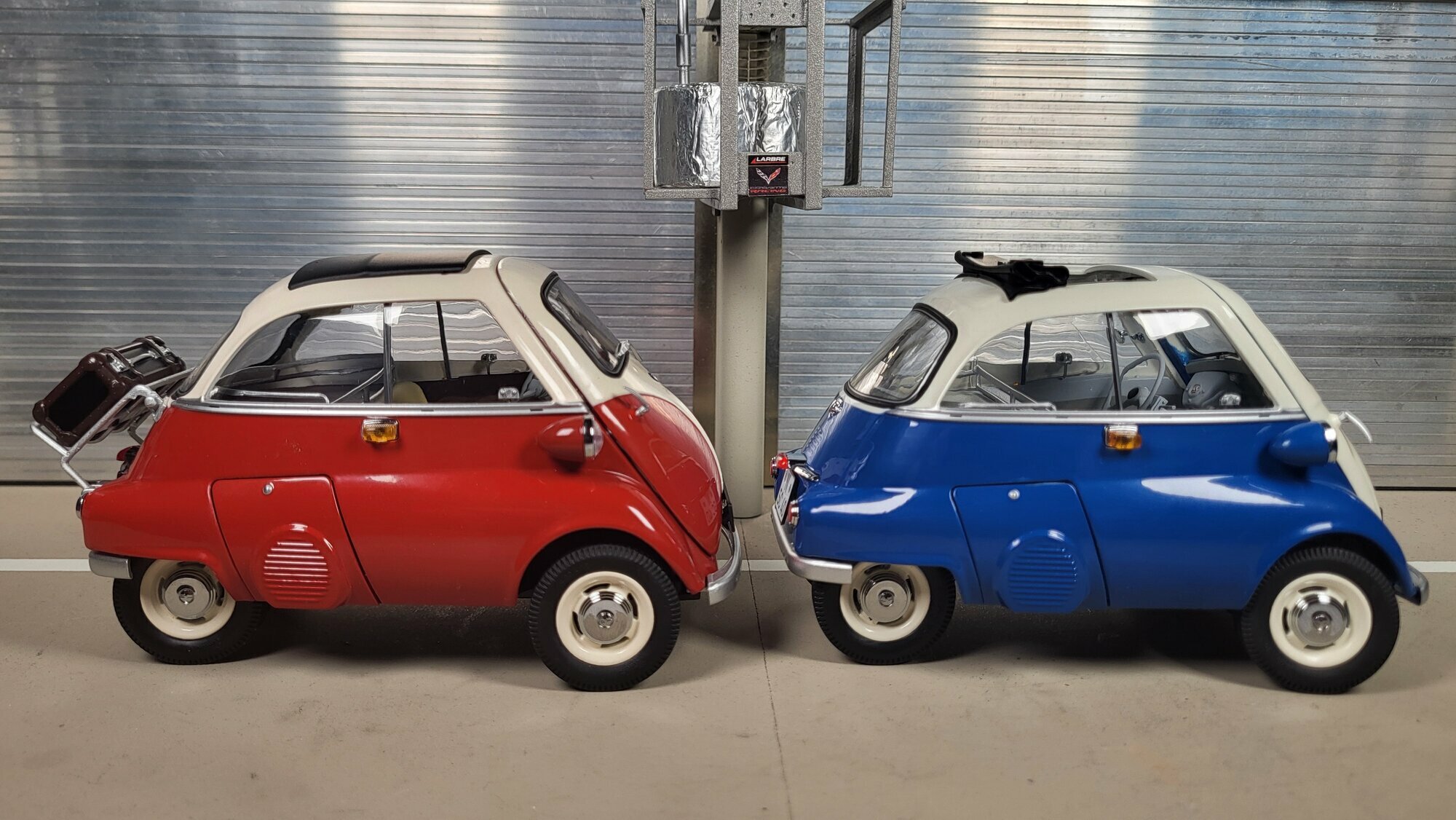
The car you see is a 1/18 scale model from Schuco and belongs to Phat‑T’s collection. It’s made from diecast metal, which you can tell from the solid feel of the body and the neat panel gaps. The paint is a two‑tone scheme: a warm red for the body and a pale cream for the roof, nose panel and trim line. That color combo matches a common factory finish for the BMW Isetta, and the model’s crisp demarcation lines are well done. You can spot the typical high-set headlights on the A‑pillars and the amber side lamps. The chrome trim around the glass and the thin bumpers are finely reproduced. The black folding roof is visible and echoes the original’s emergency‑exit function. At the back the model has a luggage rack with a suitcase — a nice everyday detail that nods to how folks used Isettas on short trips in the 1950s. The wheels have cream rims with smooth chrome hubcaps, and the very narrow rear wheel spacing hints at the real car’s unusual setup. Inside, through the big windows you can see the light-colored steering wheel, the basic instruments and the single bench seat. There’s a single wiper on the front, matching the minimalist spirit. Plate “N‑SC 41” and fine badges finish the look. It’s a typical 1/18 diecast from Schuco, so it fits neatly into most collector lines.
How it fits in a collection and useful bits to know
For collectors the BMW Isetta is small but instantly recognizable. The Schuco 1/18 captures the key traits: the front door with its surrounding trim, the closely spaced rear wheels, the frameless sliding windows and the folding roof. Details like the little ventilation slot at the rear and the continuous trim strip are clearly visible in the photos. There’s no obvious tuner or special wheel maker on this model — which makes sense because the real Isettas were sold mostly stock. For display, I’d position it so the side with the luggage rack faces forward; that shows off the car’s teardrop silhouette and light placement. If you sort your collection by design evolution, the BMW Isetta is a cool bridge between motorcycles and small cars: its engine roots are in motorcycles, but it gives you a closed cabin. This diecast piece from Phat‑T’s collection demonstrates that hybrid solution nicely and pairs well with other microcars from the 1950s and early 1960s.
- Write a first comment about this model now!Any comment can be discussed by all members. It's like a chat.Mention other Modelly members by using @ in your message. They will then be informed automatically.
- Write a first comment about this model now!Any comment can be discussed by all members. It's like a chat.Mention other Modelly members by using @ in your message. They will then be informed automatically.