
ISO Isetta(diecast 1:18, Schuco Pro.R18)
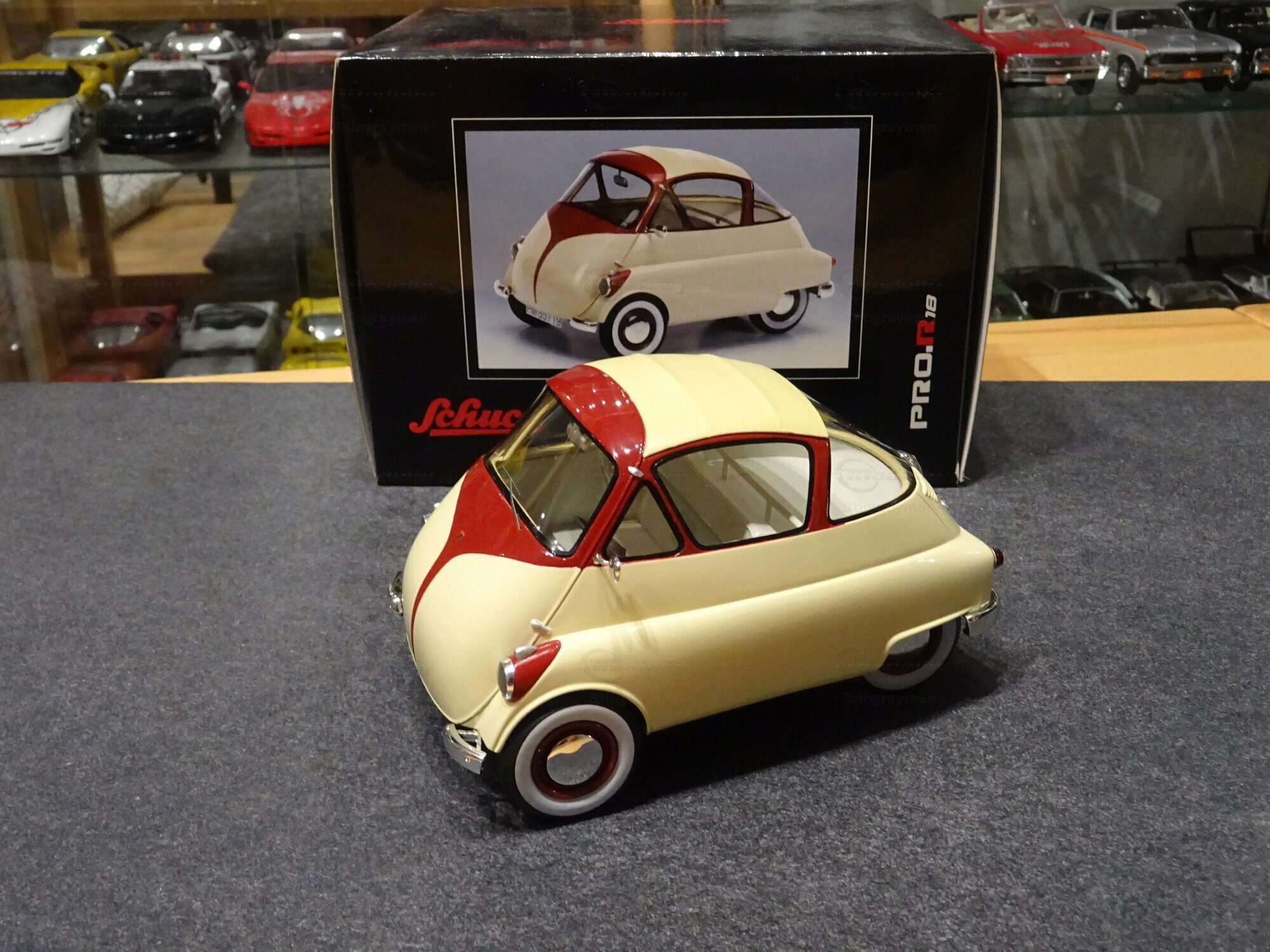
- ISO Isetta (from 1953)
- Schuco Pro.R18
- 1:18
- Showcase model / No engine
- diecast
- Beige Rot
- Perfect mint condition
- Original packaging exists
- Not for sale
Schuco Pro.R18 scale model car in 1/18: BMW Isetta as a collector’s model by Stingrayman
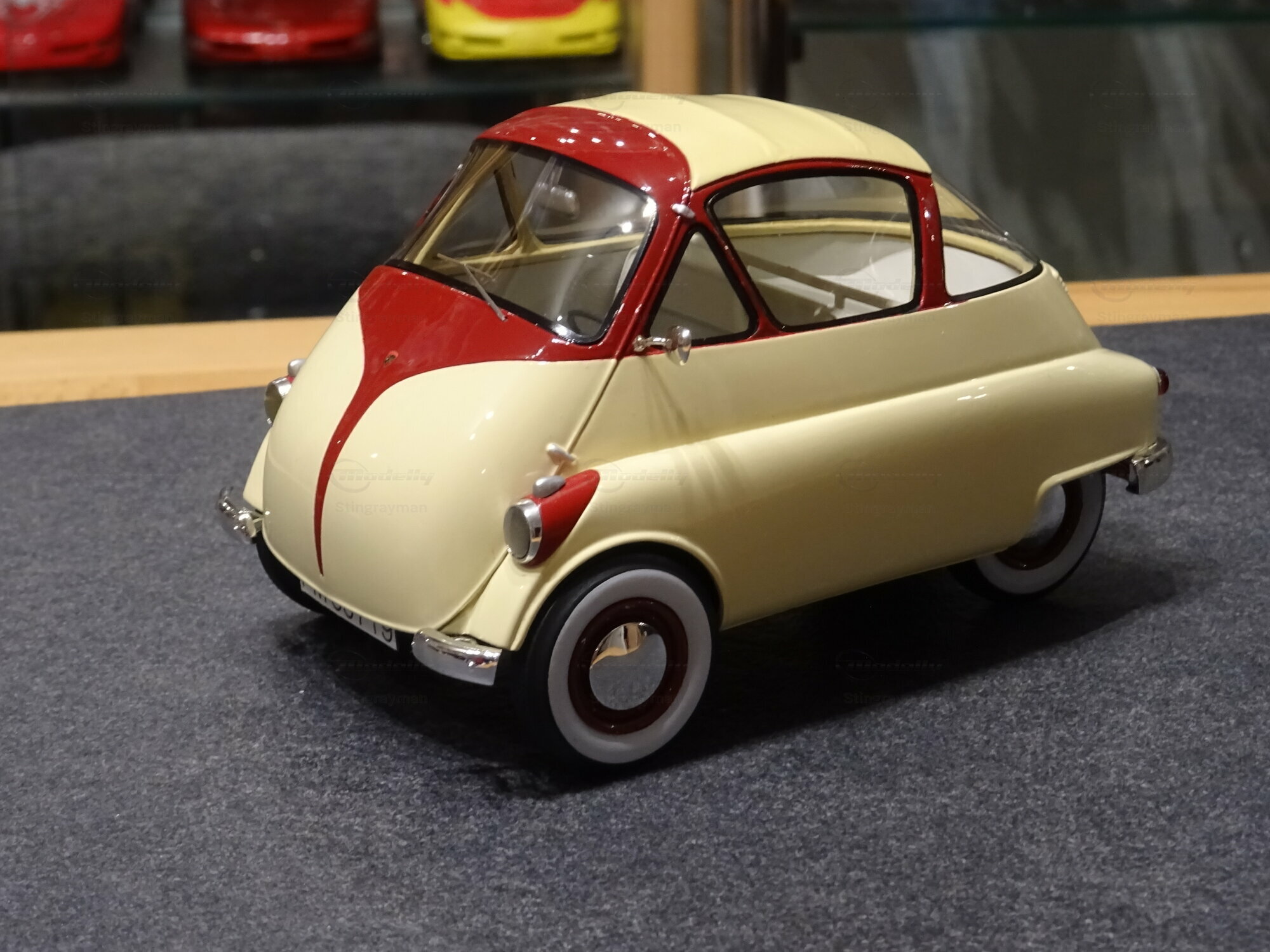
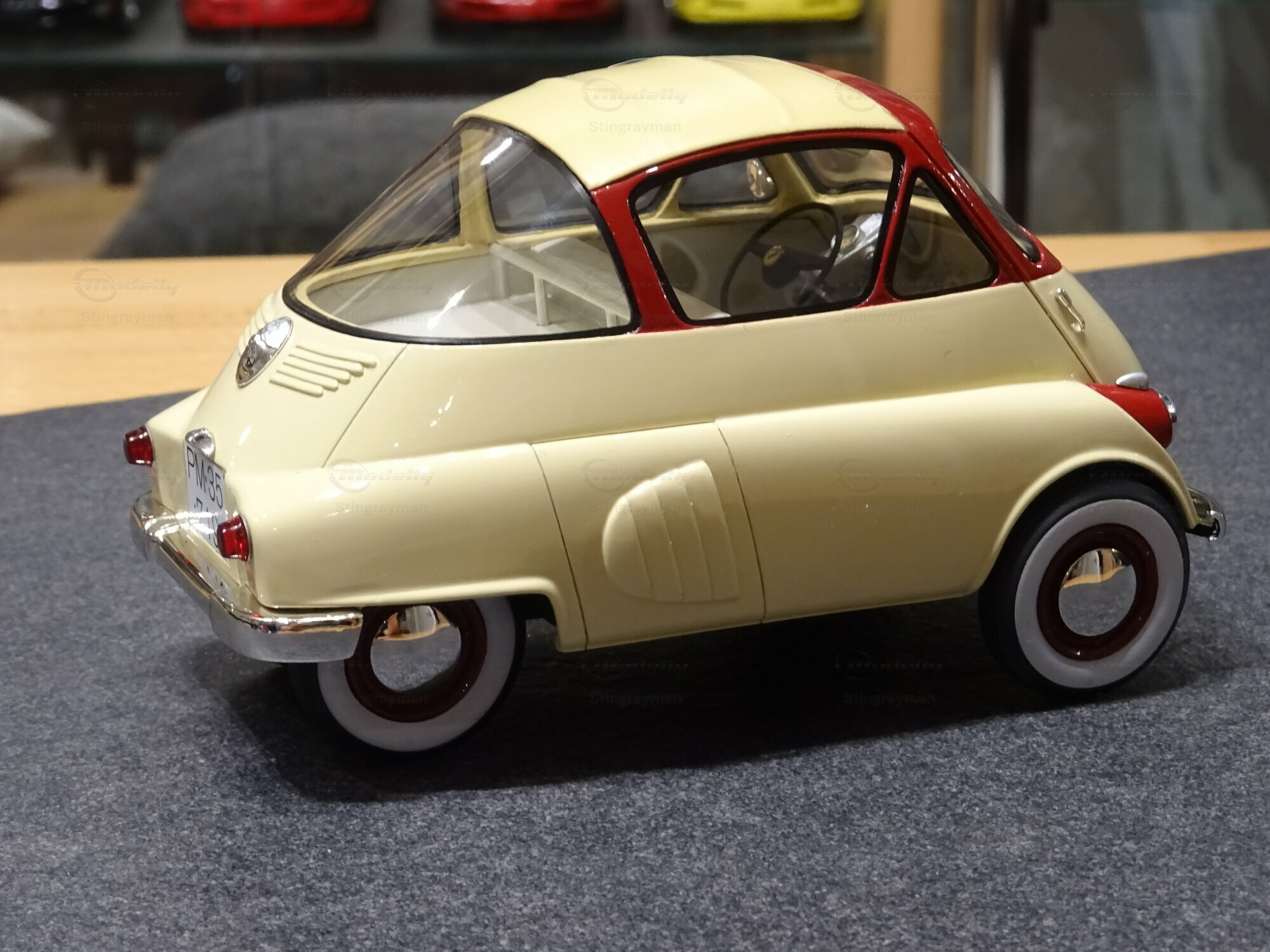
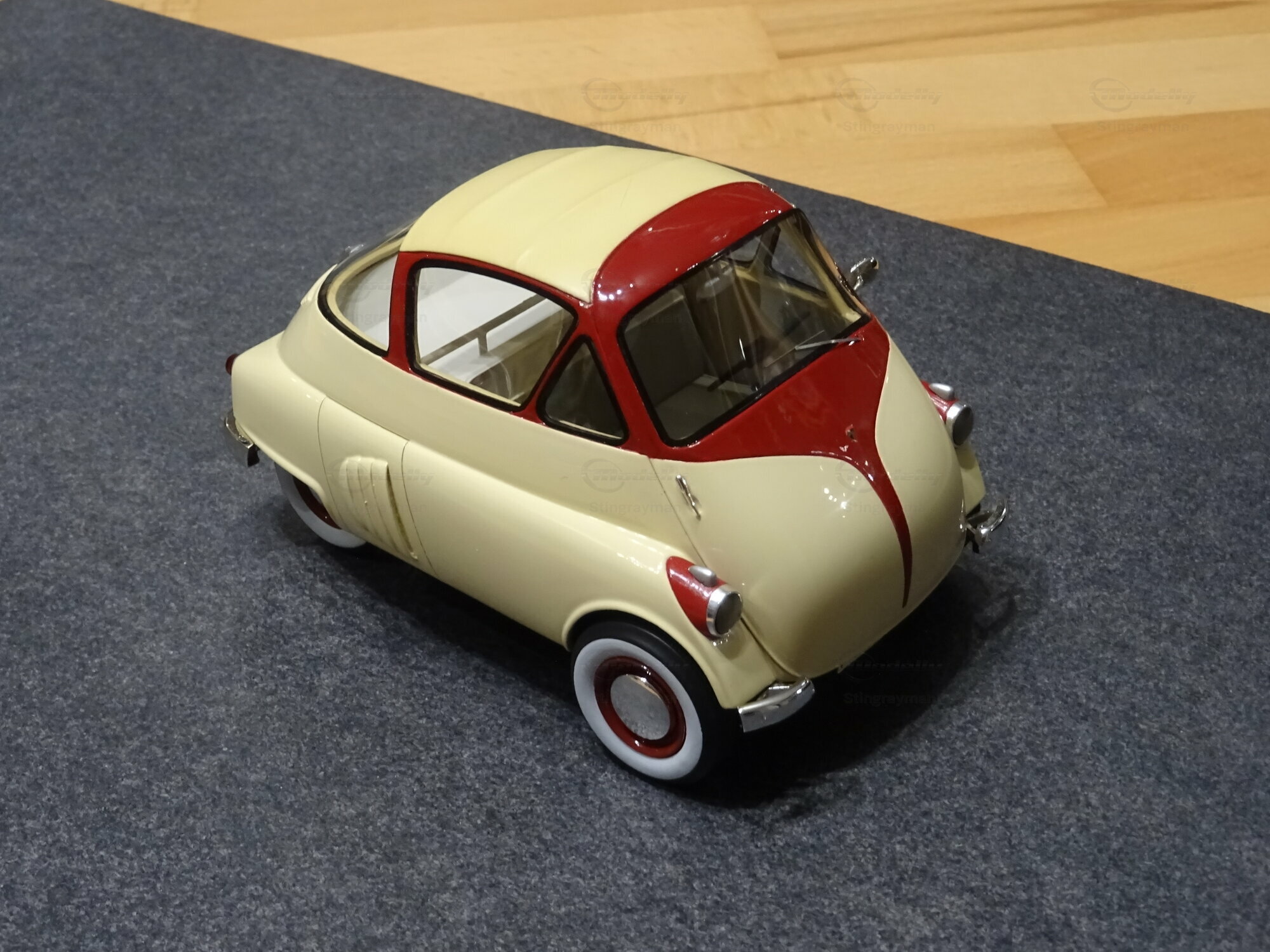
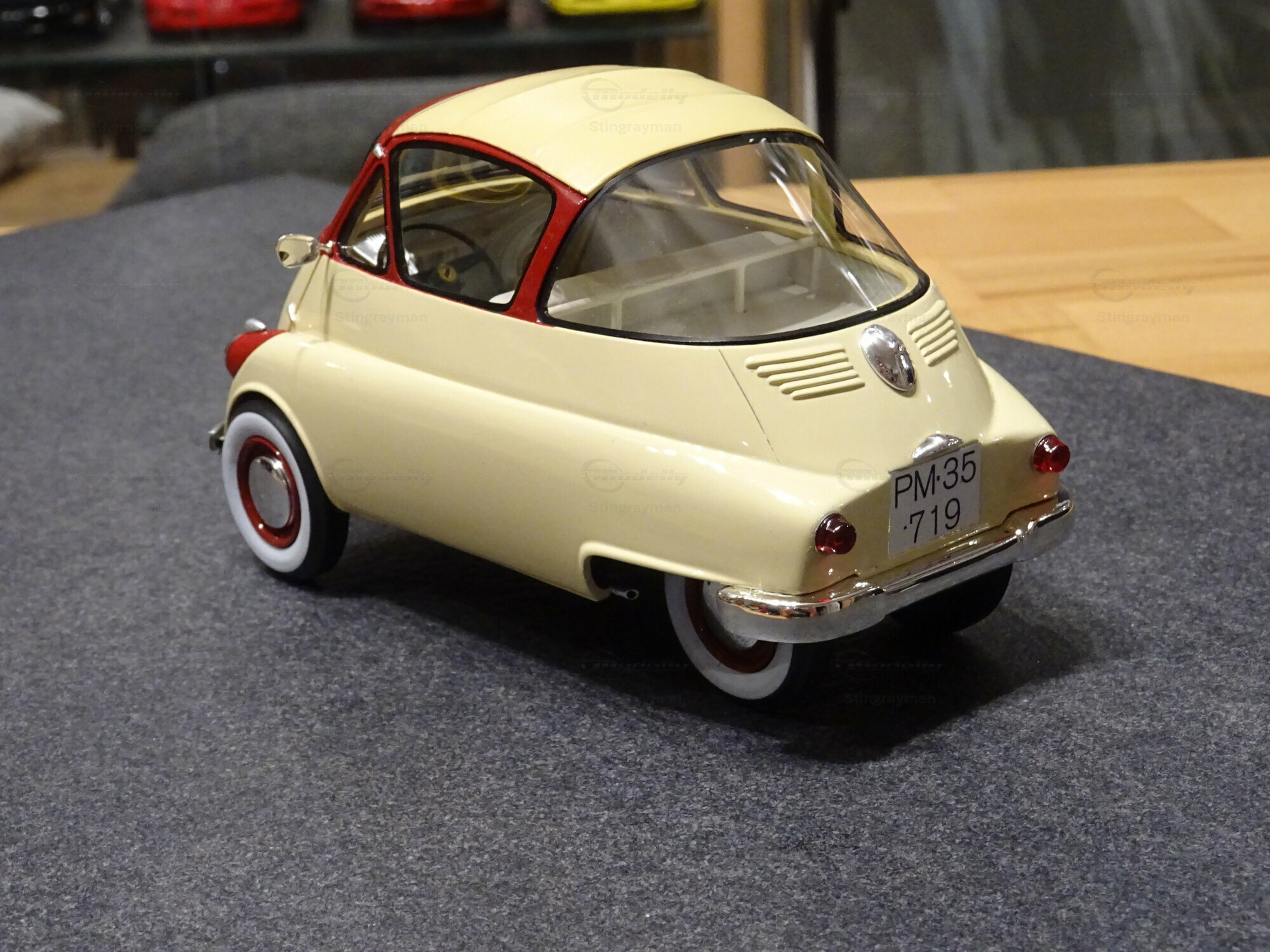
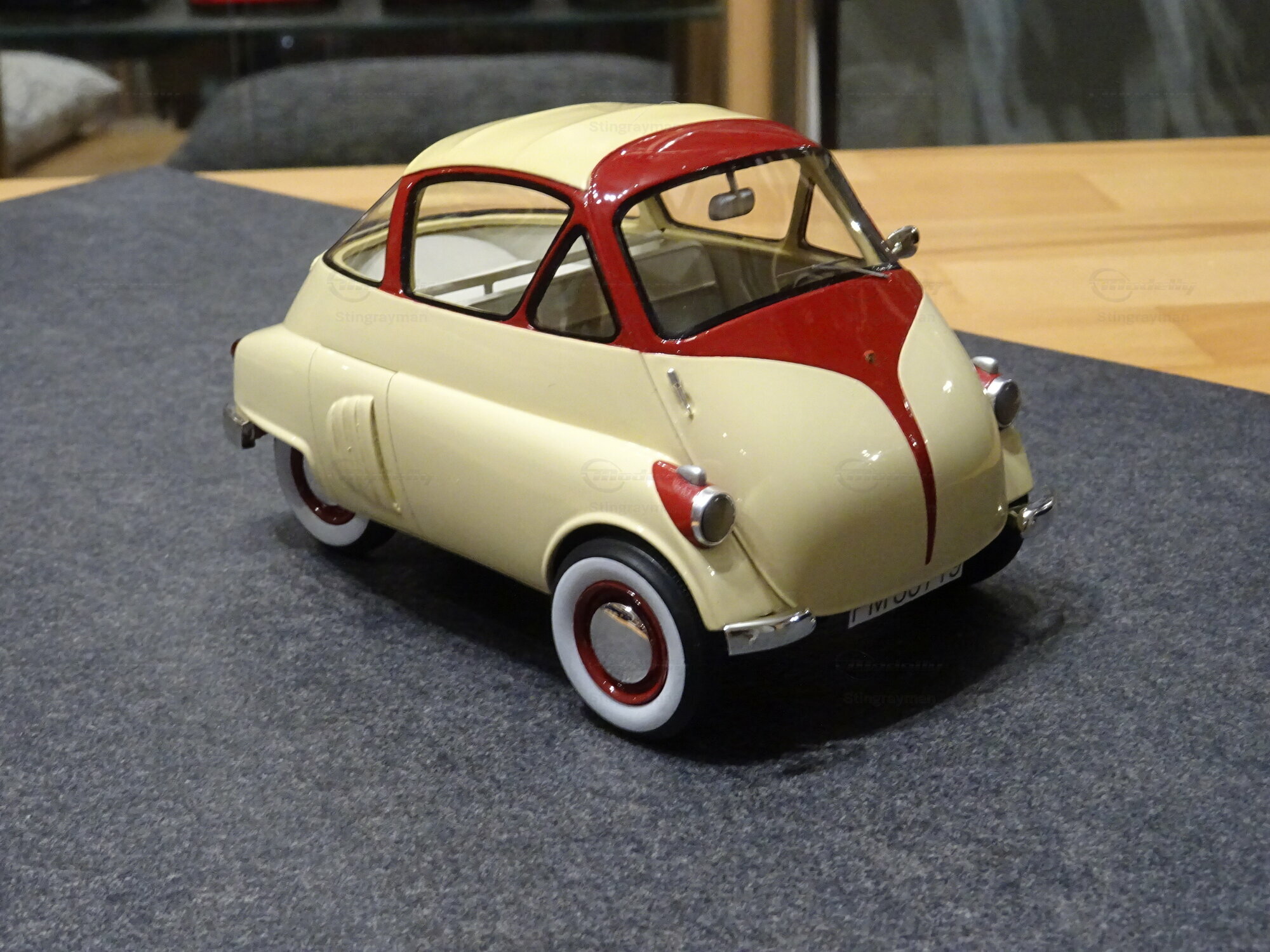
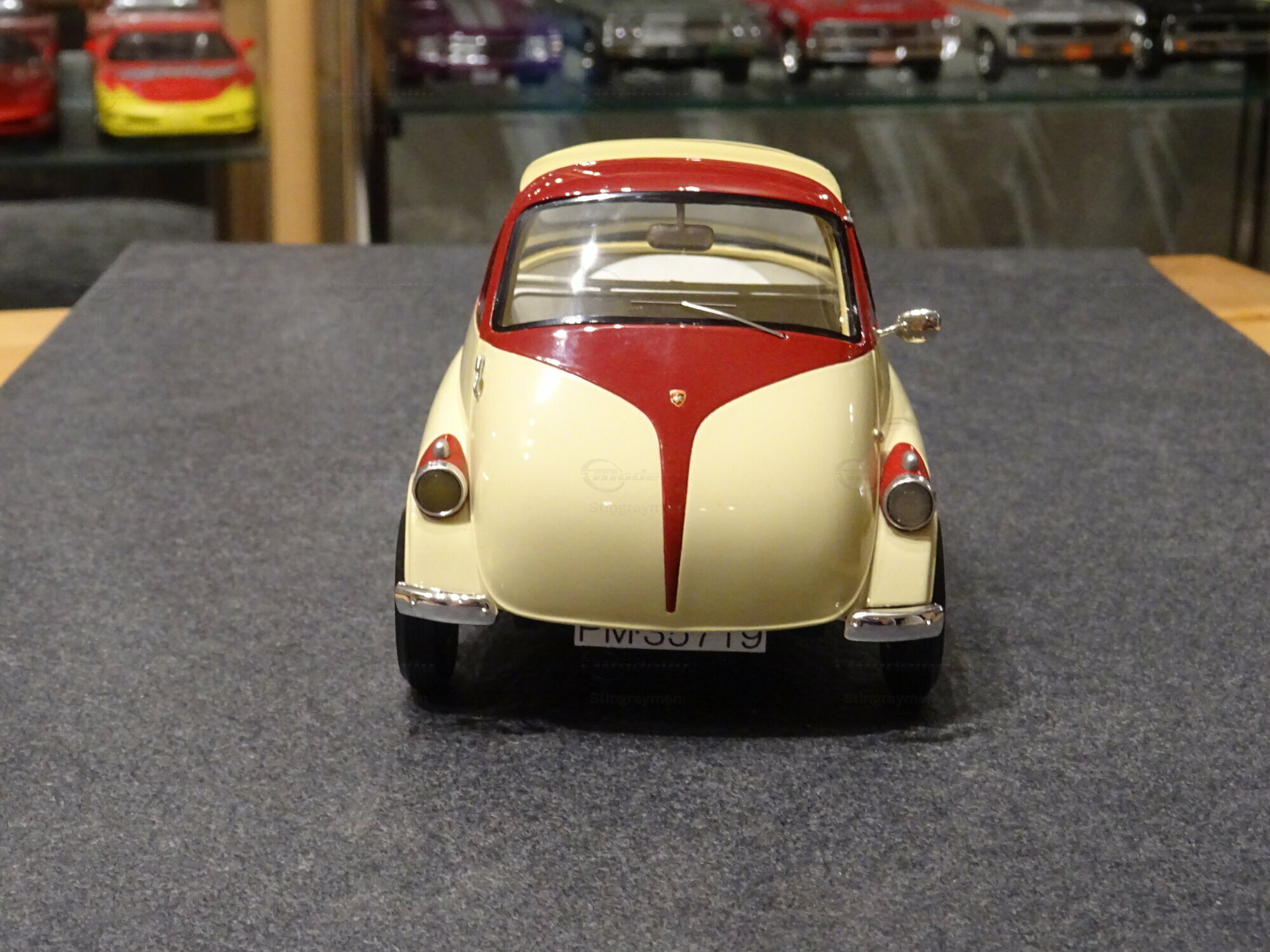
The photos show a scale model car in 1/18, made by Schuco Pro.R18, from the collection of Modelly member “Stingrayman”. The box clearly shows the Isetta as the prototype, and the model’s shape matches the familiar BMW version of the bubble car line. This example comes in a two-tone paint scheme: a light cream or ivory base color, with the roof frame, front section, and window surrounds finished in dark red. The red area at the front tapers down into a narrow point, giving the car a very recognizable graphic layout. You can also see whitewall tires, red wheel centers, small chrome bumpers, side mirrors, and clear windows with a good view into the interior. The mini model is made of diecast, meaning it’s produced from metal casting, which is common for 1/18 collector models because of the weight, stability, and detailed surface finish. Also important for collectors: limited to 1000 pieces worldwide. This scale model car in 1/18, made by Schuco Pro.R18, shows the lines of the original in a clean way that works really well for display cases.
The prototype: BMW Isetta, generation and period of origin in the context of the 1950s
The original this miniature is based on is most likely the BMW Isetta of the 1st generation, built from 1955 onward. But the design didn’t originally come from BMW. The predecessor and technical basis was the Italian Iso Isetta, developed by the company Iso Autoveicoli S.p.A. in Italy. The engineer responsible for the early Isetta was Ermenegildo Preti; in the design process, Pierluigi Raggi is also often mentioned. BMW took over the basic concept under license and adapted it technically to its own needs. The BMW Isetta was a microcar from the postwar era, made for buyers who wanted more weather protection than a scooter but lower costs than a full-size car. Typical features were the extremely short body, narrow track, and the front door as the main entry point. The first BMW Isetta versions used a single-cylinder four-stroke engine from BMW’s motorcycle range, initially with 247 cm³ of displacement and about 12 hp. Later, the 300 version followed with 298 cm³ and around 13 hp. The gearbox was a manual four-speed unit with reverse gear, and power went to the rear wheels. Top speed was around 85 kilometers per hour (52.8 miles per hour), depending on the version. To put the car’s era into context, here are a few events from 1955: West Germany joined NATO that year, Disneyland in California opened in the United States, and Bill Haley made “Rock Around the Clock” a worldwide hit. These examples are just there to help make the timing of the car’s concept easier to picture.
Technology and body design of the BMW Isetta: front door, single-cylinder engine, and compact dimensions
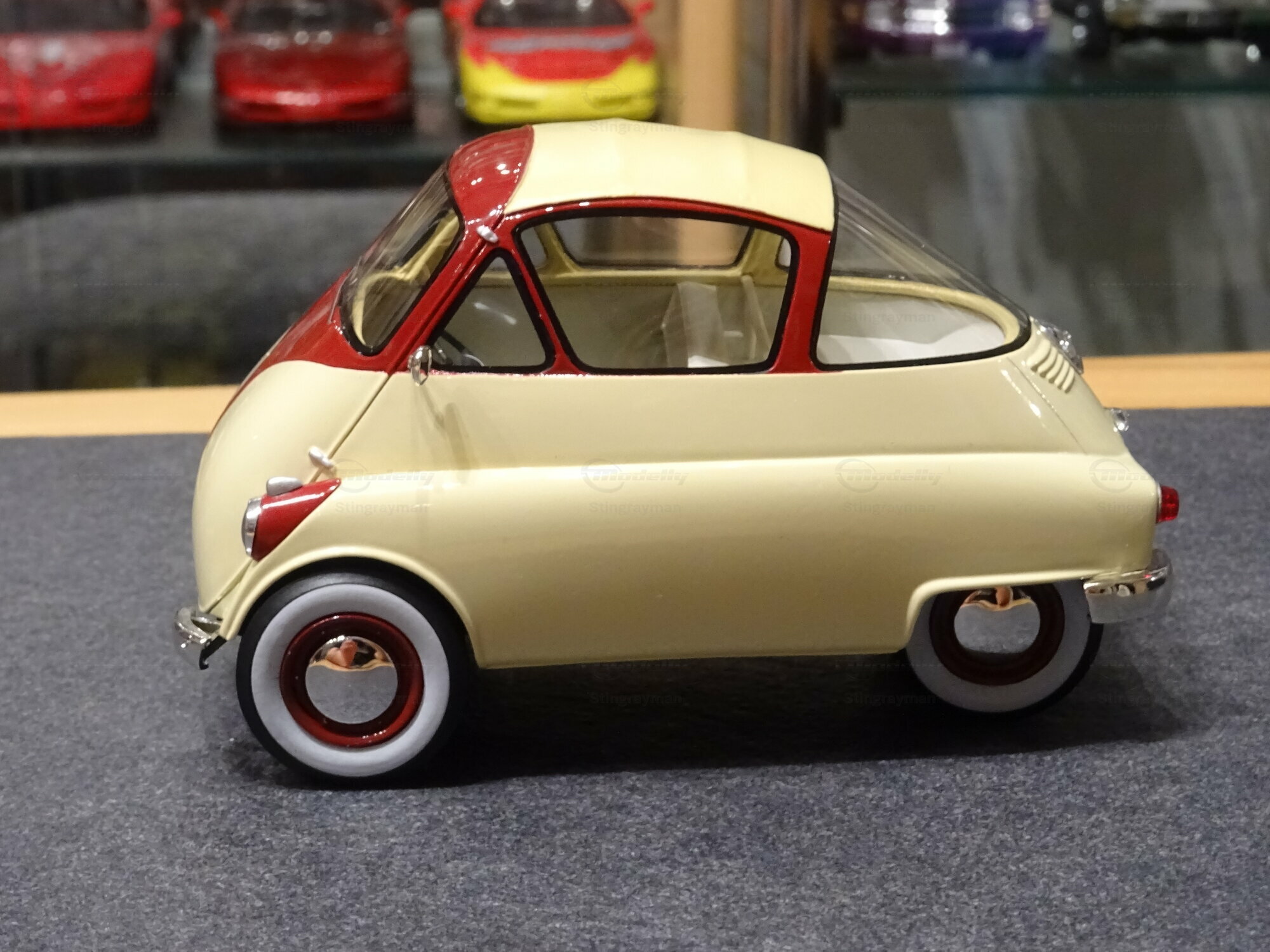
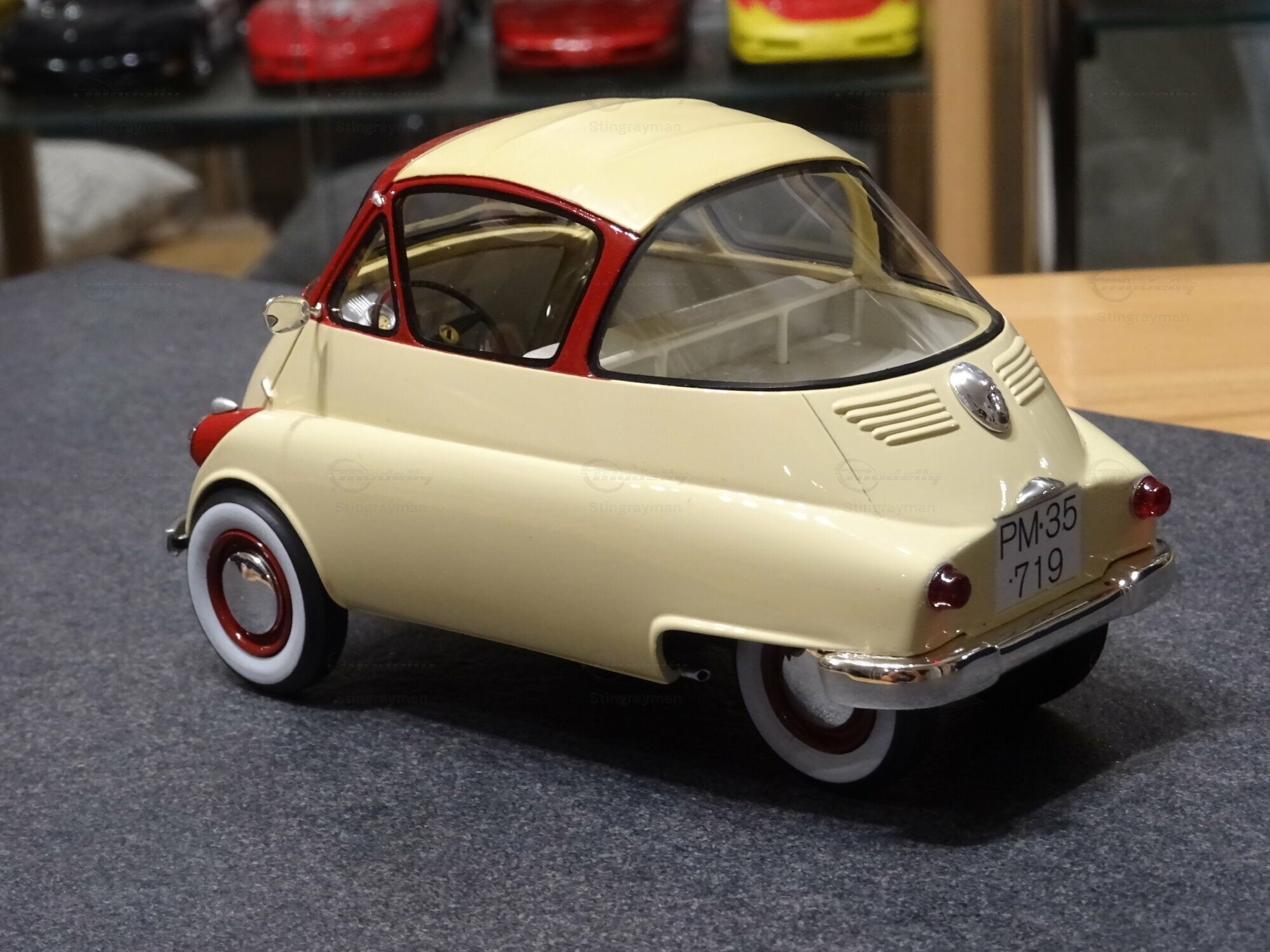
The BMW Isetta is one of the more technically unusual small cars of its time. Its most striking feature was the front-hinged door, which also carried the steering column. When the door opened, the steering wheel moved outward with it, making entry much easier. The engine sat at the rear, or in the rear side area, where you also had ventilation slots for cooling. The body was designed for low weight and minimal exterior dimensions; the wheelbase was short, and the rear track was narrower than the front. That kept the footprint small while still giving room for two people inside. Especially in the early years of the economic boom, the BMW Isetta offered a practical middle ground between a motorcycle and a full passenger car. Compared with the Italian Iso version, BMW changed things like the engine, suspension parts, and many construction details. The miniature shown here captures that typical layout really well: the rounded front, the high-cut window frames, the compact side profile, the small bumpers, and the narrow rear section are all easy to spot in the photos. The tires have a classic whitewall look that fits the period style. Based on the photos alone, you can’t reliably identify a specific wheel manufacturer or a particular wheel model. There’s also no clearly visible tuner brand; this car looks more like a near-stock version of the BMW Isetta.
Paint, details, and how the Schuco collector model looks in the display case
For collectors, the paint job on this example is especially interesting. The two-tone finish combines a light cream color with a darker red, which frames not just the roof band but also the front mask and the window surrounds. That really emphasizes the rounded shapes of the original car. Add in the small chrome details on the bumpers, mirrors, and lamp housings, and the model gets a very authentic look. The rear lights sit far out on the rounded body, while the side-mounted lamp housings at the front are easy to see in the photos. Because of the large window surfaces, you can look into the interior; the light-colored cabin and simple seating arrangement match the character of the BMW Isetta. In overall appearance, the model feels compact and balanced, because the proportions of the tiny body, high glass area, and slim wheels are reproduced nicely. In the display case, the mix of unusual car design and restrained color choice really stands out. For international model car collectors, the serial limit is also a big plus: limited to 1000 pieces worldwide. In the photos with the packaging, the link to the Schuco line is also easy to follow, which is useful for documenting a collection like Stingrayman’s. There’s no clear evidence here that this is tied to a specific movie or TV vehicle, so the focus is on the historic microcar itself and how it was turned into a collector’s model.
Chriskitt
Auto-translated
 Looks like a BMW Isetta. A nice car, though. Have a great Sunday! 👍👍👍😎
Chriskitt
Auto-translated
 Looks like a BMW Isetta. A nice car, though. Have a great Sunday! 👍👍👍😎