
Ford F100 Pick Up "Midnight Pumpkin"(1:10, Tamiya)
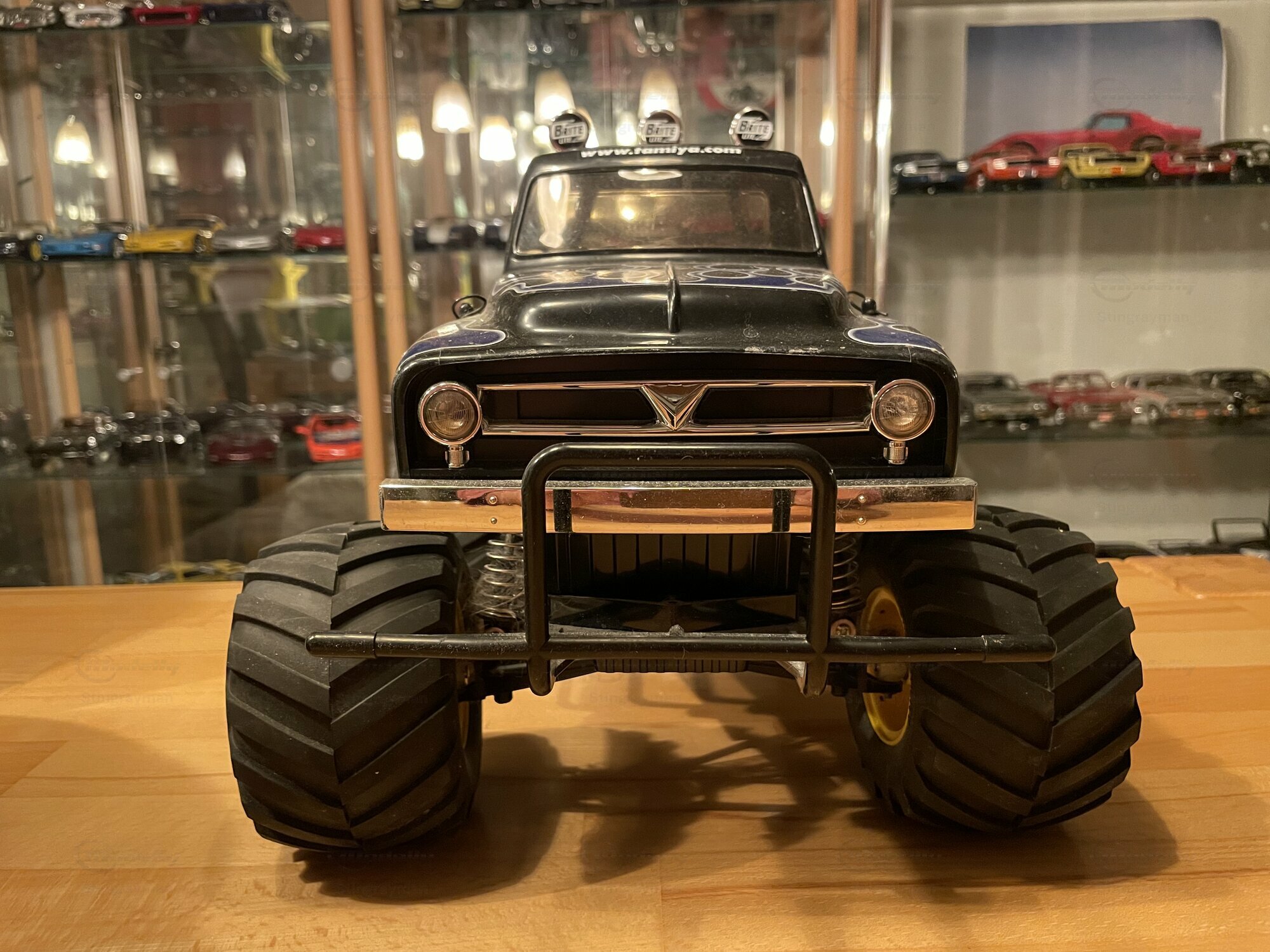
- Ford F100 Pick Up "Midnight Pumpkin" (from 1955)
- Tamiya
- 1:10
- Showcase model / No engine
- plastic
- Schwarz mit blauen Flammen
- In near mint condition
- Original packaging exists
- Not for sale
Prototype: The Ford hauler from the Fifties
This RC model is clearly based on the Ford F‑100. That lineup belongs to the second generation and was produced from 1953–1956. The Ford F‑100 replaced the earlier F‑1 and was a move toward more modern, comfortable pickups. Its ladder frame stayed tough, but the body got a wider cab with better visibility, a redesigned dashboard and improved heating. The Ford F‑100 was aimed at businesses, farms and private owners who needed payload capability with everyday usability. To put the timing in context: 1953 saw Stalin’s death, Watson and Crick described DNA’s structure, and Queen Elizabeth II was crowned — events that help place the era when the Ford F‑100 debuted. The predecessor was the first F‑Series generation (1948–1952), whose more utilitarian look was softened by the Ford F‑100’s wider grille and round headlights.
Original tech and model history
Under the hood of the Ford F‑100 there were various inline‑six and V8 engines depending on year. In 1953 a 3.52 liters (215 cubic inches) inline six was offered, alongside a 3.92 liters (239 cubic inches) Flathead V8. From 1954 the “Y‑Block” V8s appeared (starting at 3.92 liters (239 cubic inches), later up to 4.46 liters (272 cubic inches)), while the six grew to about 3.66 liters (223 cubic inches). Power ranged — depending on carburetion and year — from roughly 100 to over 170 hp. Gearbox choices included a 3‑speed manual with an unsynchronized first gear and, later on, a 3‑speed automatic. The Ford F‑100 came with rear‑wheel drive; four‑wheel‑drive conversions were available from specialist shops. In 1956 the Ford F‑100 got a noticeable facelift with more upright A‑pillars, a one‑piece panoramic windshield and revised front styling. Typical wheelbases were about 279–300 centimeters (110–118 inches), and the leaf‑spring suspension gave a stable payload capacity, while comfort upgrades like better seat padding and sound insulation made everyday use easier. The Ford F‑100 became popular in custom culture — gasser builds and later “monster” looks — which is why RC makers love to riff on it.
The Tamiya 1/10 model
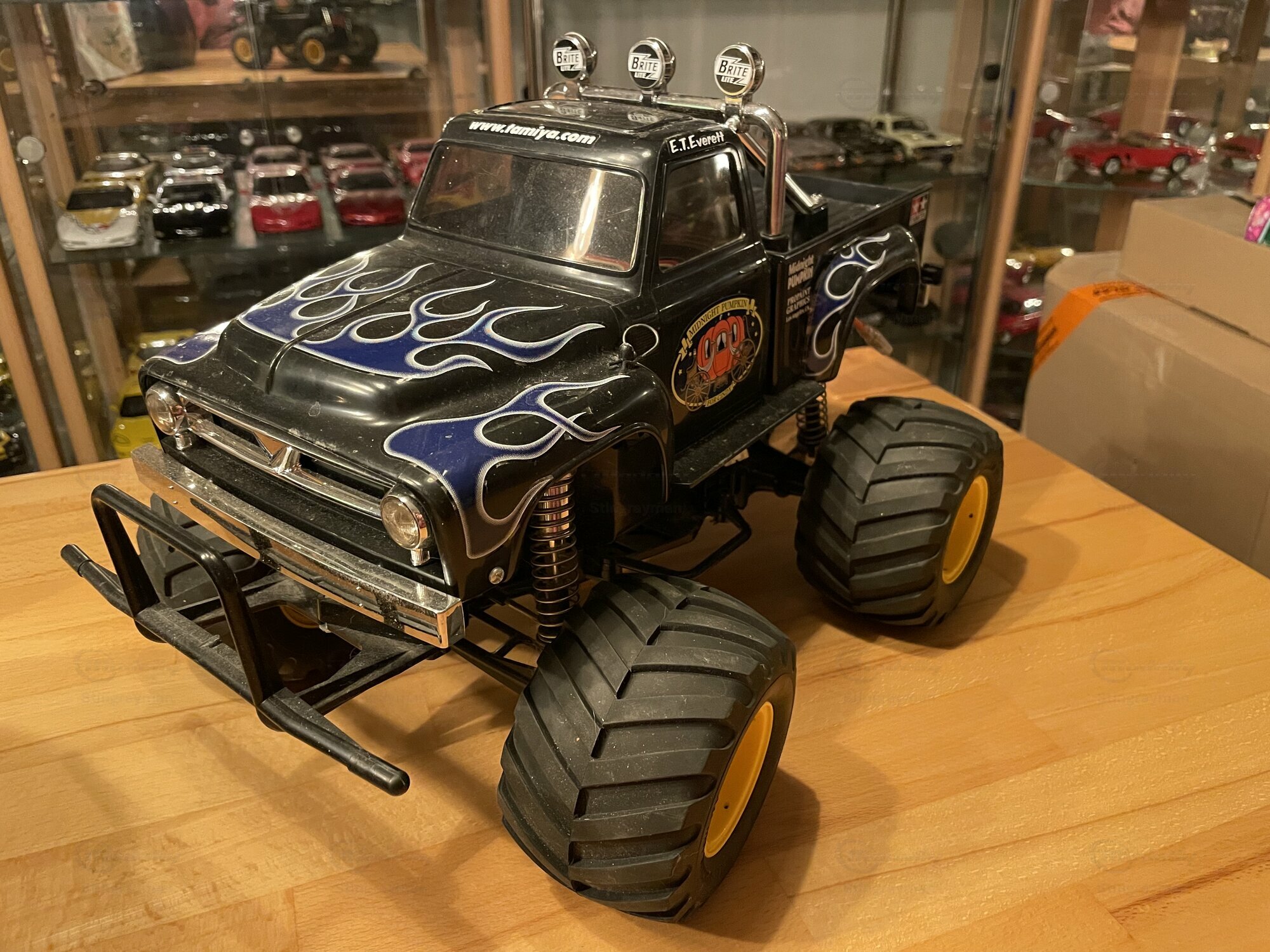
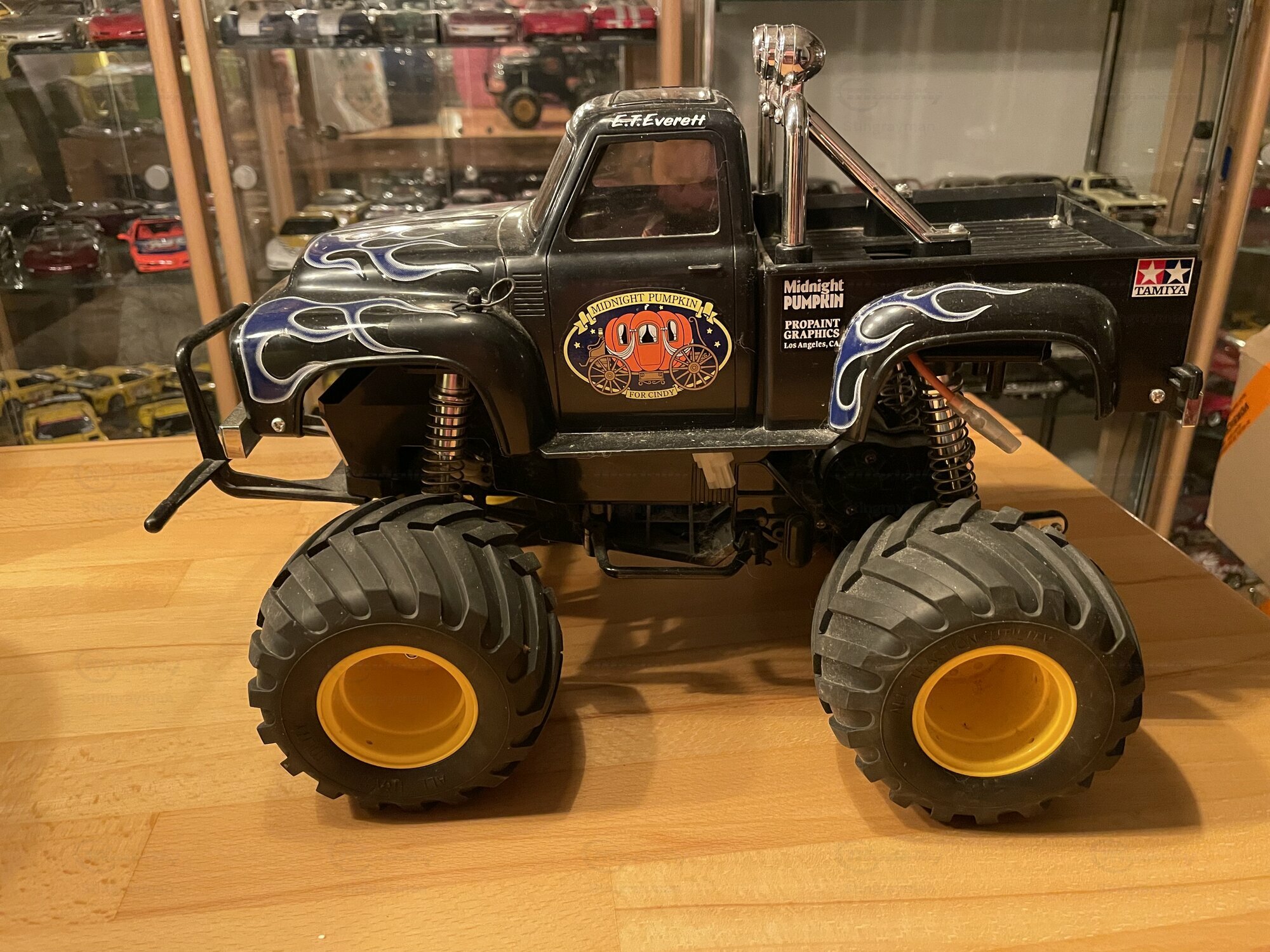
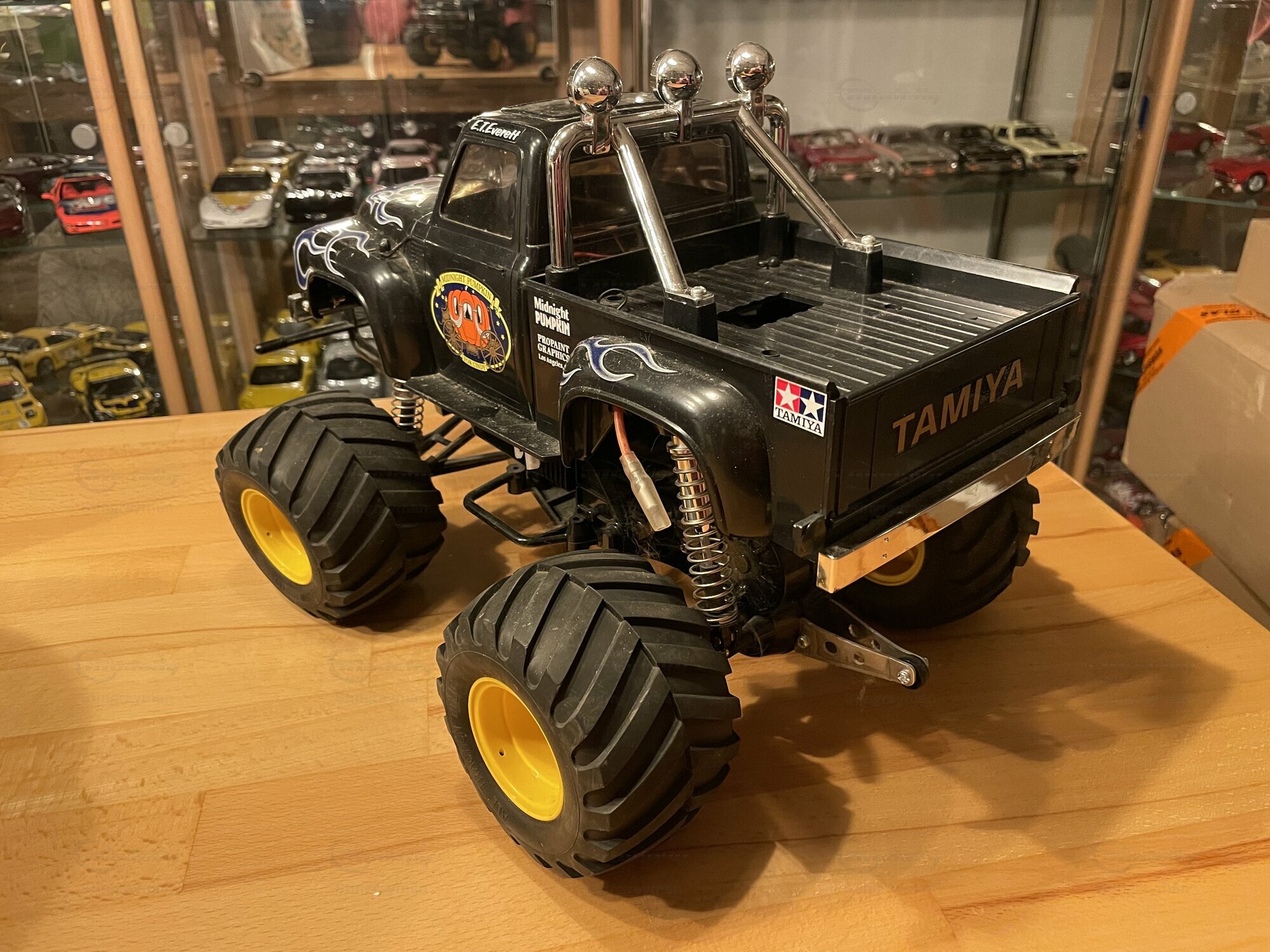
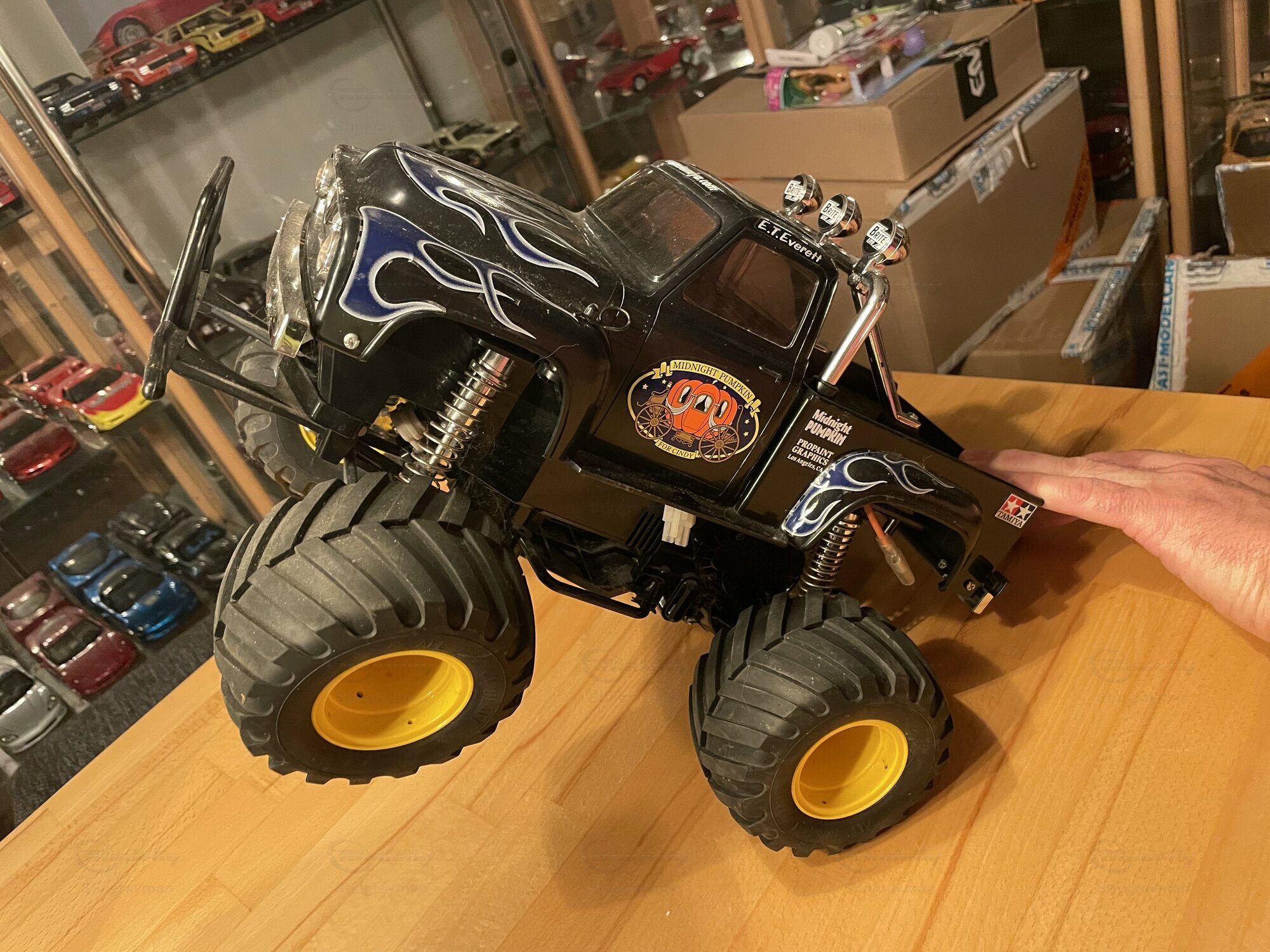
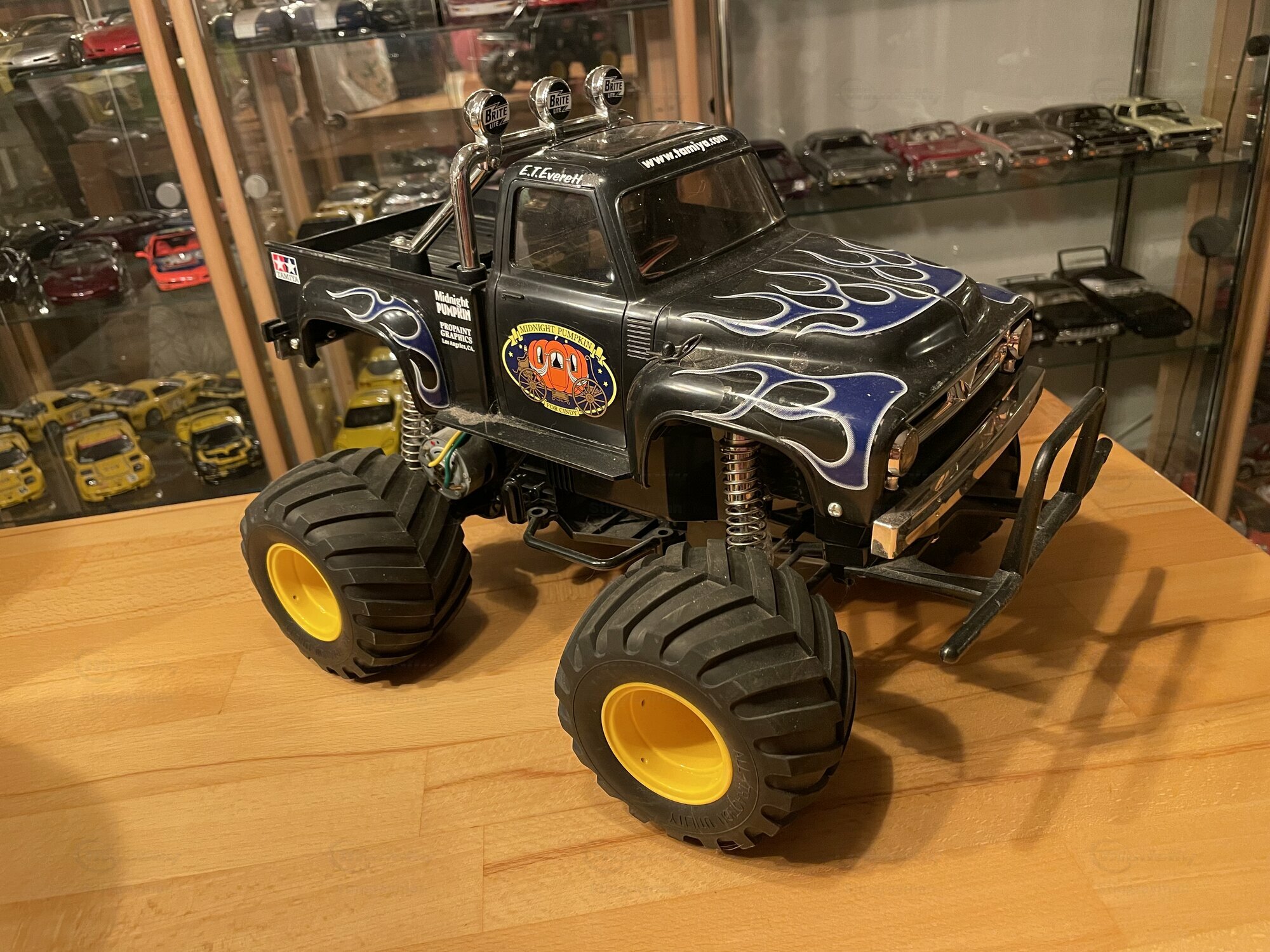
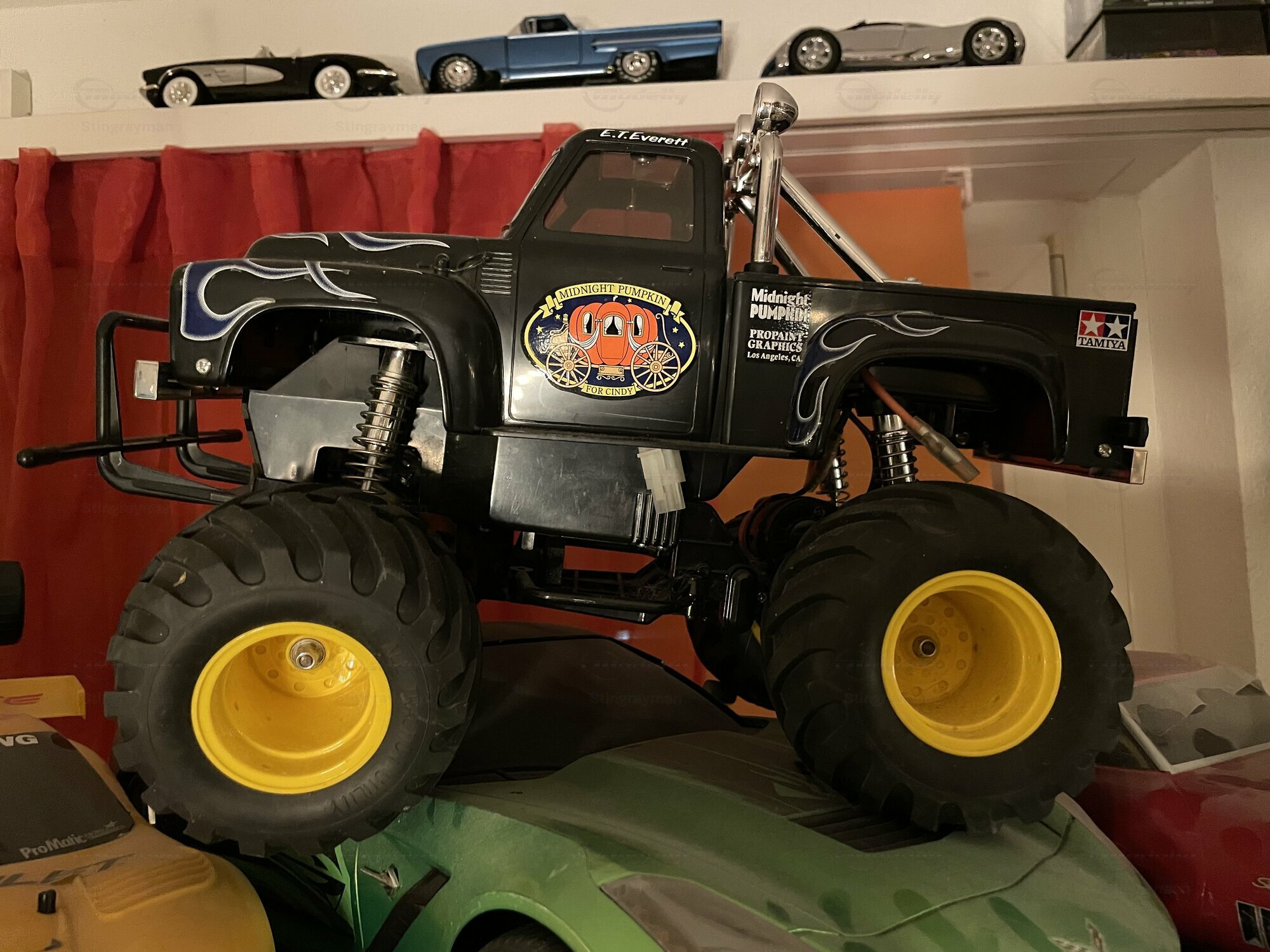
The kit shown here comes from the collection of Modelly member “Stingrayman” and is a model car at 1/10 scale from Tamiya. It’s visually very close to the Ford F‑100 from 1953–1956. The body is made of plastic; the shell is sturdy painted ABS, and the bumpers and roll‑bar bits are chrome‑plated plastic. So yes — the miniature is plastic. The photos show the chunky balloon tires with a wide block tread and yellow rims, giving the truck that classic monster‑truck vibe. There’s a tubular grille guard up front and a two‑stage chrome bumper behind it. The front styling captures the Ford F‑100 look with twin round headlights and a central trim bar. On the roof sits a chrome roll bar with three auxiliary lights whose covers read “Brite.” The interior windows are tinted; as with most RC shells the interior is kept minimal to make room for the electronics. The black paint with blue flames and the “Midnight Pumpkin” logo on the doors are cleanly applied and match Tamiya’s known livery. The look is bold but practical — the clear decals help you spot it quickly on a track.
Chassis, function and collector value
This is, again, a 1/10 scale model from Tamiya, normally built as a working RC vehicle. The chassis — known for a solid rear axle with a leaf‑spring‑style setup and strut‑like dampers — is made for wheelies and rough surfaces. It’s typically driven by a 540‑size electric motor through a sealed gearbox to the rear wheels, with steering handled by a standard servo. You can tell from the visible shocks, gearbox and beefy front bumper on the shown example. The body follows the Ford F‑100’s proportions without an official license, translating the hood bulge, fender lines and round lamps into miniature form. The Stingrayman build is black with blue‑white flames over the hood and fenders; the doors show the “Midnight Pumpkin” logo with a pumpkin‑truck graphic plus small sponsor decals. That gives it a distinct look that sits nicely in a display case. The photos show good fitment of the body over the chassis, even gap lines around the wheel arches and neatly finished chrome parts. For collectors, this model lets you display the 1950s Ford F‑100 vibe in a durable RC package. Fun fact to place the era: 1953 also saw Elvis’s first demo recordings and the film “From Here to Eternity” later win the Oscar — little cultural markers that help you picture when the Ford F‑100’s design came about.
Chriskitt
Auto-translated
 👍👍👍 very nice car!
Chriskitt
Auto-translated
 👍👍👍 very nice car!