
BMW 2800 CS Schnitzer(diecast 1:12, Customized)
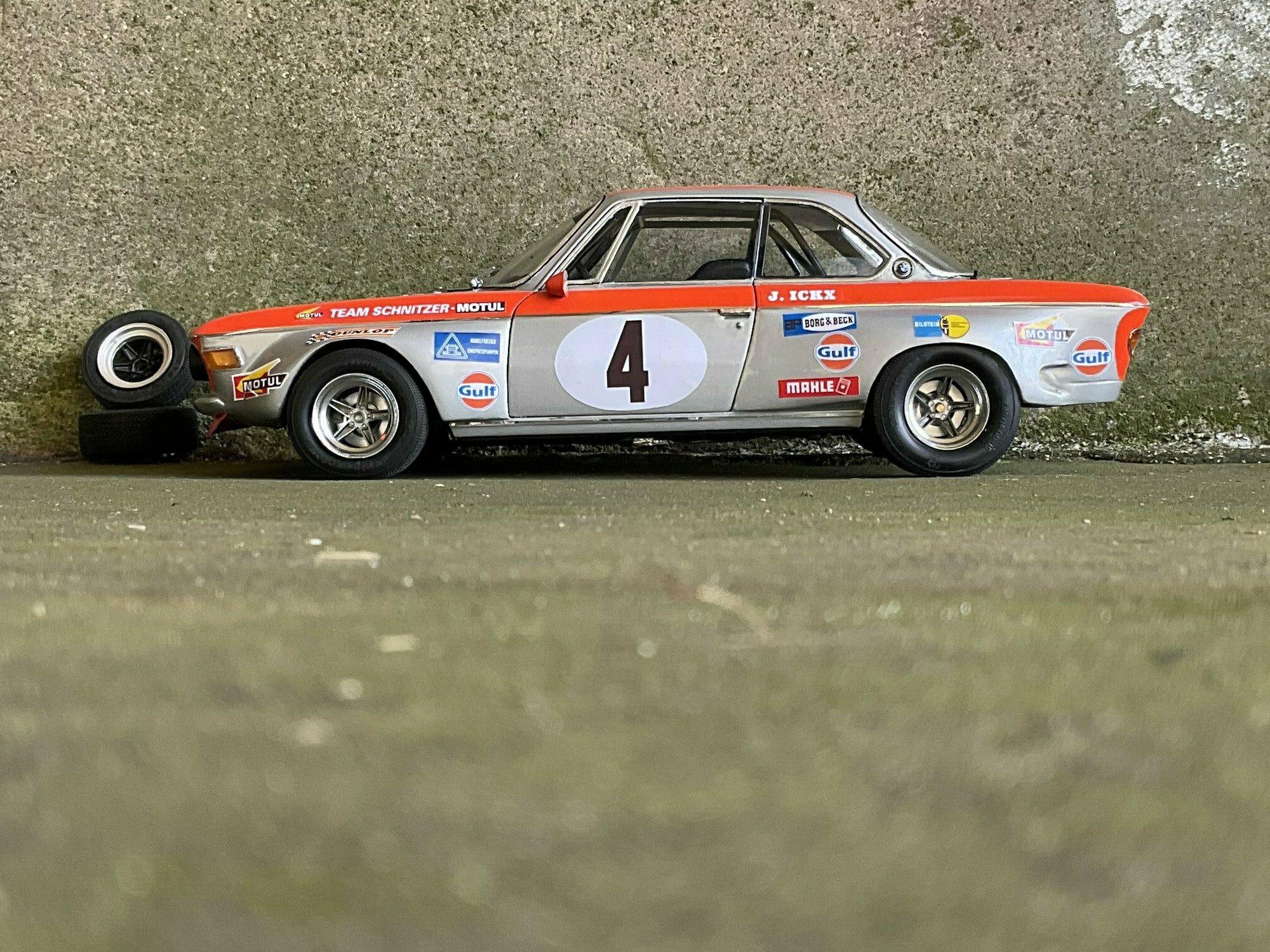
- BMW 2800 CS Schnitzer (from 1972)
KK ScaleUmgebautes Modell- 1:12
- Showcase model / No engine
- diecast
- silver
- In near mint condition
- Original packaging exists
- Not for sale
History and tech of the BMW‑E9 coupe as a base
This model shown is based on the BMW 2800 CS, which belongs to the E9 family. That generation was built from 1968–1975 and is the evolution of the earlier BMW 2000 C/CS. The production BMW 2800 CS used the M30 straight‑six with 2,788 cm³ (170.2 cu in), a design that traces back to work by BMW engineer Alexander von Falkenhausen. From the factory it produced about 170 PS (125 kW) and offered roughly 240 Nm (177 lb‑ft) of torque. McPherson struts up front, semi‑trailing arms at the rear, disc brakes all around and a balanced weight distribution made the BMW 2800 CS a good platform for touring‑car racing. The coupe body was styled under Wilhelm Hofmeister and the shells were built by coachbuilder Karmann. With a wheelbase of about 2,624 mm (103.3 inches), an overall length of roughly 4.66 m (15.3 ft) and a fairly stiff, lightweight structure, the BMW 2800 CS was the starting point for many Group‑2 race cars before the 3.0 CS/CSL took over.
Schnitzer build and racing details
Team Schnitzer – started by Josef Schnitzer and Herbert Schnitzer – early on used the BMW 2800 CS as a race car. Under Group‑2 rules they heavily revised the chassis and drivetrain. The race version got widened fenders to fit beefier slicks, much stiffer springs and dampers, bigger anti‑roll bars, and upgraded brakes. The M30 inline six was bumped with different camshafts, higher compression, improved intake (often twin Weber carbs or injection) and a tuned exhaust to make in the ballpark of 250–280 PS. A ZF 5‑speed gearbox, a limited‑slip diff and reinforced brakes gave the package durability. Typical race touches were aerodynamic add‑ons like a front spoiler and weight reduction by removing bumpers and much of the interior. The result was a competitive BMW 2800 CS that ran in the European Touring Car Championship as a bridge between the production coupe and the later 3.0 CSL.
KK Scale 1/12 model — the customized piece from TrolleyJack’s collection
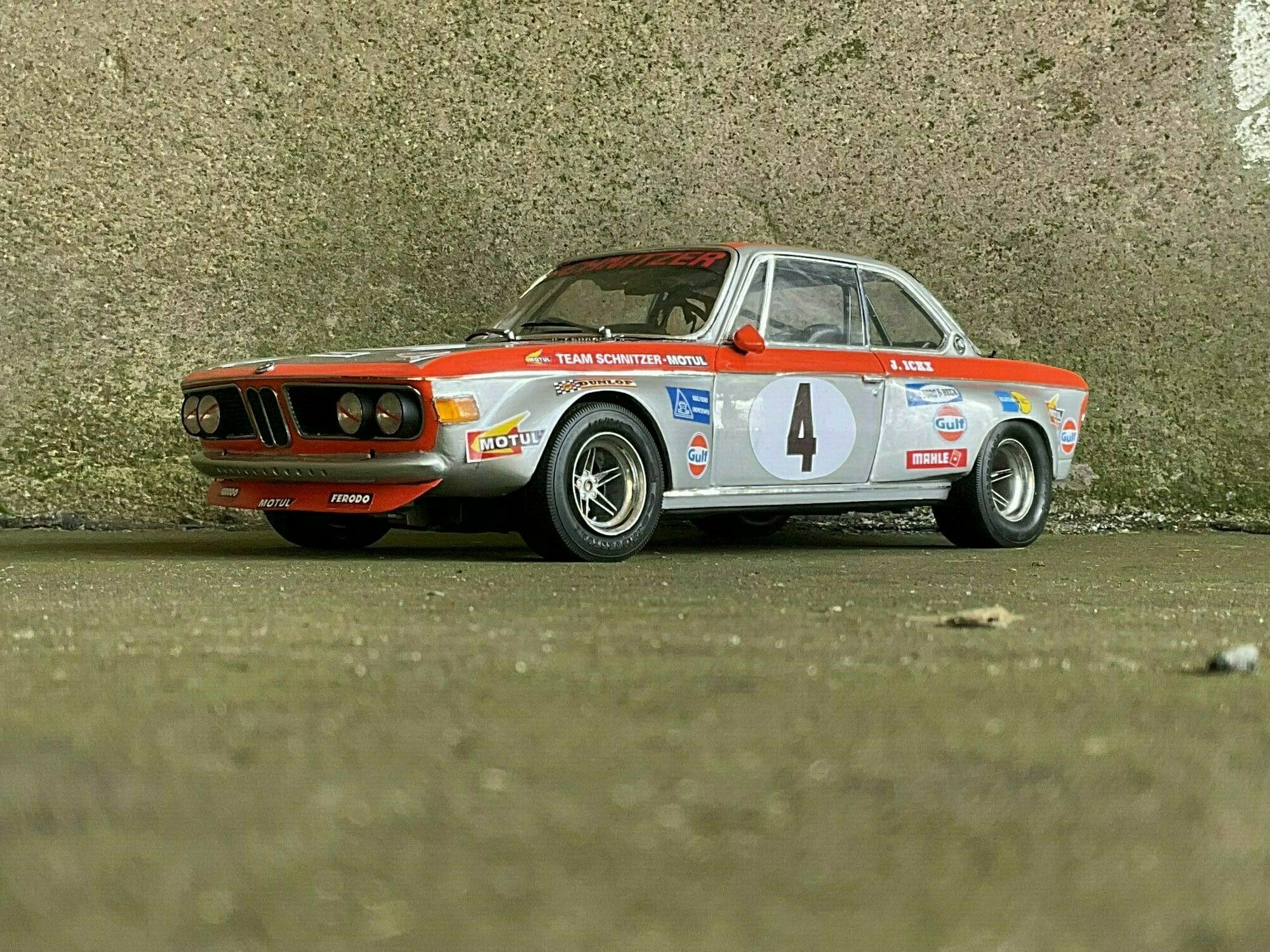
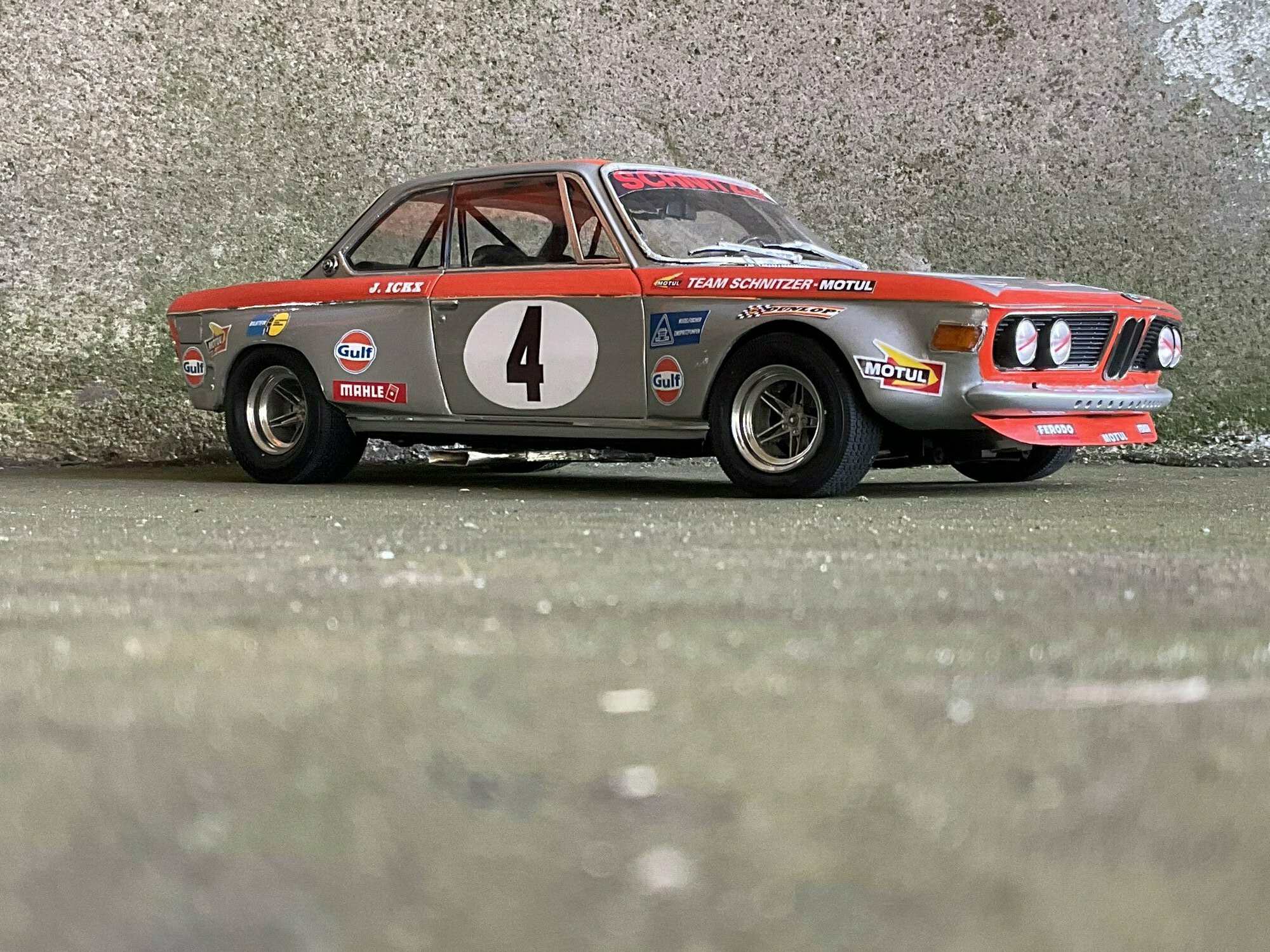
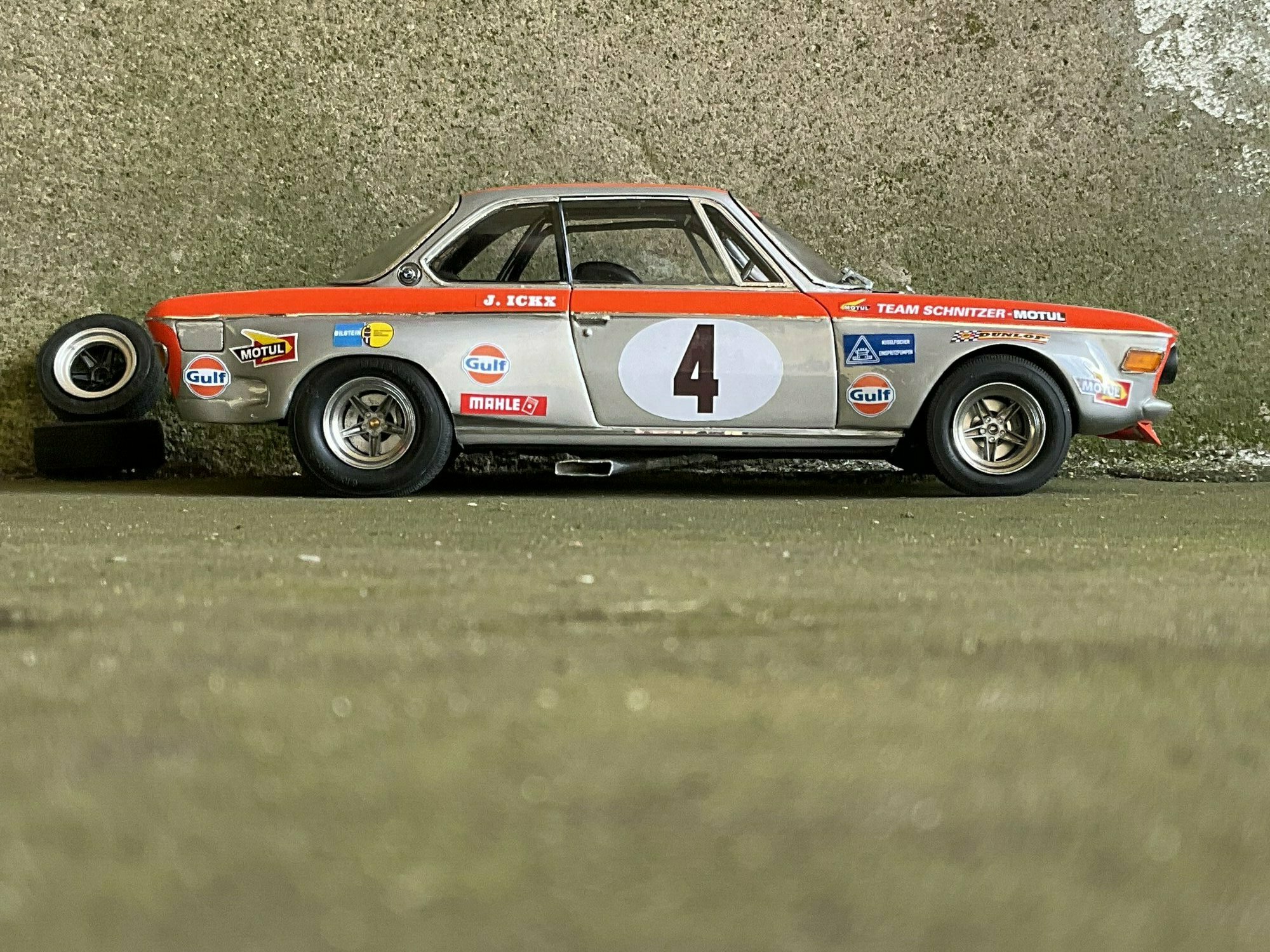
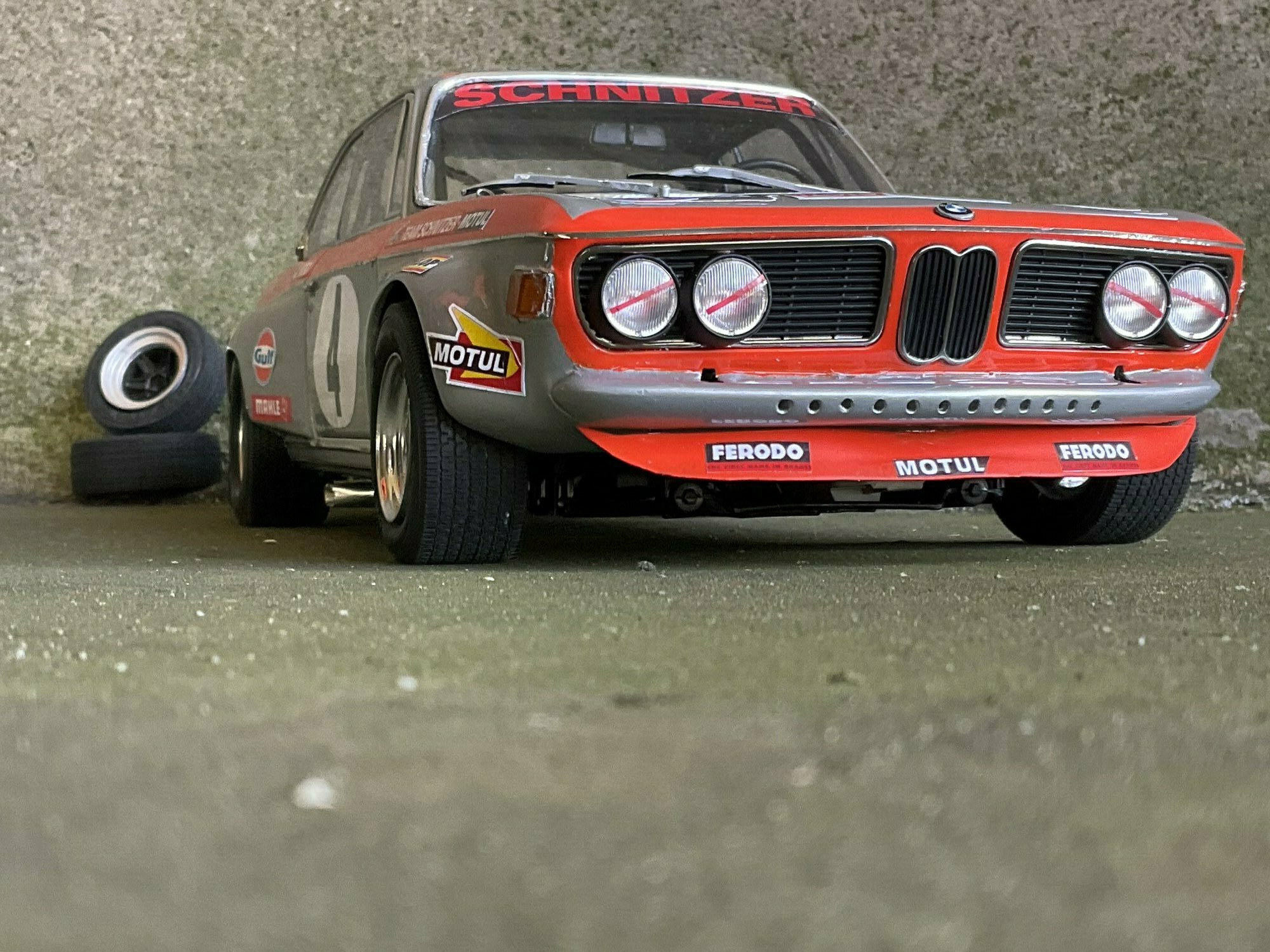
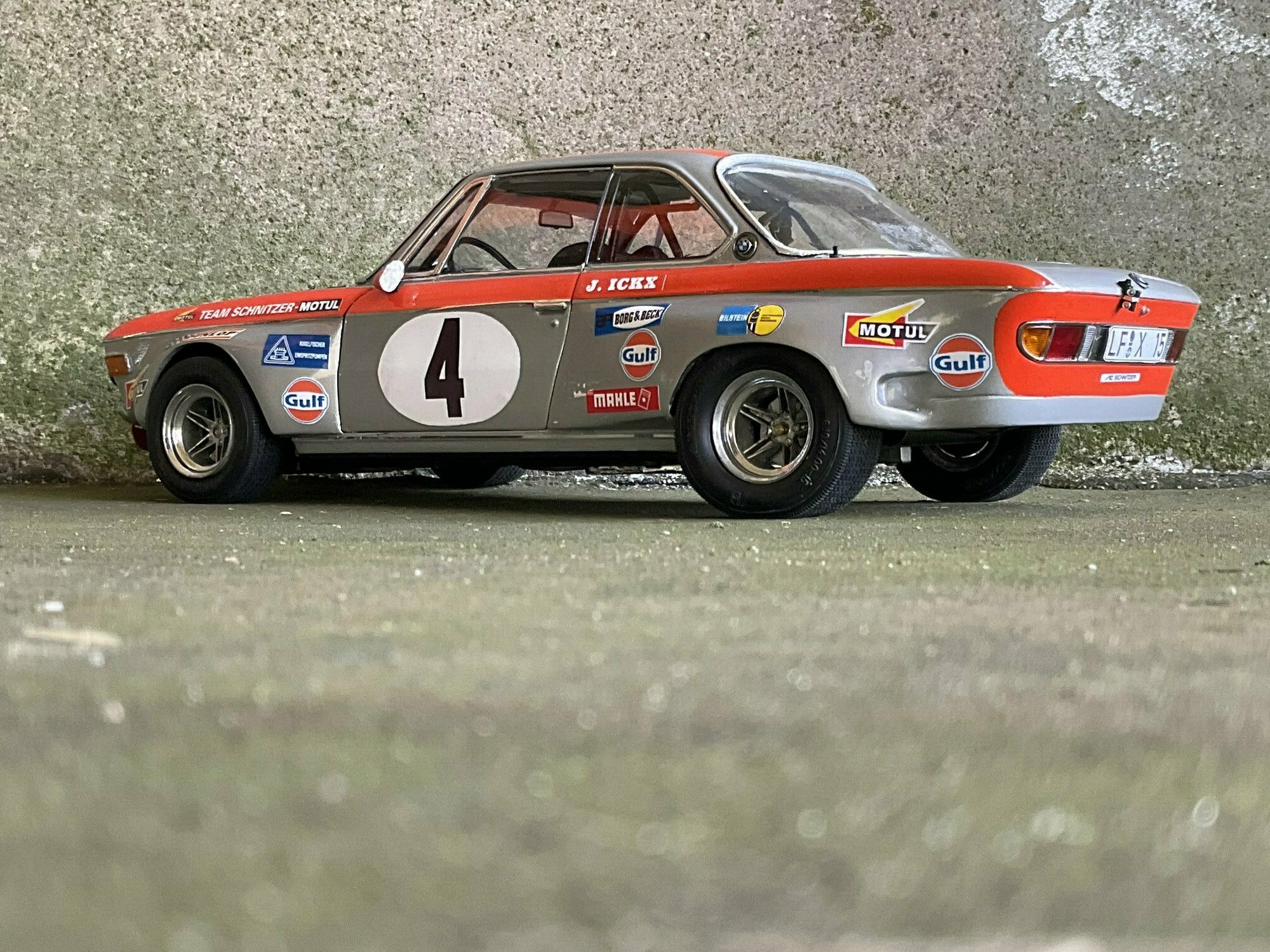
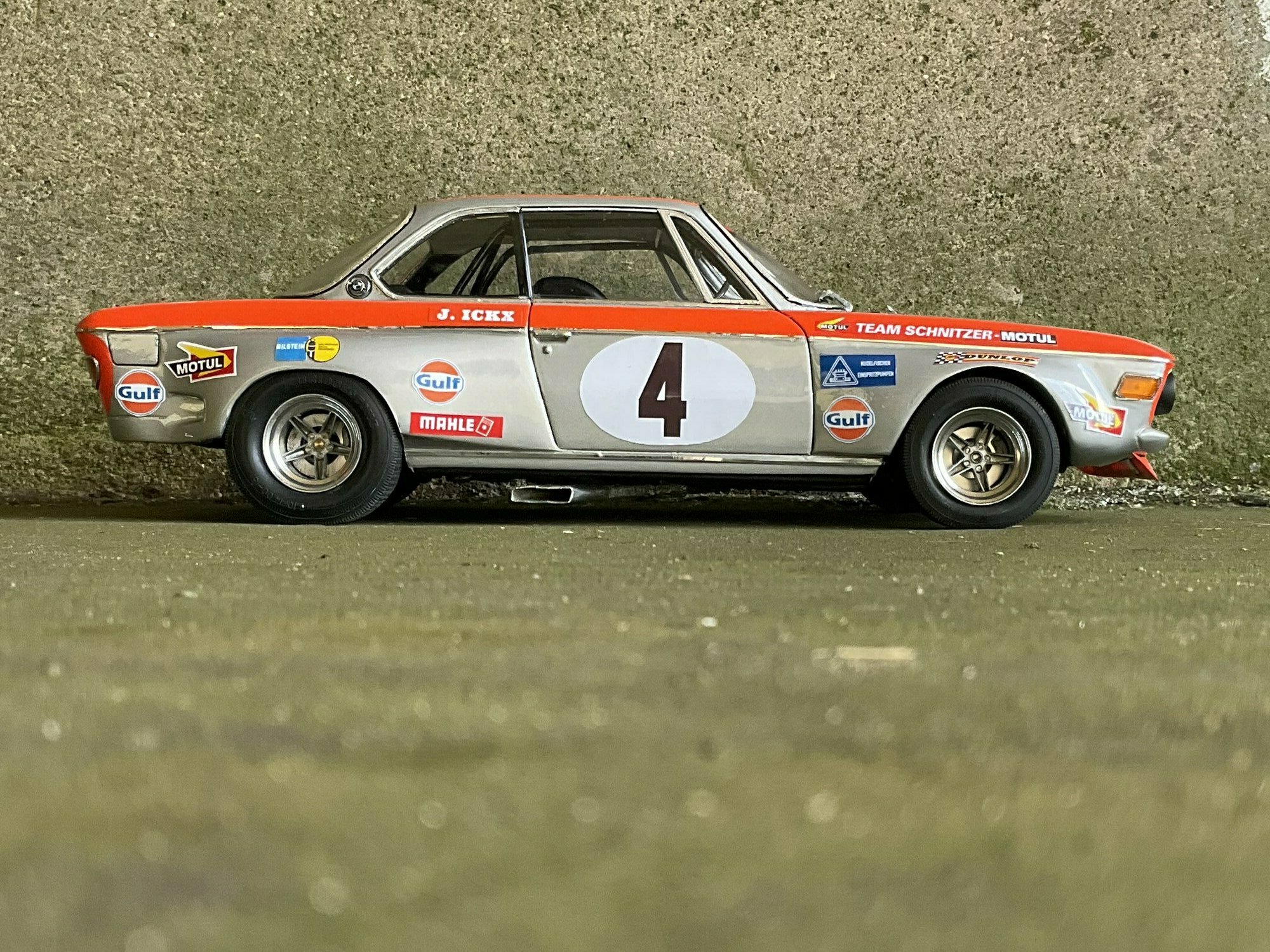
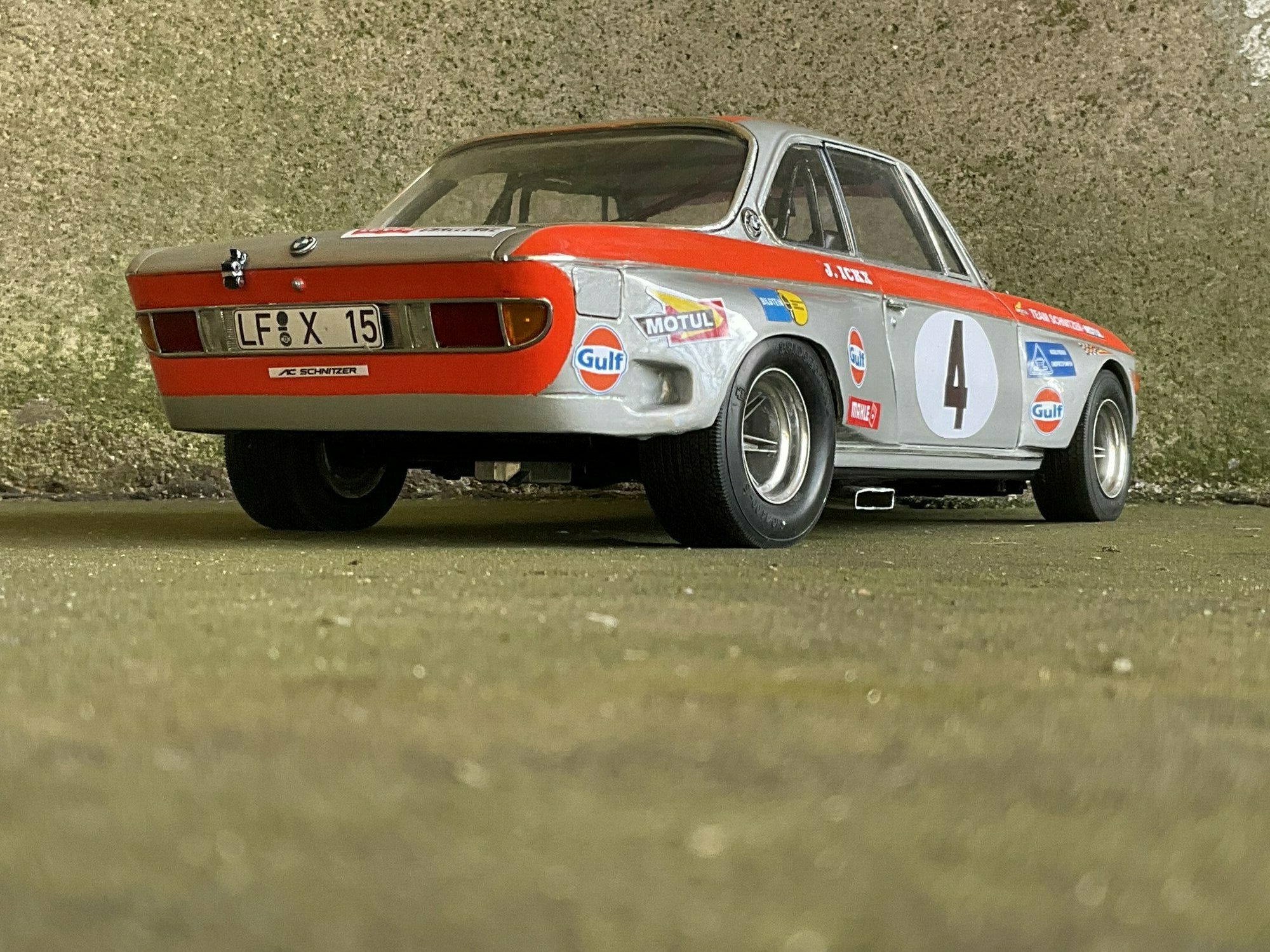
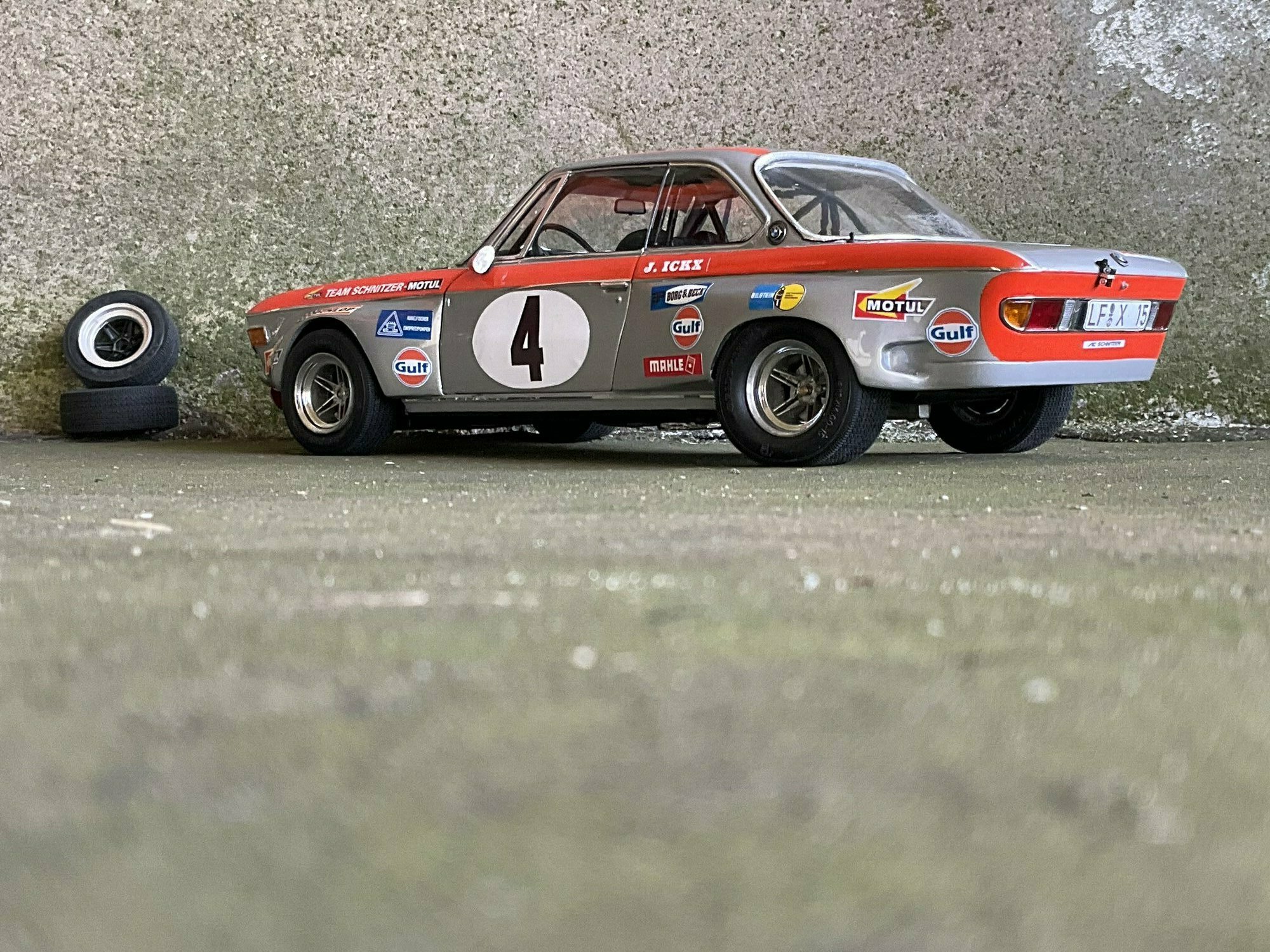
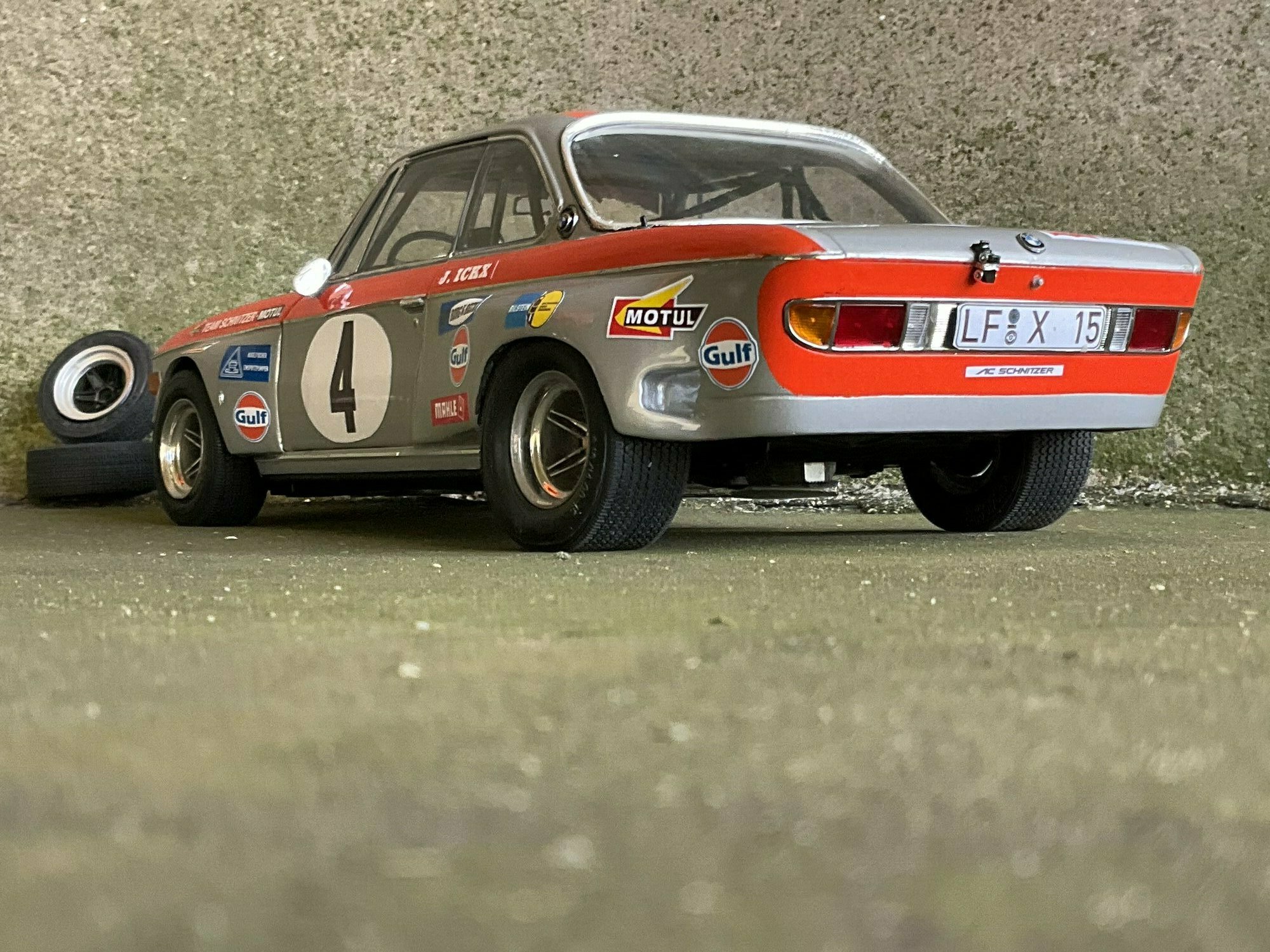
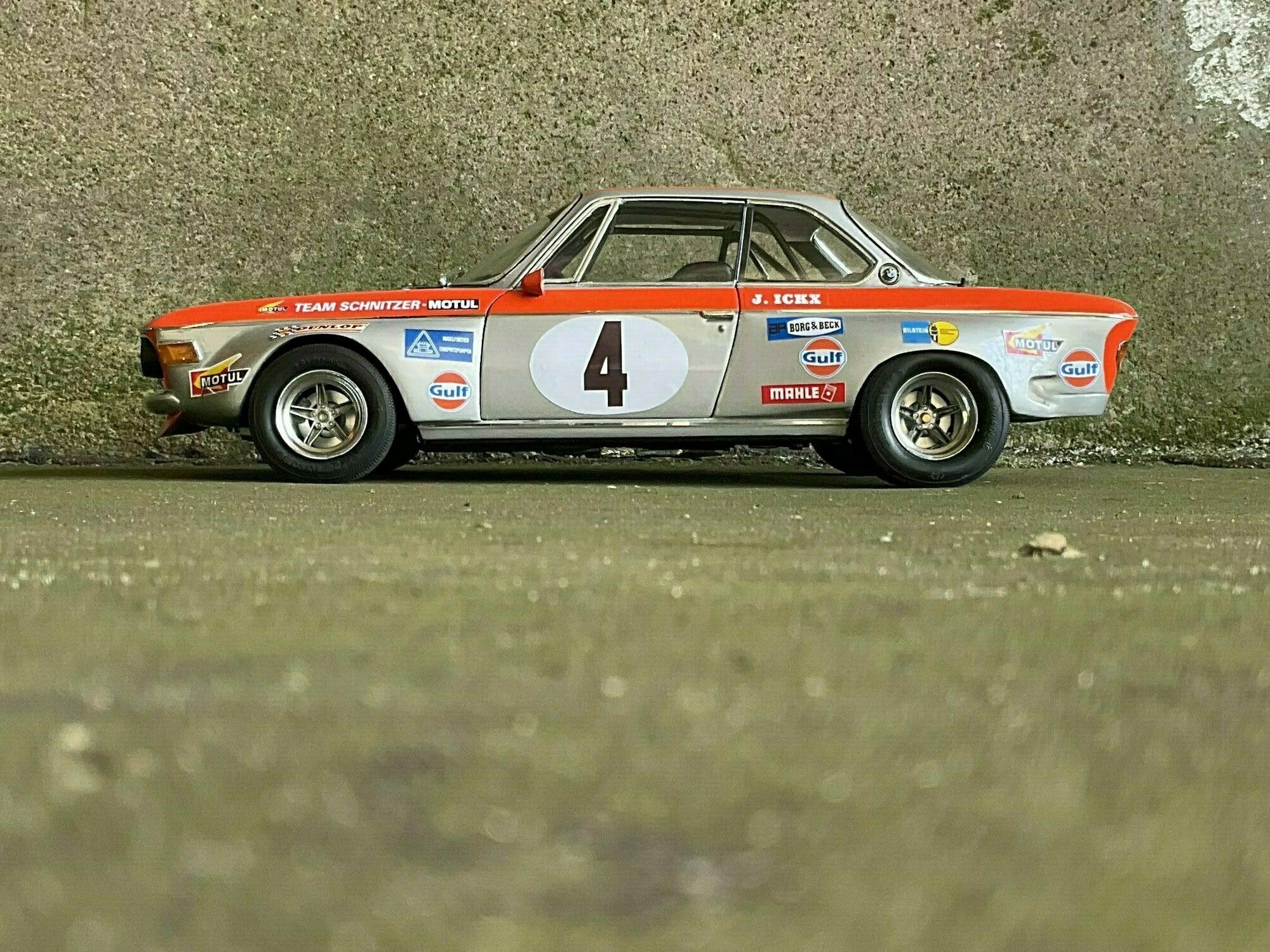
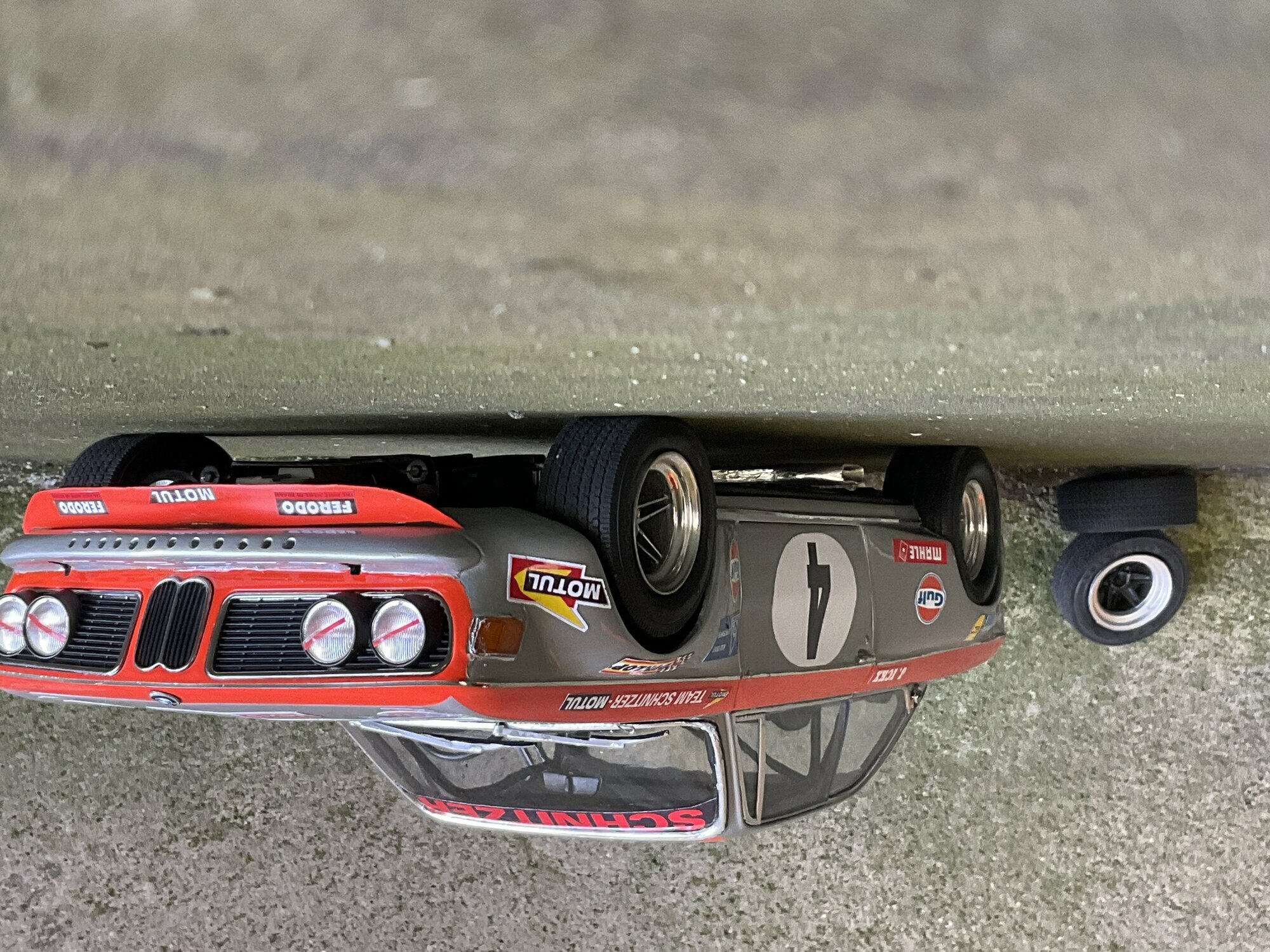
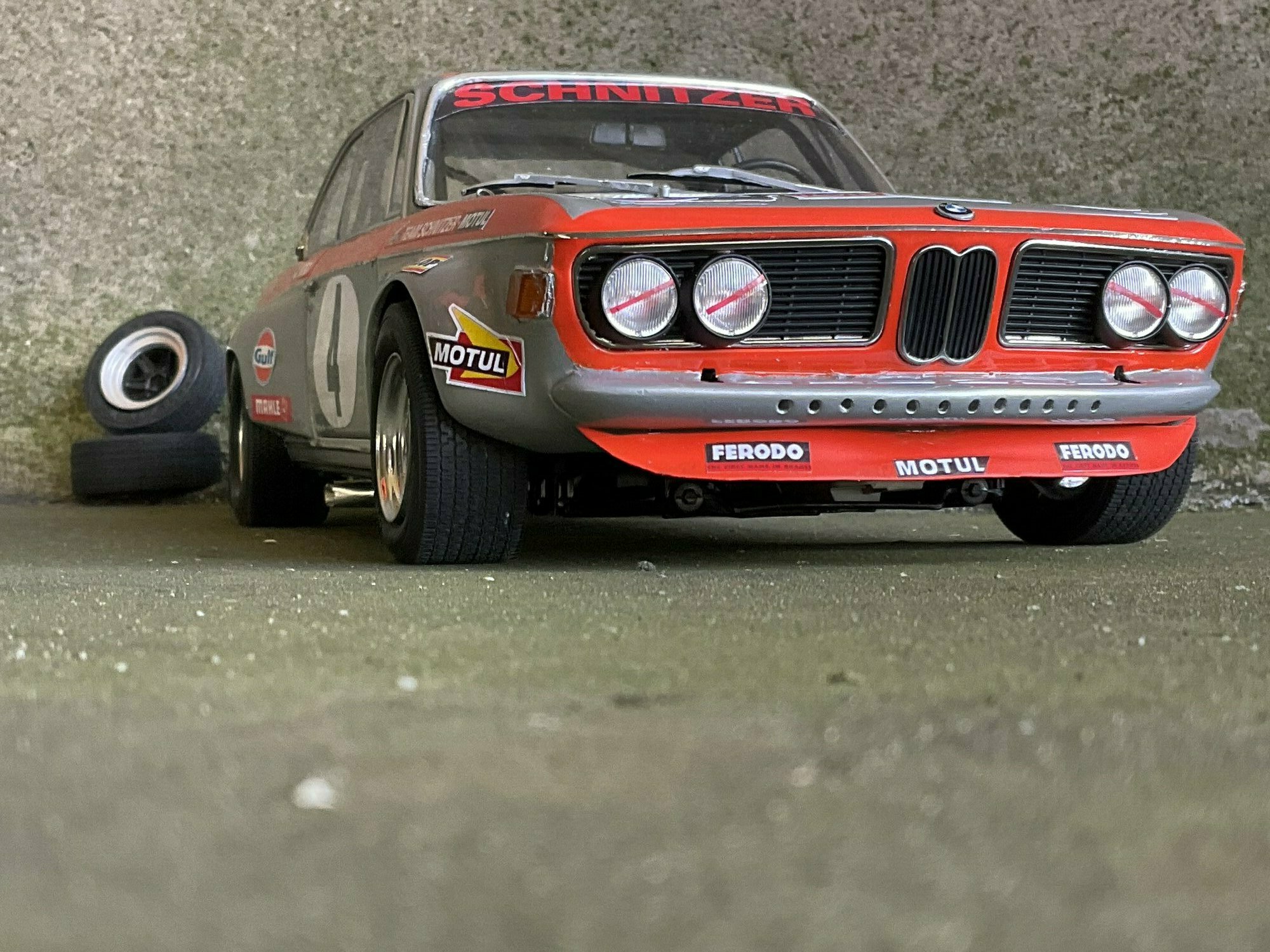
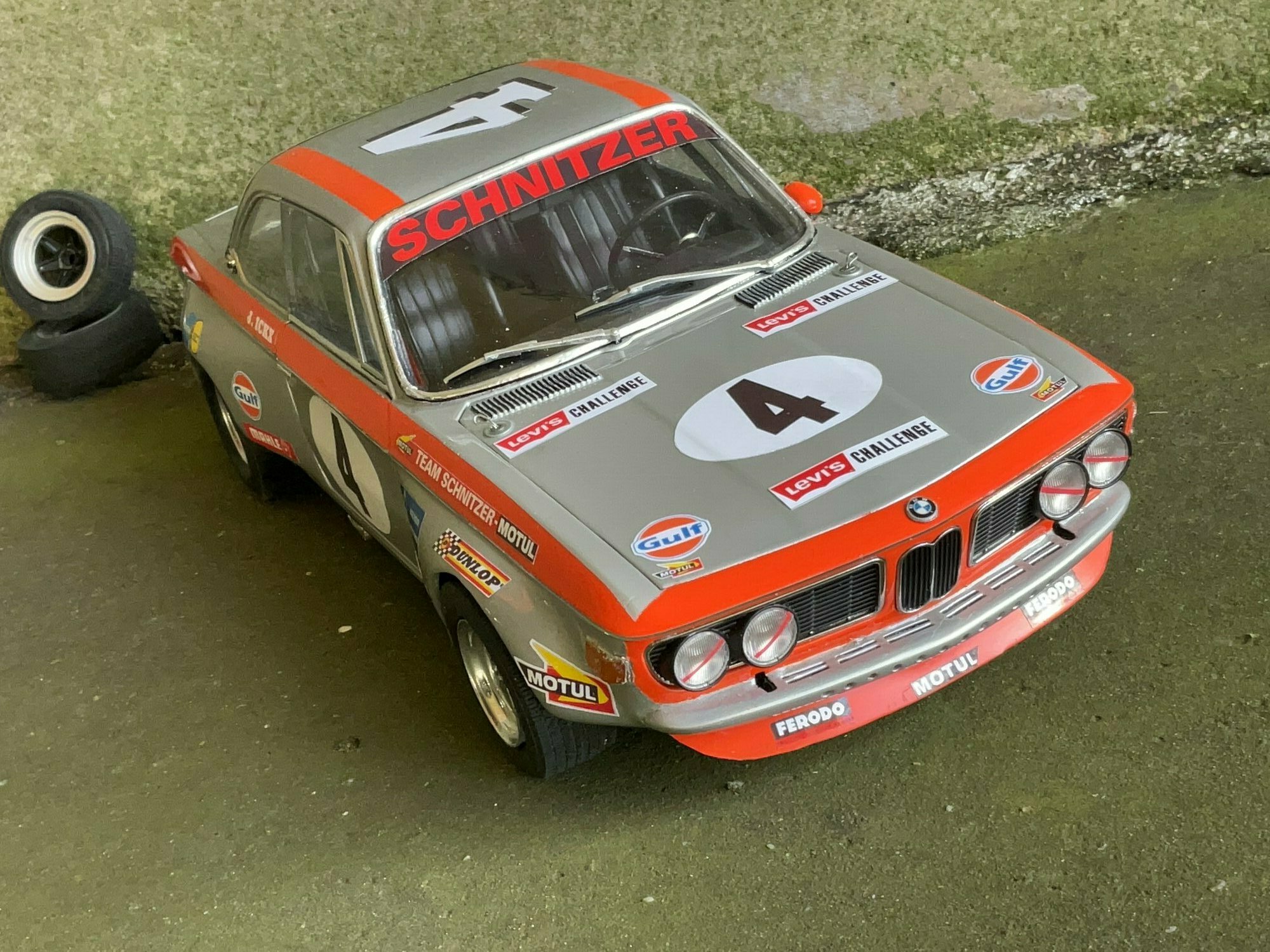
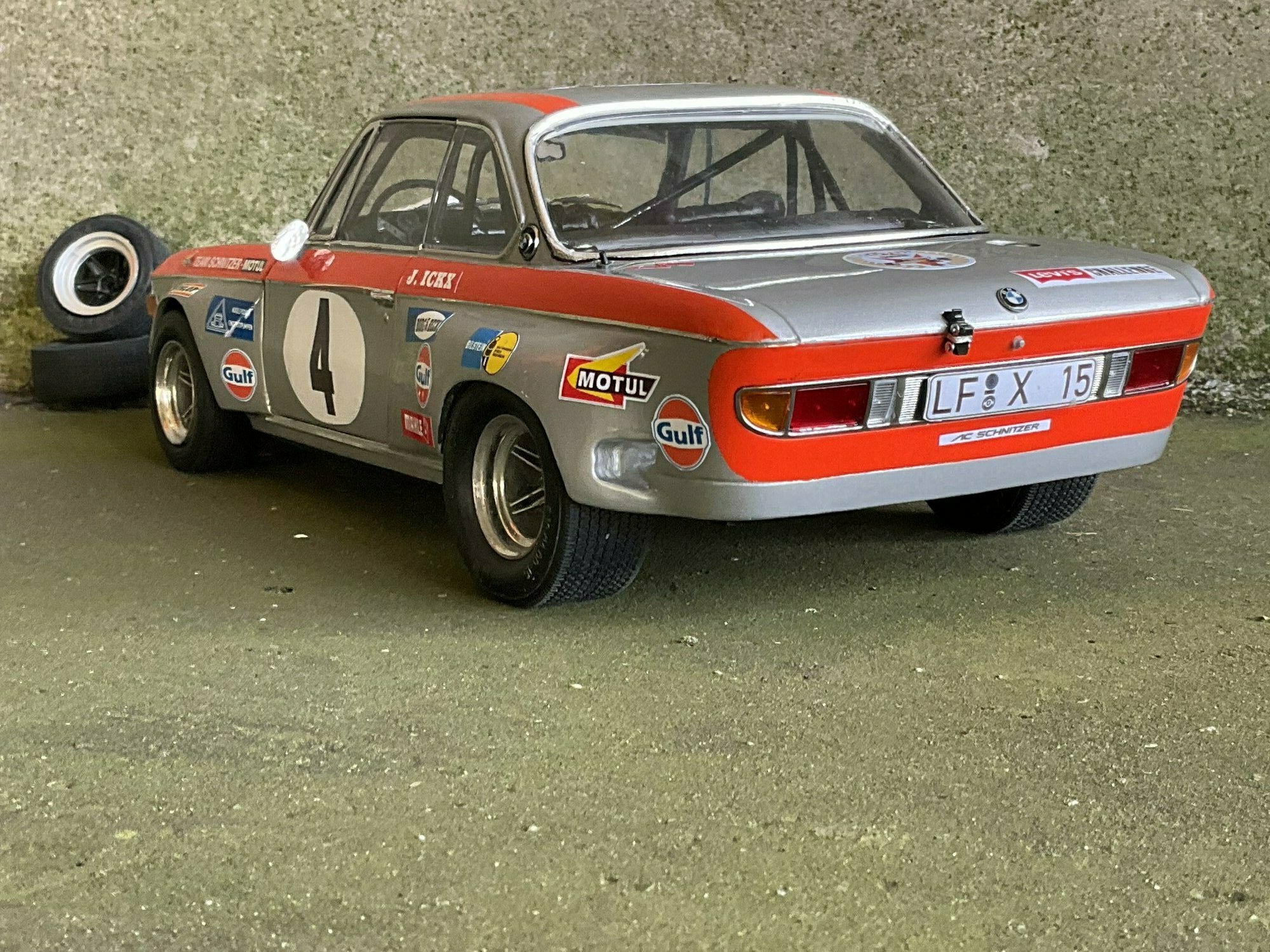
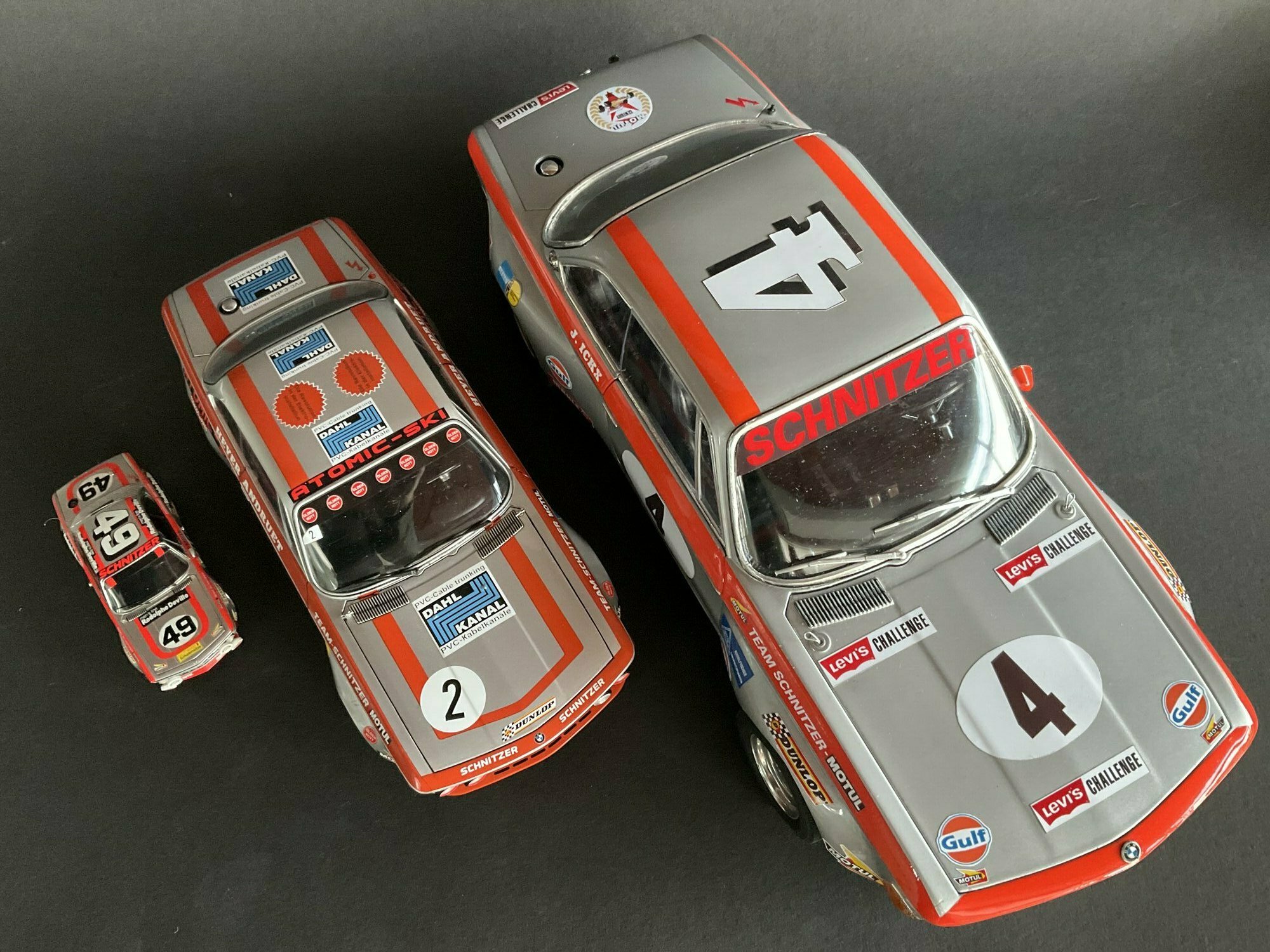
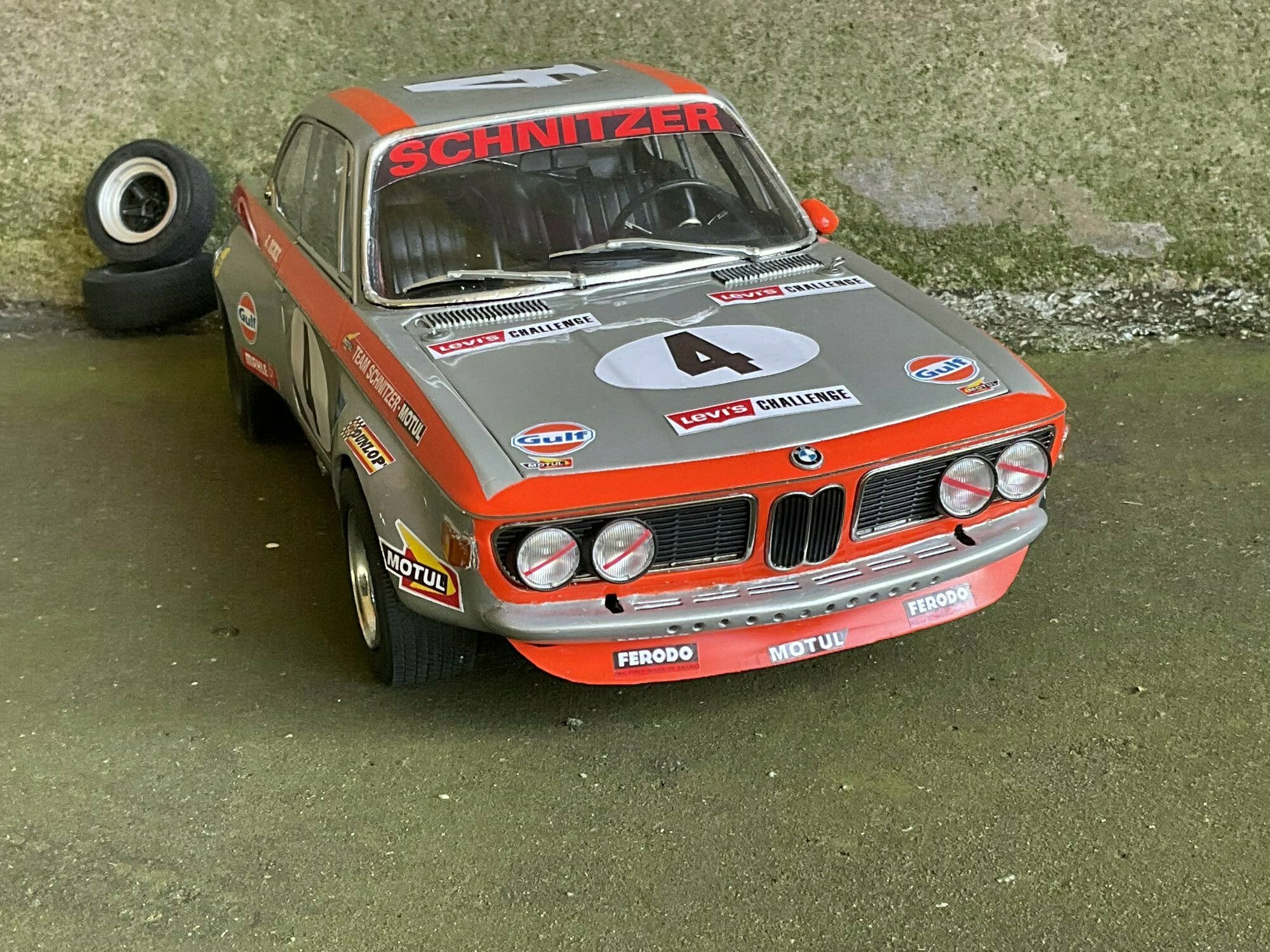
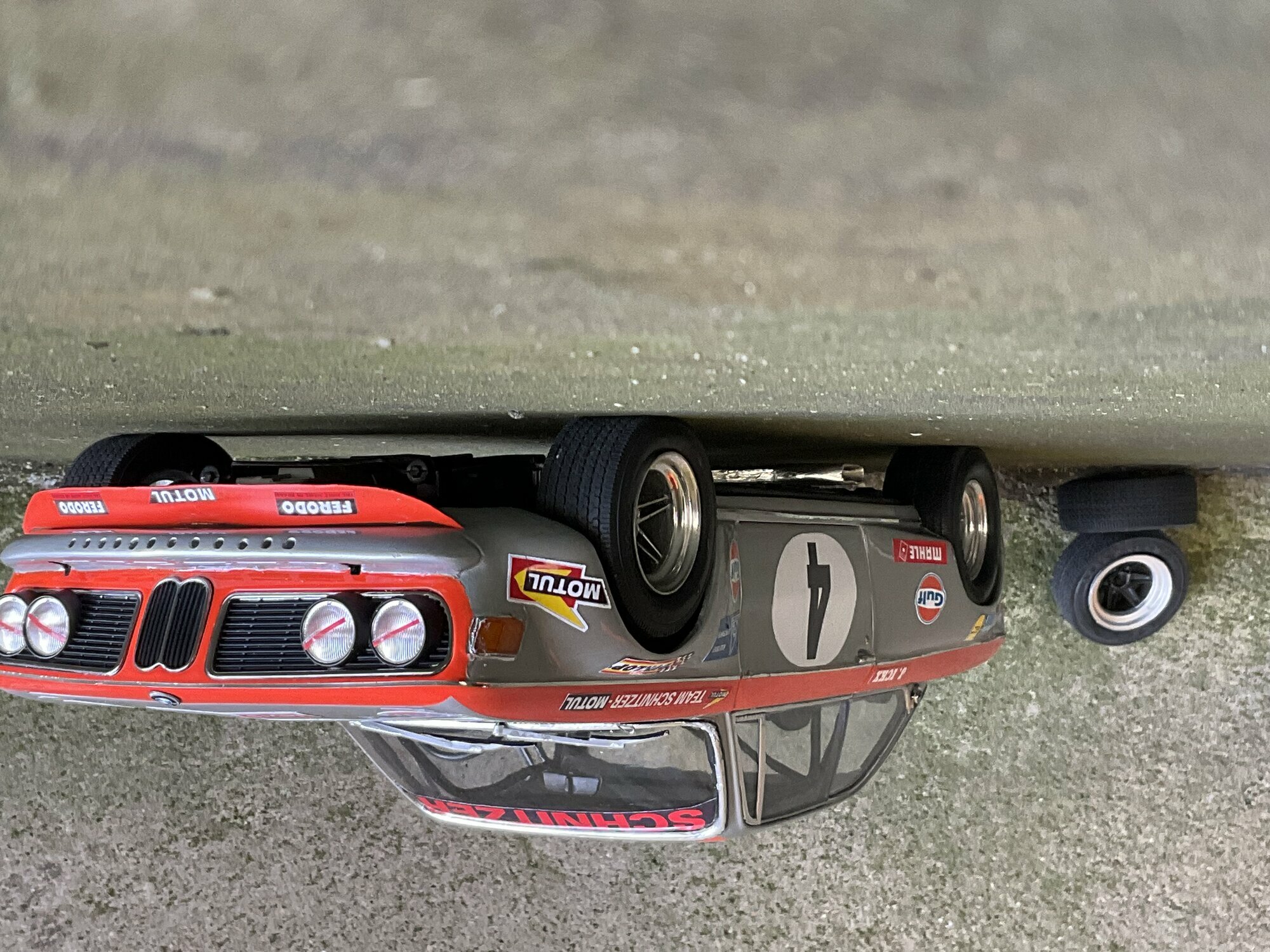
The model shown at 1/12 scale originally comes from KK Scale and is a diecast piece. Important: this example has been modified and is not the stock product from KK Scale. You can see changes in the livery and detailing: the side number circles with the “4”, the sunstrip reading “Schnitzer” and extra sponsor decals match a Team Schnitzer race setup for the BMW 2800 CS. Visible are Minilite‑style wheels, a lowered ride height and a red front spoiler; the missing bumpers underline the Group‑2 look. The body is silver with an orange trim line running over the front, sides and rear. On the hood and both doors there’s a white roundel with the number “4”. The front shows the classic BMW kidney grille and four round headlights, plus a small red lower spoiler with tiny brand stickers. Inside you can spot a stripped interior with a hinted roll cage. At 1/12 scale (the real car is about 4.66 m (15.3 ft)) the model measures just under 39 cm (15.4 inches), which matches the proportions of the BMW 2800 CS nicely. Again: the displayed item is a modified 1/12 KK Scale model from the collector “TrolleyJack”, not an unaltered factory release.
Paint, markings and sponsors — what’s visible
Team Schnitzer often ran silver paint with a bright contrasting color. On this BMW 2800 CS the upper trim line is orange, flowing over the front, fenders and door frames. There’s a white roundel with “4” on both doors and the hood. The windshield sunstrip reads “Schnitzer”, and the driver side carries “J. Ickx” (a nod to Jacky Ickx). The front has the twin BMW grille and four round lamps; the big red lower spoiler and visible sponsor decals include Gulf, Motul, Mahle, Ferodo and Borg & Beck. The five‑spoke rims with wide tires, a side exhaust and the removed chrome bumpers finish off the race look. The diecast body’s panel lines and gaps are clean, which is nice for a model this size. Once more: this particular piece is a customized 1/12 model from KK Scale, not the unmodified product from the maker.
Racing history and drivers — E9 success in two acts
The BMW 2800 CS was a key player in touring‑car racing from the late 1960s. Especially in the ETCC, Schnitzer‑prepared cars faced stiff competition from Ford and Alfa Romeo. Already in 1969/70 they scored class wins and podiums; the M30’s power and the E9 body’s handling paid off on fast tracks. Drivers like Hans‑Joachim Stuck and Dieter Quester left their mark with an aggressive but precise style. In endurance races — for example at the Nürburgring — the BMW 2800 CS proved durable, thanks to a robust drivetrain, the ZF gearbox and well‑cooled disc brakes.
From the 2800 CS to the CSL — continuity of success and the Ickx reference
When the 3.0 CS/CSL appeared it became the main contender, but the BMW 2800 CS was the immediate precursor in the E9 racing story. Schnitzer, Alpina and BMW Motorsport iterated the concept, which made the jump to the later “Batmobile” possible. Well‑known drivers like Toine Hezemans, Jacky Ickx and Brian Muir campaigned E9 coupes in various specs; the “J. Ickx” tag on the model ties into that era. The technical recipe — sturdy M30 inline six, improved aerodynamics, wider track and a durable chassis — helped earn national championships and endurance wins. So the BMW 2800 CS stands for the start of a development line that put BMW on the touring‑car map through the 1970s.
- Write a first comment about this model now!Any comment can be discussed by all members. It's like a chat.Mention other Modelly members by using @ in your message. They will then be informed automatically.
- Write a first comment about this model now!Any comment can be discussed by all members. It's like a chat.Mention other Modelly members by using @ in your message. They will then be informed automatically.