
BMW M1 Procar(diecast 1:18, Werk83)
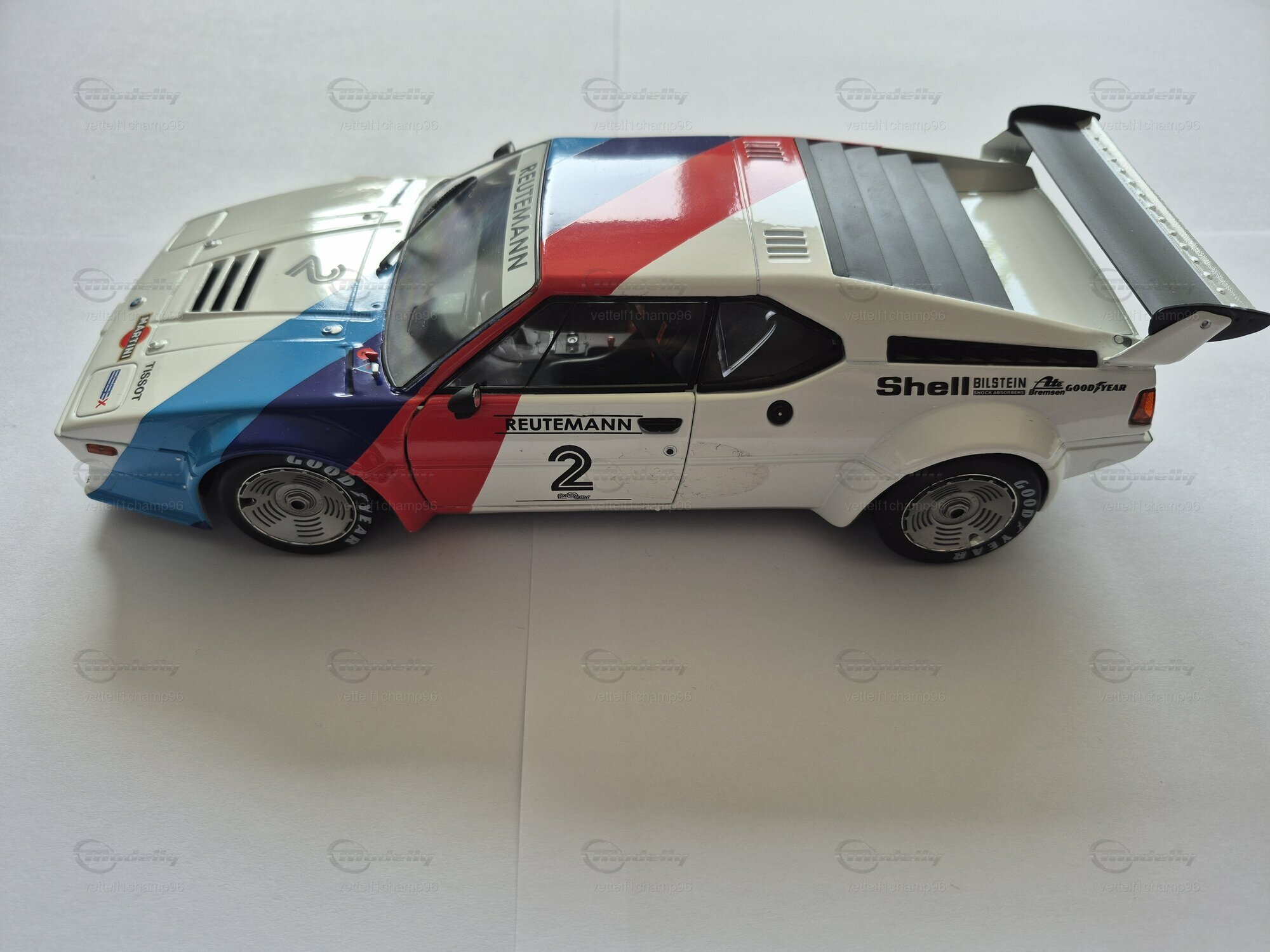
- BMW M1 Procar (from 1979)
- Werk83
- 1:18
- Showcase model / No engine
- diecast
- racing / multicolored
- In near mint condition
- Original packaging exists
- Not for sale
BMW M1 Procar 1/18 model car by Werk83: prototype, series and development
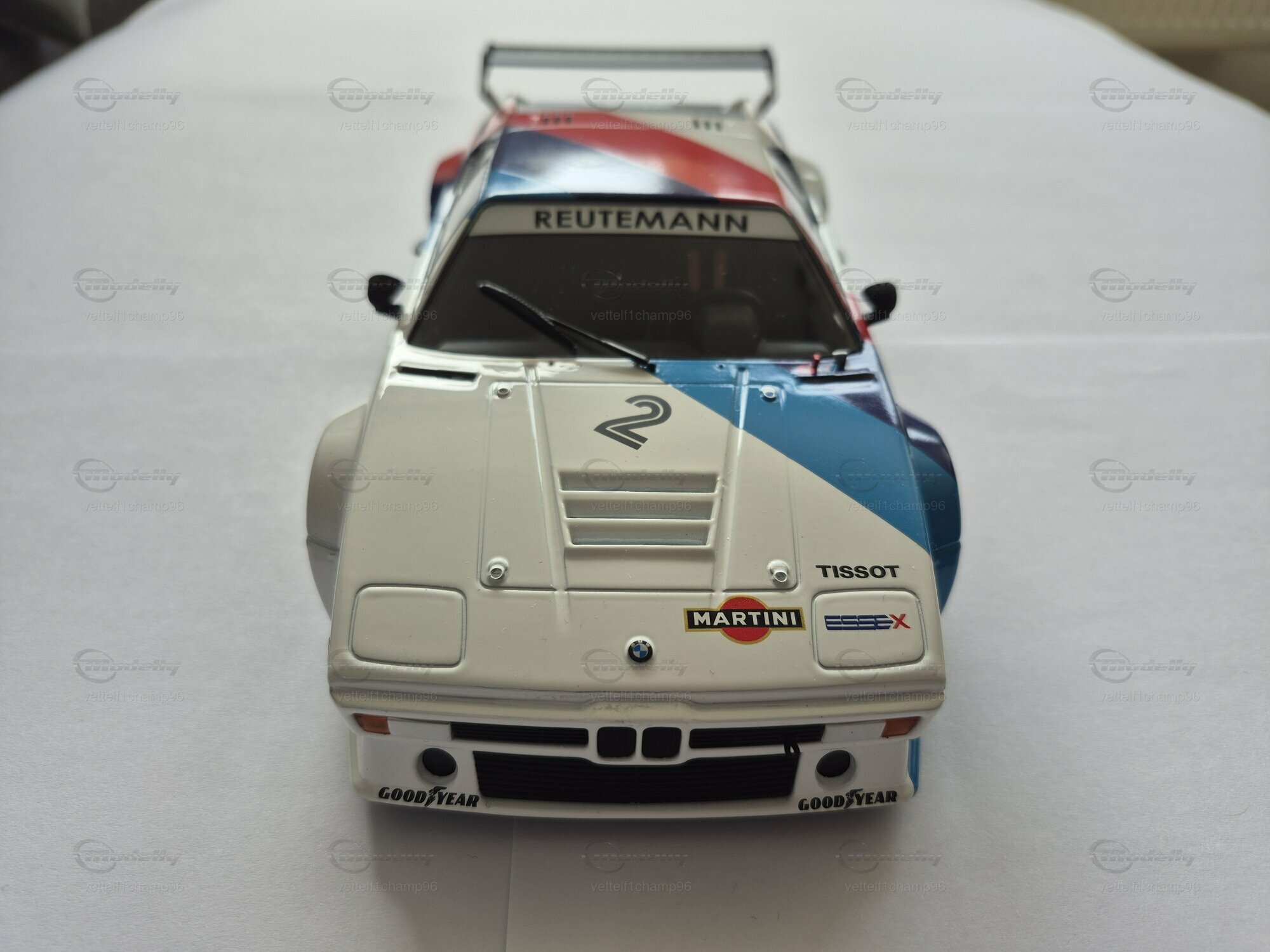
The miniature shown here from Modelly member “vettelf1champ96” is clearly based on the BMW M1 Procar racing car, meaning the motorsport version of the BMW M1. The road car belonged to the E26 generation, built from 1978 to 1981. There was no direct predecessor in BMW’s lineup, since the M1 was the brand’s first standalone mid-engine sports car project. The design of the production car came from Giorgetto Giugiaro, the body development was closely tied to Italdesign, and in the overall project Jochen Neerpasch played an important role as a key figure in the BMW Motorsport world. Technically, the M1 was based on a tubular frame, plus a plastic body and the longitudinally mounted inline-six M88/1 engine ahead of the rear axle with 3,453 cm³ (210.8 cu in), four-valve technology, six throttle bodies and dry-sump lubrication. In the road car, output was around 277 hp, while the Procar version made significantly more. What you’re looking at here is a model car in 1/18 scale, made by Werk83, which recreates the striking racing version with its big rear wing, widened wheel arches and lowered front end. The miniature is made from diecast, which you can tell from the clean body edges and solid shape.
BMW M1 Procar technology: racing conversion of the E26 with inline-six power
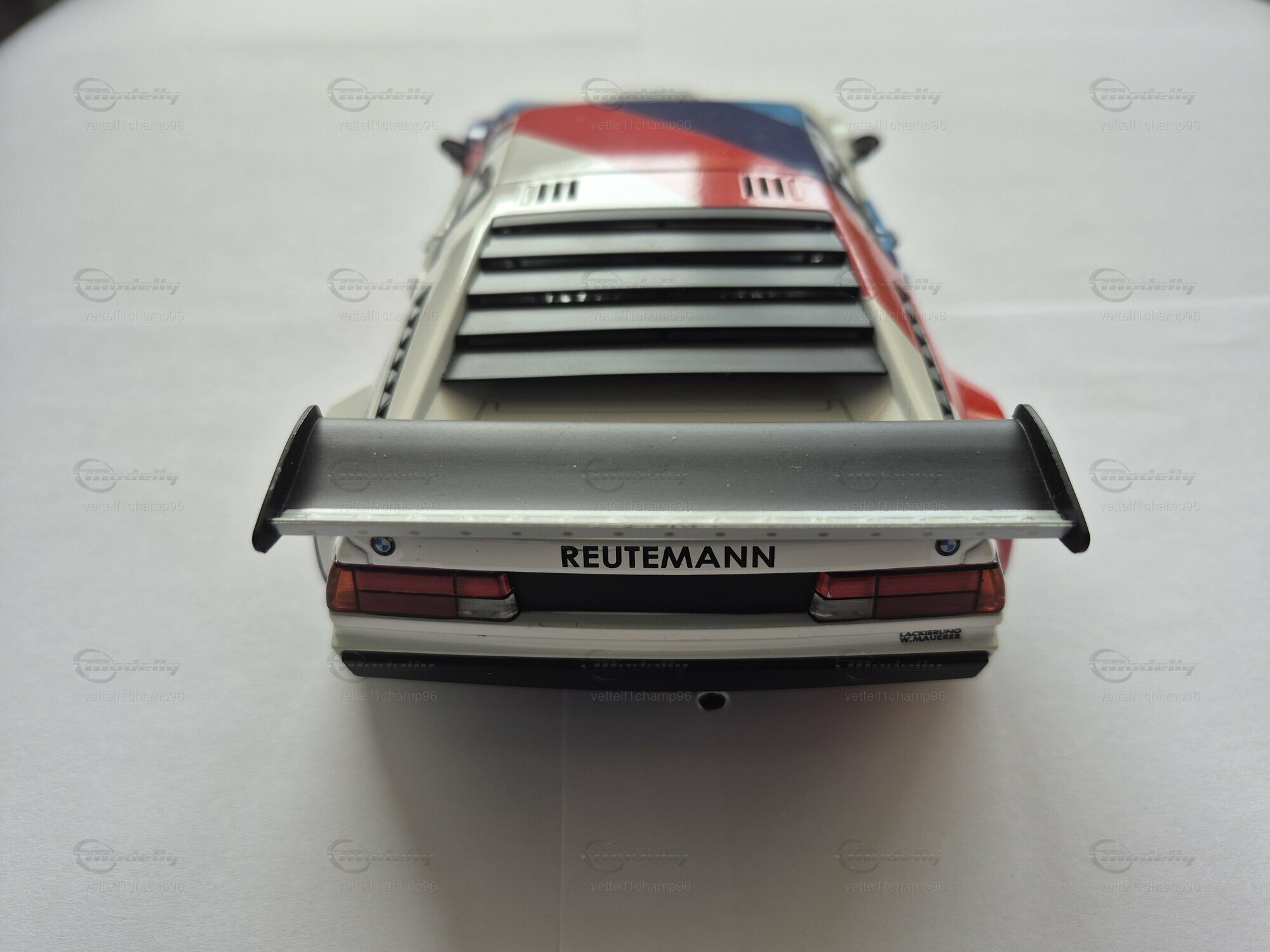
The BMW M1 Procar was built for the Procar series introduced in 1979, which ran as a one-make championship alongside Formula 1 events. Compared with the road-going M1, the car got a heavily revised aerodynamic package, wider track widths, racing suspension, a safety cell and weight reduction aimed at competition use. The inline-six was still based on the M88 concept, but in Procar trim it produced around 470 hp depending on spec at very high engine speeds. Power went through a manual racing gearbox to the rear wheels. The weight distribution benefited from the mid-engine layout, which, together with the wide stance and big slicks, gave the car excellent cornering speed. Also noticeable were the large air intakes, vents in the front hood and the slats over the rear section. The model shown here in 1/18 scale, made by Werk83, clearly shows these technical features: the front end has the deep splitter with the typical openings, the sides show the flared fenders and low silhouette, and the rear wing instantly stands out above the tail section.
Motorsport success of the BMW M1 Procar and famous drivers
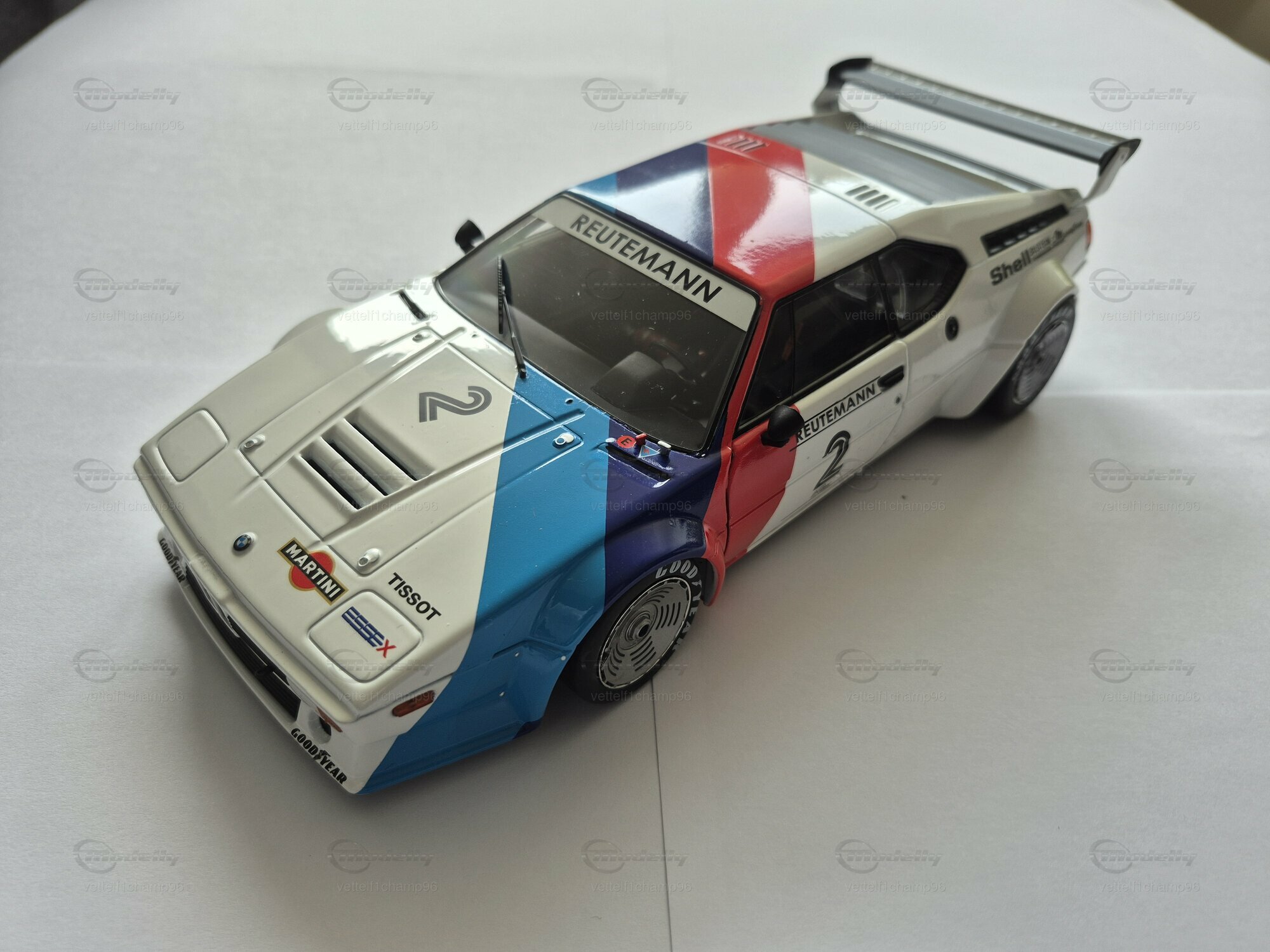
In motorsport, the BMW M1 Procar became especially famous through the Procar Championship. The concept was unusual: before selected Formula 1 races, Formula 1 drivers competed against specialists from touring car and sports car series in identical or very similar cars. That created a straight-up comparison between drivers under nearly the same technical conditions. The 1979 series was won by Niki Lauda, and in 1980 Nelson Piquet took the title. Other names closely linked to the M1 Procar include Hans-Joachim Stuck, Clay Regazzoni, Jacques Laffite, Didier Pironi, Alan Jones, Mario Andretti and Carlos Reutemann. This mix of Grand Prix stars and experienced touring car specialists is one of the reasons the series is still so well known today.
Racing outings beyond the Procar series and historical context
Besides the Procar one-make series, the BMW M1 also showed up in other racing series and endurance events. In Group 4 and later Group 5-style competition, different versions were created that were modified more heavily depending on the rules. At endurance races like Le Mans, the M1 appeared in various development stages, even if it never achieved the kind of long-term dominance seen from some pure prototypes. Its importance therefore lies not only in individual results, but also in its role as a technical and image-defining BMW motorsport project during a time of transition between touring car, GT and prototype concepts. The Procar version in particular is now seen as one of the most iconic racing variants of the E26, because it still clearly shows the base idea of the road car while also carrying all the typical changes of a car built uncompromisingly for racing.
Paint scheme, decals and visible details of the Werk83 miniature in the collection
On the model shown here, the paint scheme is the main attraction. The base color is white, with large motorsport stripes in light blue, dark blue and red running across it, inspired by BMW M colors. On the front, the blue band sweeps diagonally over the right side, while the roof and side sections are divided by red and blue areas. You can clearly see the number 2 on the front and doors, plus the REUTEMANN lettering several times, linking it to Carlos Reutemann. There are also easy-to-read sponsor and equipment logos like Shell, Bilstein, Goodyear, Tissot and Martini; on the front, Essex is also visible, and Ate appears on the sides as well. The decals are placed neatly and follow the body lines. The model has closed pop-up headlights, black window surrounds, side mirrors on both sides, windshield wipers on the front glass and the typical slats over the rear deck. The turbine-style wheels with printed Goodyear lettering fit the period-correct look of the prototype. The rear view is also informative: you can see the wide taillights, the black rear section and the high-mounted wing. For collectors of BMW racing models, Procar cars and late-1970s touring cars, this version is an interesting collectible thanks to the clearly recognizable Reutemann livery, believable proportions and convincing body detailing.
Chriskitt
Auto-translated
 Very nice model car! 😎 🤍💙 BMW 👍👍
Chriskitt
Auto-translated
 Very nice model car! 😎 🤍💙 BMW 👍👍