
BMW 507 (Serie 1)(diecast 1:43, Minichamps)
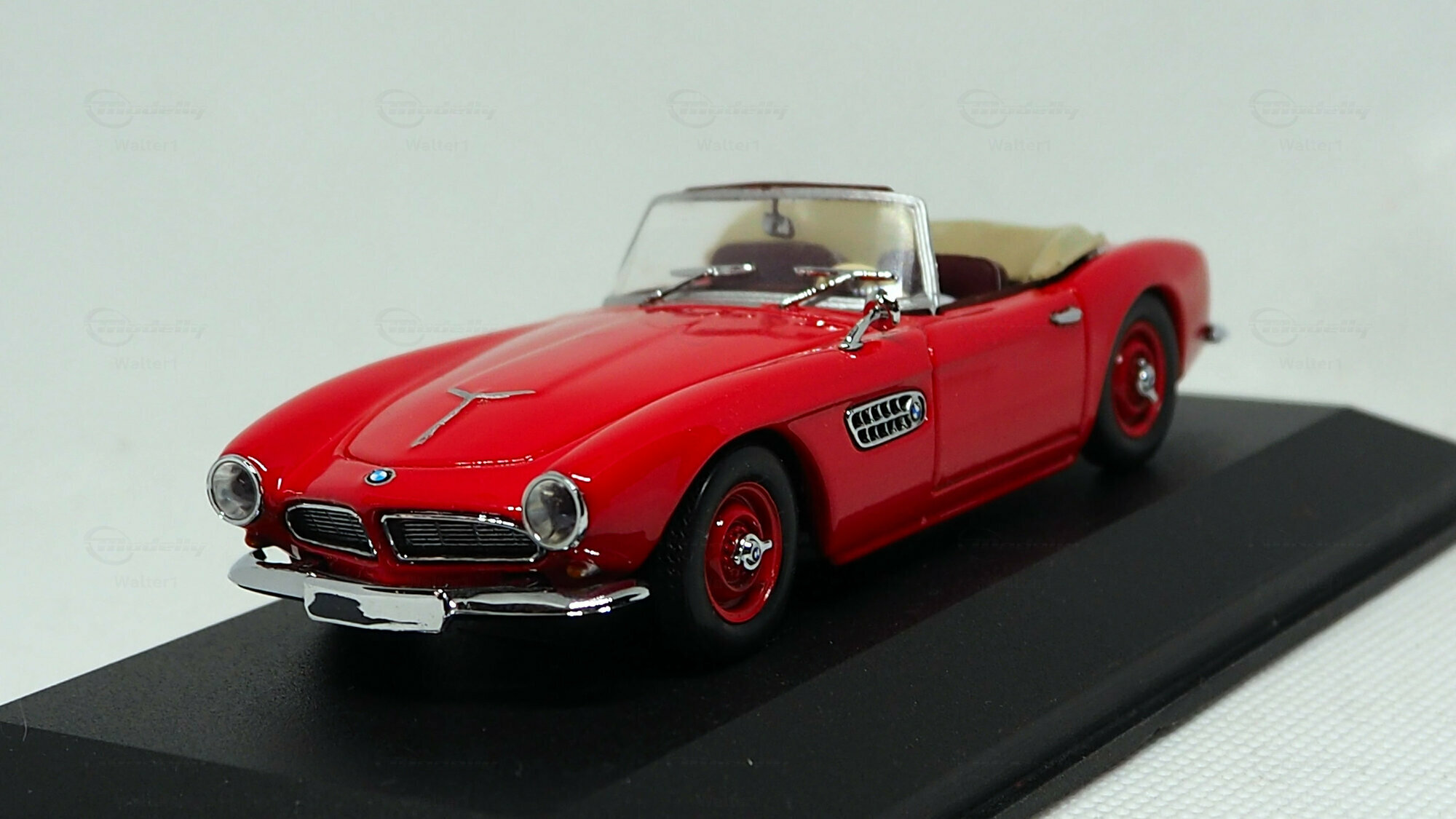
- BMW 507 (Serie 1) (from 1956)
- Minichamps
- 1:43
- Showcase model / No engine
- diecast
- red
- 22507
- Perfect mint condition
- Original packaging exists
- Not for sale
1956 BMW 507 Series I: Postwar Roadster
The prototype for this model is the BMW 507, a two-seat roadster from the Series I, built starting in 1956. The first series was produced from 1956 to 1957; after that came the technically updated Series II, which had a few changes in detail. As a sporty predecessor within the brand, the BMW 328 from the 1930s is seen as the key reference, since its racing successes helped build BMW’s reputation as a maker of sporty cars. The BMW 507 was developed at the initiative of the U.S. importer Maximilian Edwin Hoffman, who wanted to place an open sports car between the European and American markets. The body was designed by Albrecht Graf von Goertz; the technical development was led by Fritz Fiedler. Typical features include the long hood, the short rear section, the side air vents with the BMW emblem, and the wide, split BMW kidney grille. In its first year of production, 1956, events like the Hungarian Uprising, the Suez Crisis, and the first Eurovision Song Contest help place the car’s age and development period in context.
BMW 507 tech: V8 engine and lightweight body
The BMW 507 used a front-mounted 3.2-liter V8 engine with aluminum cylinder heads. The engine was based structurally on the unit used in the BMW 501 and 502 sedans, but for the roadster it got twin carburetors and a higher-output setup. Power was around 150 hp, and the power went through a manual four-speed transmission to the rear wheels. Depending on the gearing and version, top speed was said to be around 190 to 220 km/h (118 to 137 mph). The suspension used double wishbones with torsion bars up front and a solid rear axle with torsion bars in the back; braking was handled by drum brakes at all four wheels. The body was mostly made of aluminum and sat on a separate frame. This construction helped cut weight, but it also made production more expensive and complicated. In total, only 252 examples were built. So the roadster never became the mass-production model that had been planned, but because of its short production run and unique design, it still stands out clearly in BMW history.
Minichamps 1/43 model car from the Walter1 collection
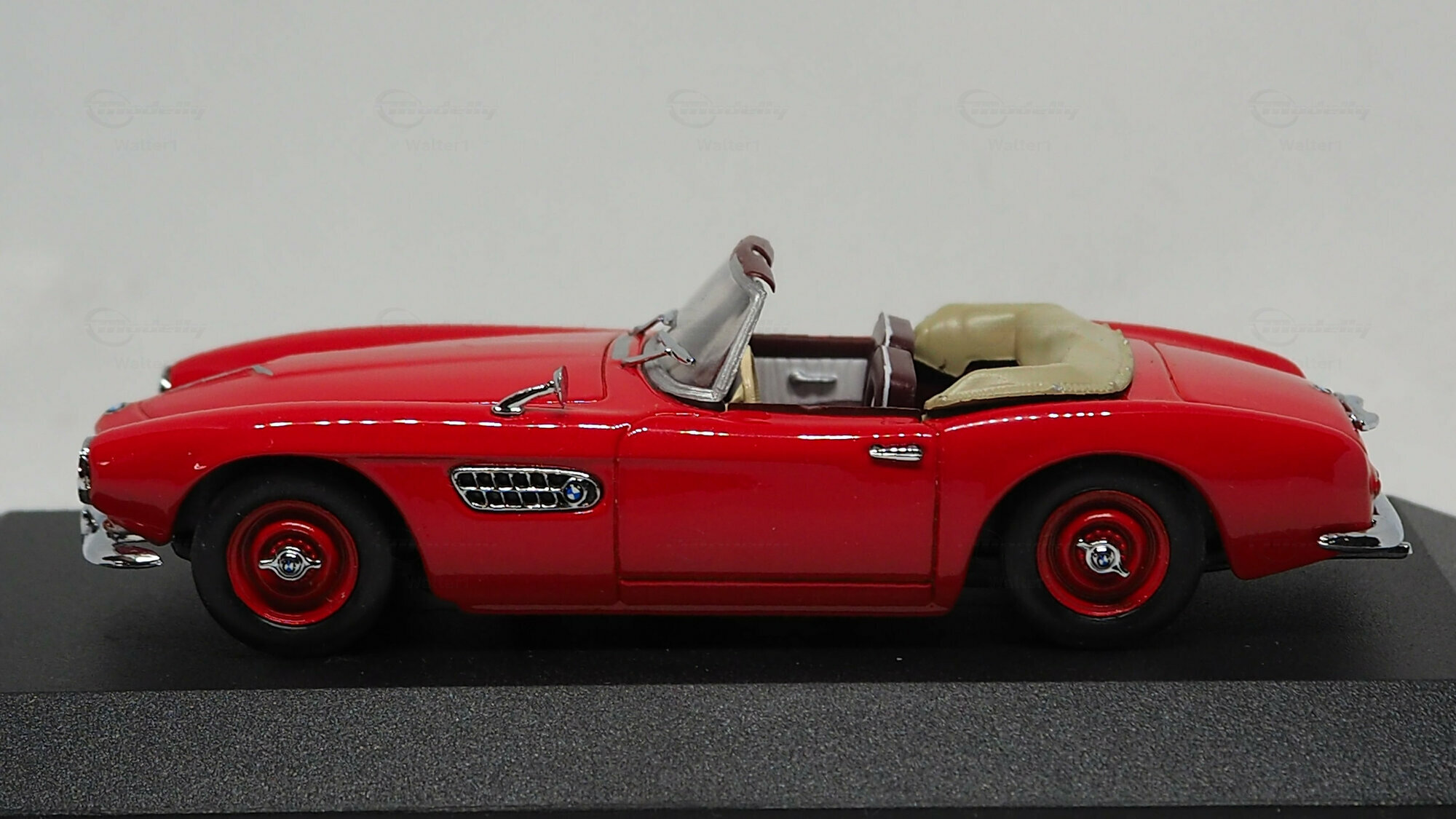
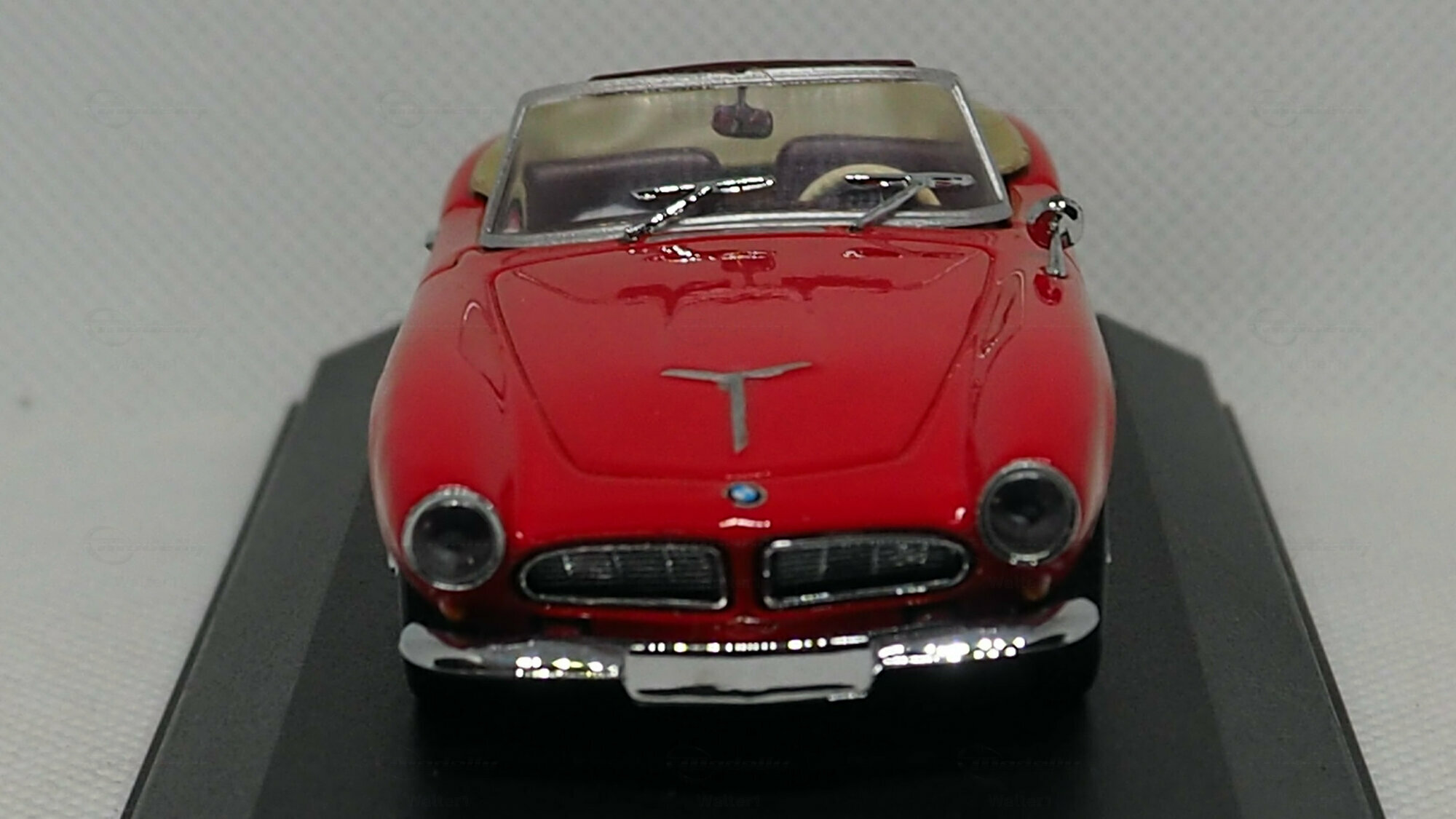
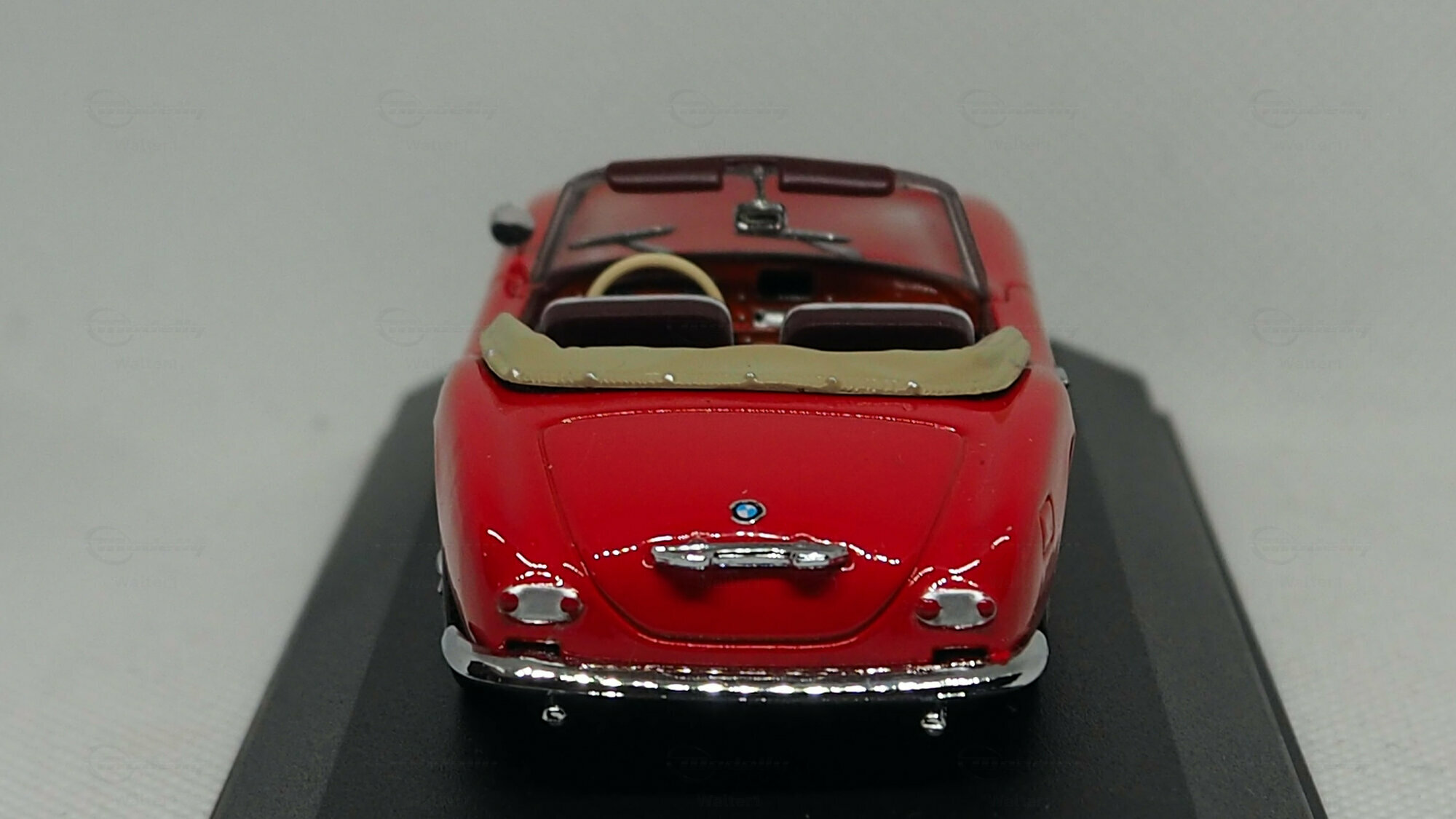
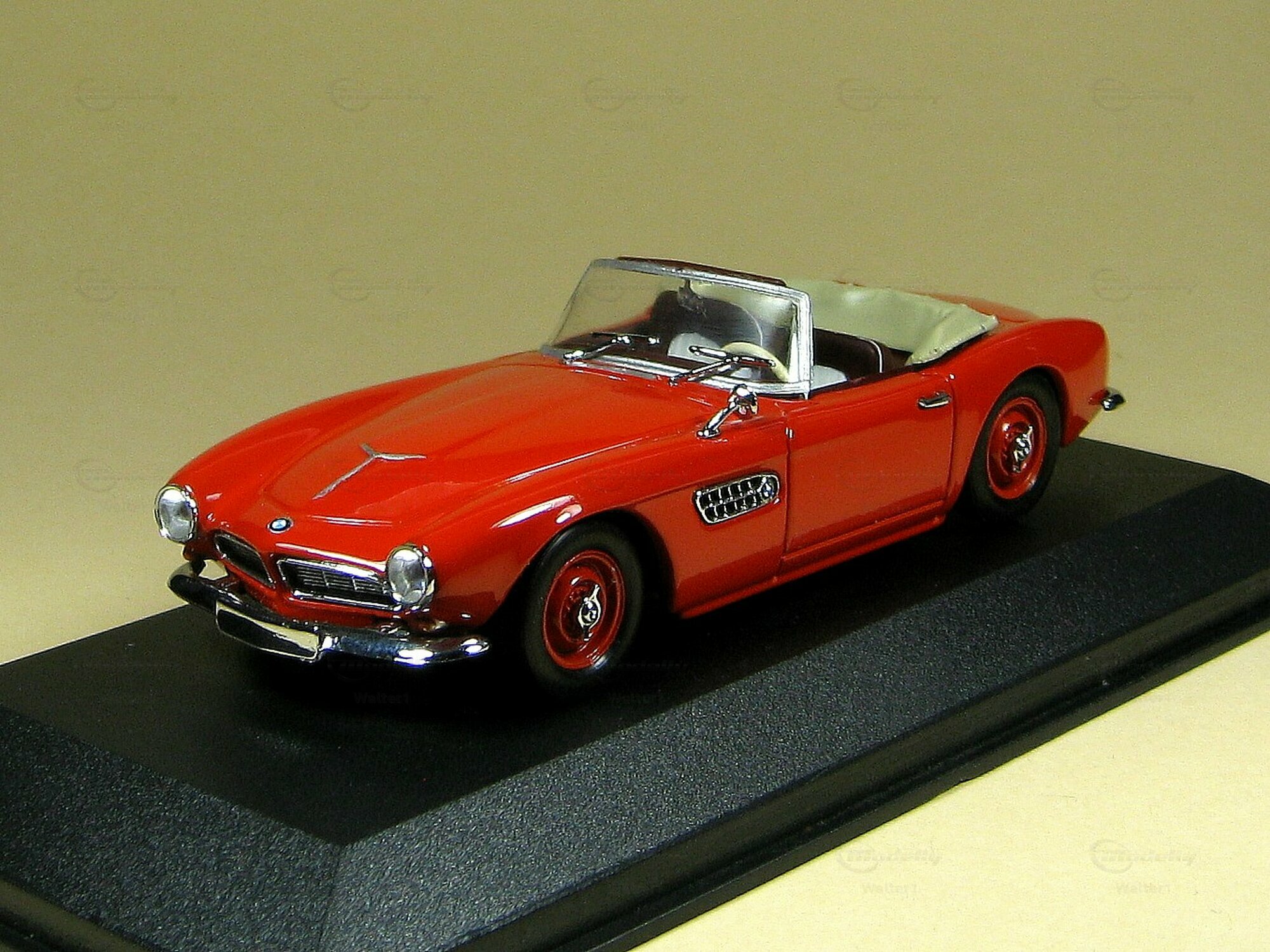
The model shown here from the Modelly collection of “Walter1” is a model car in 1/43 scale, made by Minichamps. The miniature is mounted on a black display base and was made using diecast material. The body shows an open BMW 507 in red, paired with red steel wheels, black tires, and chrome-style wheel caps. You can also see the chrome bumpers, round headlights, BMW lettering or badges on the front, sides, and rear, plus the side air vents. The front end is especially easy to read: the slim kidneys sit between the headlights, while the bumper is set clearly ahead of the body. On the hood there’s a chrome trim piece that follows the center line. The red paint is evenly applied, and the chrome parts create clear contrast on the grille, window frame, door handles, and bumpers.
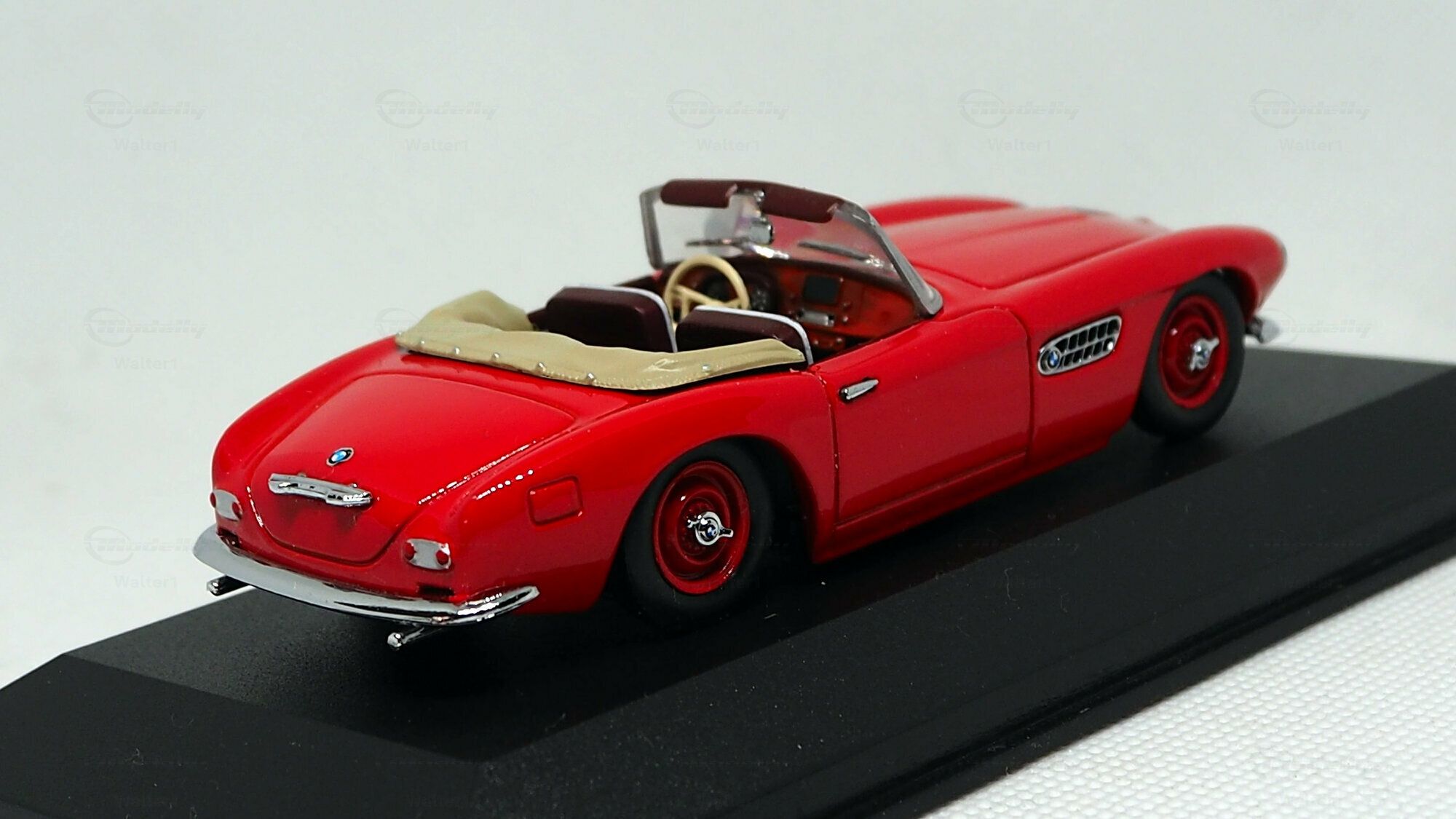
Red BMW 507 miniature with open interior and soft top cover
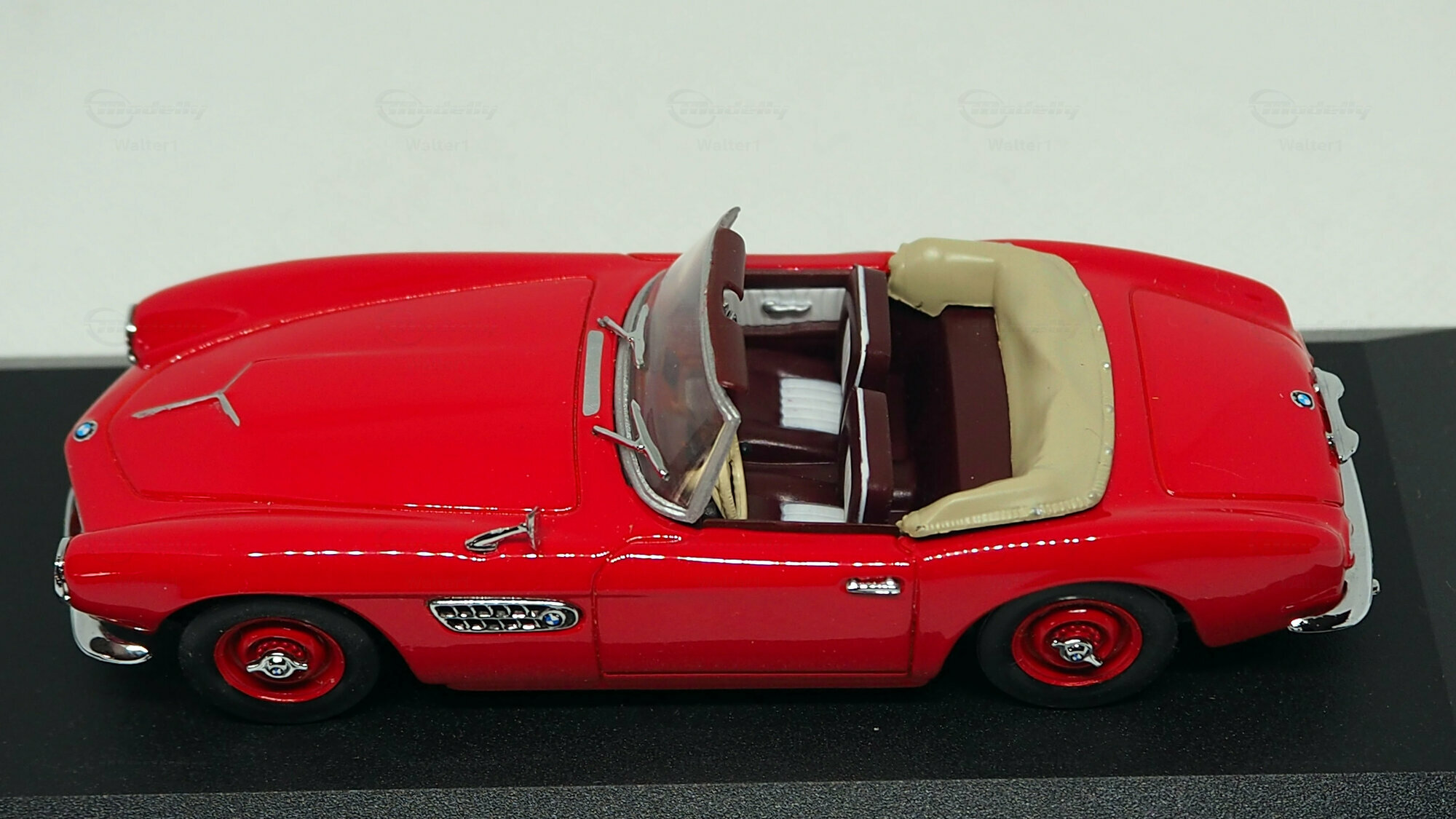
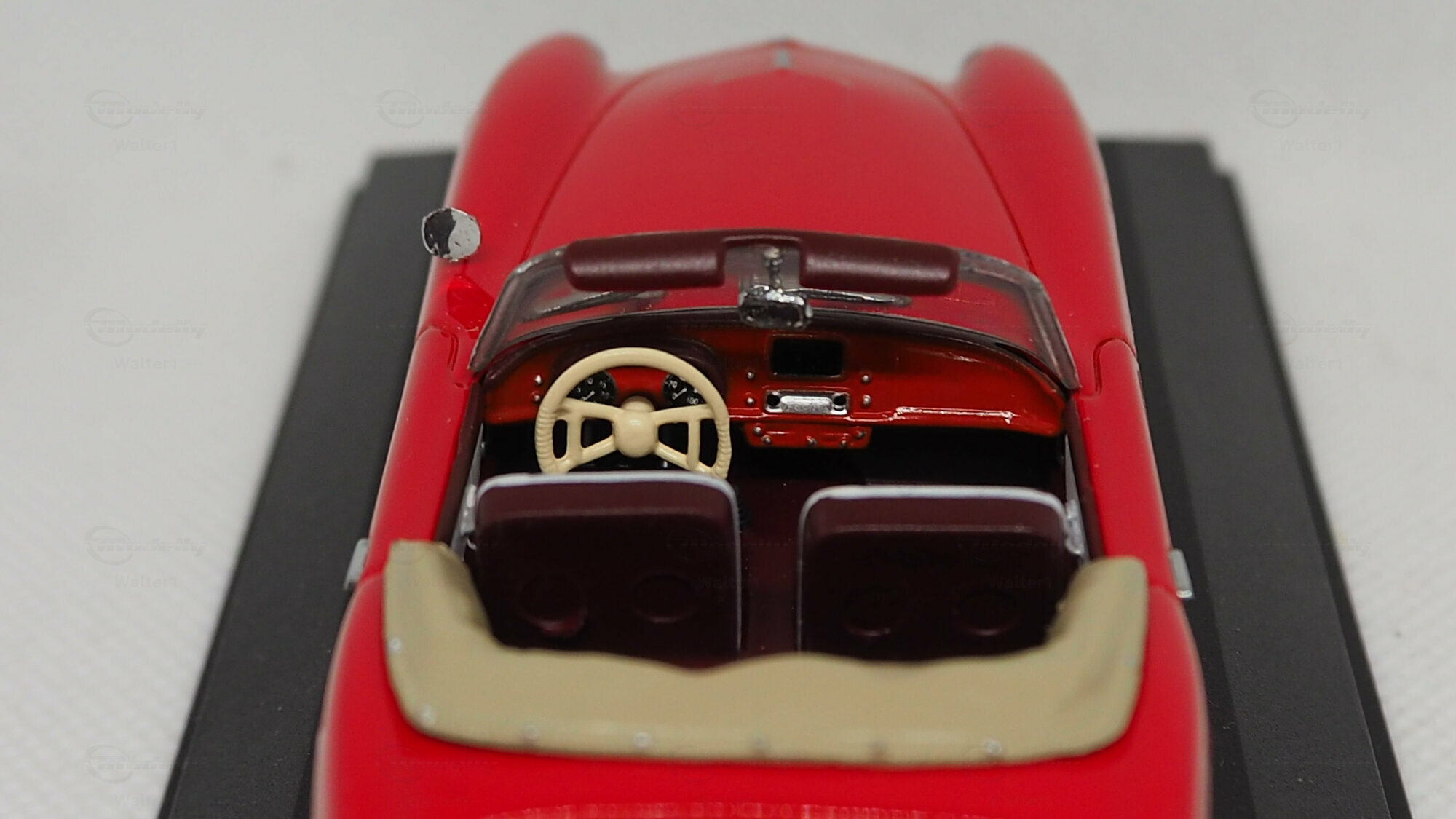
The side and rear views also show the shape of the miniature really well. The body of the BMW 507 has flowing fender lines, a low door line, and a short rear overhang. The side air intakes are modeled as separate dark inserts with silver trim; each one includes a small BMW emblem. The interior is finished in dark reddish-brown and includes a light-colored steering wheel plus a dashboard with visible gauges. Behind the seats sits a beige soft-top cover, representing the folded fabric roof. The windshield has a silver frame and hinted-at wipers. From the rear, you can spot the small BMW badge on the trunk lid, the center handle or trim strip, the taillights, and the two-piece bumper. As a 1/43-scale model car by Minichamps, this piece shows the key proportions of the open roadster in compact form. Its look really comes from the mix of red paint, the light-colored roof cover, the dark interior, and the sharply detailed chrome accents.
Chriskitt
Auto-translated
 Very nice BMW 🤍💙❤️👍👍
Chriskitt
Auto-translated
 Very nice BMW 🤍💙❤️👍👍